Tag: Whidbey Island

  • Drinking in the View

    Drinking in the View

    BY SHARON BETCHER
    Whidbey Life Magazine Contributor
    May 18, 2016

    On the island, water can seem mesmerizingly ubiquitous. We drink in the view from every possible angle. But drinking in the aqueous view can deceive us. Despite the water that stretches to the horizon in every direction, we actually have a limited supply of fresh drinking water, and that supply is intimately related to our habits—from where we build our homes to how our excretes percolate through the soil and reenter the groundwater. Because residents like to inch up to the Island’s shores to get the best view, and because seas are rising due to climate change, our aquifers are increasingly threatened by saltwater intrusion.

    Sunrise over the Saratoga Passage (photo by Susan Scott)
    Sunrise over the Saratoga Passage (photo by Susan Scott)

    What is the source of our drinking water?

    The lead-tainted, public water crisis in Flint, Michigan has made drinking water a pervasive concern—even here on Whidbey Island. Increasingly, citizens want to know where their drinking water comes from.

    On the north end of Whidbey Island, water is piped over from the Skagit River to serve residents of Oak Harbor and Naval-Air Station Whidbey Island. Potable water for residents of the north end is vulnerable to aging infrastructure (and a lack of monies for its replacement) as well as cataclysmic events, like “the Big One,” which could suddenly disrupt the supply. Deception Pass Bridge will, in fact, be closed for a stretch in the fall in order to service the water pipes attached to the bridge’s underbelly.

    Islanders of South and Central Whidbey—whether residents of a village, like Langley, or individuals drawing from one of the 6,000 private wells—share a common, naturally occurring reservoir. While hydrologists speak of multiple aquifers, in fact these aquifers fit together like cells in a contact lens floating on a bed of seawater. Critically, this is “a sole source” aquifer. That means our drinking (“potable”) water supply is replenished (“recharged”) by a single source—namely, rain, assuming its ability to percolate through the soils before running back to the shorelines. In other words, Central and South islanders have no access to fresh water apart from this combined, multi-cellular aquifer. This natural reservoir—limited in terms of what can be pumped out before seawater rushes in, and vulnerable to the demands that each of us bring to it—is what makes Whidbey Island habitable.

    IMG_5747
    Rain is the “sole source” for replenishing aquifers on Whidbey. (Photo by Susan Scott)

    Is our drinking water supply vulnerable?

    Ninety percent of the wells on the southern end of the island are sunk in the sea level aquifer. As we enter the age of climate change, this places the potable water supplies of Island County—especially given our many miles of shorelines—at risk. Island County is one of two coastal communities of Western Washington considered particularly vulnerable to sea-level rise and has been included in a federally-funded coastal resilience project backed by the National Oceanic and Atmospheric Administration.

    Even apart from climate change, monitoring the balance between freshwater recharge and water usage is, on the island, the first order of business. On Whidbey, domestic use constitutes the major freshwater draw, and up to 50 percent of that draw may be for landscape use. If the pressure in an aquifer is lowered by pumping more water for surface use than percolates back into the aquifer, the aquifer may, because of the vacuum created, infill with seawater.

    Well and sea level
    Illustration of a well relative to Sea Level (from website: https://althealai.wordpress.com/2015/10/25/groundwater/ )

    That our drinking water has but one source of replenishment already hints at a second vulnerability: the rains must find their way back through the soils before running off into the Sound. Human interruption of this slow drip-drop of rains through the diversity of soils—the construction of hard surfaces like roadways, the removal of trees that hold back water, the in-filling of wetlands that serve as a natural filtration system—impedes the recharge of the aquifer. While Island County is served by the Water Resources Advisory Committee (WRAC), a panel of 12 citizens from across the county, the intersection of the dynamics of water with property rights is a thorny nexus for us as citizens and thus for the County.

    Wetlands are critical filters. (Photo by Jamie Whitaker)
    Wetlands as critical filters for water seeping back into the aquifer. (Photo by Jamie Whitaker)

    Another aspect of the water cycle is the management of human waste. Seventy-two percent of Whidbey Island residents utilize septic systems for waste disposal. These on-site systems depend on soil filtration to purify water. All such systems allow nitrates into groundwater. (A buildup of nitrates in the human body adversely affects the ability of blood cells to carry oxygen.) When a septic system remains unmanaged—an undetected crack in a storage tank, an overfull tank—the situation worsens.

    While major cities are designing septic systems to deal with the pharmaceuticals we humans move through our bodies, drainage fields cannot modulate excreted drugs, which eventually find their way into Puget Sound and affect marine life. Might we think towards a regional water district that could include more refined management of our effluents?

    Citizenship Habits and Your Watershed

    Every one of us may, after Flint, admit to a wish to return to innocence. And it’s tempting to believe we live on an island utopia. In fact, if we want to maintain this island as a sanctuary that includes humans, we each need to accept the responsibility to know about our water—its source, its vulnerabilities, and how our habits affect it. John Lovie, one of South Whidbey’s representatives to Island County’s WRAC, urges each of us to:

    1. Know the source of your drinking water.

    a. If you are part of a community-based water system, like Sun Vista/Sunlight Beach HOA, go to your public meeting. Prepare for your meeting by going to the state Source Water Assessment Program (SWAP), which maintains an on-line map of all public water system wells (https://fortress.wa.gov/doh/eh/maps/SWAP/index.html). Next, physically get that wellhead in your sights. Now observe, what’s uphill from your well? That knowledge will give you some sense of potential contaminants. Then ask, Where is sea level compared to the depth of your well?
    b. If you are on a private well, know the depth of your well and the age of your pump. To find the depth of most private wells, go to the state’s well log website: https://fortress.wa.gov/ecy/waterresources/map/WCLSWebMap/WellConstructionMapSearch.aspx. To find the depth of your well compared to sea level, first find the approximate elevation of your property on GoogleEarth. This elevation minus the depth of your well gives you the elevation of the bottom of your well.

    2. Know your water quality.

    a. If you are part of a public water system, look up your water quality report at the Washington State Department of Health website: https://fortress.wa.gov/doh/eh/portal/odw/si/FindWaterSystem.aspx.
    b. If you are on a private well, test your water annually. Testing kits may be picked up at B&W Pumps (behind the Texaco) in Freeland and Island County Health Department in Coupeville. Make sure your annual water quality test includes readings of chloride, total coliform, nitrate, manganese, arsenic and iron.

    3. Inventory your habits.

    a. Think about how you use water and what may, even unexpectedly, enter the water because of your use—antimicrobials from hand-sanitizers or soaps, for example.
    b. Consider how these substances affect our drinking water supply and, eventually, our marine life.
    c. Xeriscaping your yard could help reduce drawdown on our aquifer.
    d. Check the infrastructure of your septic tanks and the integrity of your drainfields. Have that septic tank pumped regularly.

    Can we share? 

    In a world reduced to the private and the individual, the care of our water—here on Whidbey as in the state of Washington—draws us back to “the commons.” Our state has retained the legal precedence for treating water as a “common pool resource.” Despite the fact, then, that “my” potable water comes from a “private” well, water remains ours—not mine.

     “Story of Water,” art installation by Melissa Koch. (Photo by Michael Stadler)
    “Story of Water,” art installation by Melissa Koch. (Photo by Michael Stadler)

    The future likely holds increased threats to our water supply—from climate change, pollutants and population growth. Sharing this limited reserve means strengthening the muscles of civil conversation and stewardship.

    The state holds water in trust on our behalf; that fact implies that we the people can be trusted to operate as members of the commons. It requires us to converse with those with whom we might not agree. It requires us to think beyond “my rights” about a resource that grants life to all. As Lovie sees it, “Water is a proverbial dry run for the type of negotiations we as citizens have ahead of us, given the fact that our geography, with our climate, is changing.”

    Helen Price Johnson at Whidbey Institute (Photo by Jerry C Milhon)
    Island County Commissioner Helen Price Johnson (far left) speaks with attendees at “Whose in Charge of Your Drinking Water?,” a conversation hosted by Thriving Communities at the Whidbey Institute on March 16, 2016. (Photo by Jerry C. Milhon)

    ___________________

    Thriving Communities initiative of the Whidbey Institute, Clinton, initiated a public conversation about Whidbey Island’s drinking water and the realignment of our civic sensibilities on March 16, 2016.  A second event—once again open to all—will be held in mid- to late May. For notice of this upcoming meeting, visit the Thriving Communities website at http://thrivingcommunities.org/.

    Thanks to John Lovie for his assistance in preparing this article.

    An academic theologian and philosopher by background, Sharon Betcher is now an independent scholar, writer and wannabe farmer living on south Whidbey. As a writer, she won the 2012 Short Story Smash and took first place in the memoir category of the Whidbey Island Writers Association’s 2012 contest. In March 2015, Betcher presented at the annual Women of Whidbey (WOW) Stories Conference.

    __________________

    CLICK HERE to read more WLM stories and blogs. Have a great story idea? Let us know at info@whidbeylifemagazine.org.

    WLM stories and blogs are copyrighted and all rights are reserved. Linking is permitted. To request permission to use or reprint content from this site, email info@whidbeylifemagazine.org. 

  • Janet Steadman: A Well-Pieced Life

    Janet Steadman: A Well-Pieced Life

    BY NATALIE OLSEN
    Whidbey Life Magazine Contributor
    May 18, 2016

    “Quilting,” Janet Steadman says, “is like eating potato chips. You can’t stop at just one.” Her career began in 1983 because of a new round bed that needed a cover. She loved fabric and sewing, so decided to learn to quilt a cover. After a few classes, she designed and made “Spiral Progression” for that bed in Texas.

    “Spiral Progression,” 120 inches in diameter. (Photo by Jim Lincoln)
    “Spiral Progression,” 120 inches in diameter. (Photo by Jim Lincoln)
    “Sold Out,” permanent collection of U.S. Embassy for the Ivory Coast. (Photo by Roger Schreiber)
    “Sold Out,” permanent collection of U.S. Embassy for the Ivory Coast. (Photo by Roger Schreiber)

    She definitely didn’t stop at making just one. Her quilts have won awards internationally and are part of collections throughout the U.S., Canada, Africa and Antarctica. A few months ago, that one delivered to the Palmer Station in Antarctica marked a giant milestone. Her quilts have now been shown on every continent on Earth.

    While Steadman’s quilts make their homes in places around the world, she and her husband moved from Texas to settle on Whidbey in 1991. It was like returning to the island for her, as she had taught at Langley High School right after graduating from the University of Puget Sound. Over the years, her quilting community on Whidbey has developed significantly.

    Part of that community includes Clinton quilter and dyer Liz Axford, who met Steadman in Houston, TX in l986 and later moved to Whidbey in 2008. Axford describes her friend as “a great teacher and a great student. She is always anxious to try something new, and easily laughs off any obstacles in her path as she perfects new ideas and techniques. I think she’s making the best work of her life right now.”

    “Bare Branch” 2014, from newest series “Fine Lines” (Photos by Roger Schreiber)
    “Bare Branch” 2014, from newest series “Fine Lines” (Photos by Roger Schreiber)


    “Bare Branch” detail, 2014, from newest series “Fine Lines” (Photos by Roger Schreiber)
    “Bare Branch” detail, 2014, from newest series “Fine Lines” (Photos by Roger Schreiber)

    Axford, Steadman and 10 others who met through classes over the years, mostly with renowned quilter Nancy Crow, formed the group Fiber Optix, which still meets once a month.

    Crow (www.nancycrow.com) describes Steadman as “a terrific example of an artist who has stayed focused these past 40 years, producing excellent work year after year well into her 80s. Her machine-pieced quilts have gotten better and better, changing, always staying interesting. She is a first rate colorist and a first rate craftsman, meticulous in all aspects of creating her very individual quilts. She has a distinctive and strong voice that is all her own.”

    To one of the newer Fiber Optix members, Marcia Derse, a Freeland fabric designer, Steadman is an inspiration. Derse (www.marciaderse.com) pictures “Janet waking every day to work effortlessly in her studio, delighting in discoveries and bringing her careful eye and experience to her richly layered work.”

    The public supports the praise for Steadman’s work. Her quilts have sold well online through Artful Home. Her work has also sold in several galleries, including Penn Cove Pottery Gallery here on Whidbey. Samples of her work can be seen at Janet Steadman.

    David Walker, known internationally for his art quilts and photography, sums up the thoughts of many who have worked with Steadman: “For nearly 40 years, Janet has honed her career as a quilt artist and has produced a body of work that would appear daunting for the most of us yet causes us to ask the question, ‘Where does she find the time and energy to create so much quality art?’ Janet is passionate about everything in her life; she remains passionate about her art as well as all the other necessities of a good life lived. She knows much about balancing both time and energy. Janet’s color palette tells us much about her popularity; it is about warmth, the colors of the seasons and friendship. Janet inspires all of us to follow in her footsteps as an example of hard work, dedication and passion.”

    One of Steadman’s favorite quilts, “I Love a Mystery,” graced the cover of the book “Art Quilts: A Celebration: 400 Stunning Contemporary Designs.” (Photo by Roger Schreiber)
    One of Steadman’s favorite quilts, “I Love a Mystery,” graced the cover of the book “Art Quilts: A Celebration: 400 Stunning Contemporary Designs.” (Photo by Roger Schreiber)

    Natalie Olsen, a weaver & writer, is also inspired by Janet, both as a friend and an artist.

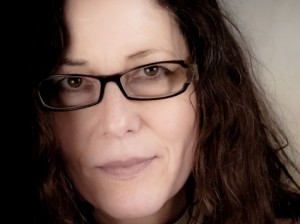
    Photo at the top: head shot of Janet Steadman (Photo by Michael Stadler)

    __________________

    CLICK HERE to read more WLM stories and blogsHave a great story idea? Let us know at info@whidbeylifemagazine.org.

    WLM stories and blogs are copyrighted and all rights are reserved. Linking is permitted. To request permission to use or reprint content from this site, email info@whidbeylifemagazine.org.

  • Castle on Whidbey ||  A Riddle by Cameron Castle

    Castle on Whidbey || A Riddle by Cameron Castle

    BY CAMERON CASTLE
    Whidbey Life Magazine Contributor
    May 18, 2016

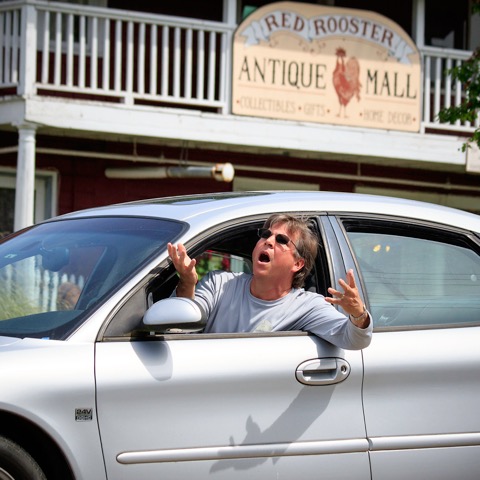
    What happens at the four-way-stop in Freeland, Washington, when a Prius with a “Perform Random Acts of Kindness” bumper sticker, a 1984 Volvo station wagon and two random cars from Maple Ridge Retirement Home all arrive at the same time?

    Cam Stopsign Story_0025
    You go, no, you go. Life on the island. (Photo by David Welton)

    Answer? NOTHING. Nothing happens.

    The Prius driver, even if first on the scene, is saying, “No, you go.”

    The Volvo driver is bent over searching on the floor of his car for his “Credence Clearwater Revival Greatest Hits” cassette tape.

    And both of the Maple Ridge folks are trying to focus on anything farther away than the hood ornaments on the front of their large cars. (No offense)

    Nobody is going anywhere.

    And, if you are the second car in line, you ain’t goin’ nowhere neither.

    Cam Stopsign Story_0143
    Sometimes you’re not going anywhere. (Photo by David Welton)

    That is because we live on Whidbey Island. A place where honking one’s horn is not only unacceptable, but also not even considered. Unheard of. Actually, unheard. I have never heard a car horn since moving to this island seven years ago.

    My wife, Laura, and I grew up in Chicago. My best friend, Mase, used to drive around the city with one hand on the wheel and the other poised over the horn honker. He played that thing like a jazz keyboard player. His syncopated honking rhythm was a constant as he drove. Turning left in front of oncoming traffic, spinning the wheel franticly with only his left hand, he would be beeping manically with his right.

    I asked him once why he did that. I asked, “With the regularity that you honk that horn, does it really make any difference?” He looked at me with an incredulous stare and replied, “Absolutely it makes a difference. It makes me feel better.”

    When I am at that stop in Freeland, staring at the people bustling in and out of the post office, I want to honk my horn. Desperately. But I don’t. I can’t conceive of the reaction I might get. And if I am the third car, Heaven forbid, I look into the rear view mirror of car number two, and wonder, “Local?” There we sit.

    There are times when I want to scream and wave my arms like someone who has just been pushed off a cliff. But I refrain. I refrain because the chances the driver in front of me will be, Sunday, sitting next to me at church, or, in 15 minutes, be in front of me at the grocery store line, or actually be my neighbor, is about 75%.

    Asking for patience from above. (Photo by David Welton)
    Asking for patience from above. (Photo by David Welton)

    I was a territory salesman around Seattle for ten years. I honed road rage to a fine craft.

    I was also a recipient of road rage on many occasions. One time I somehow upset a city bus driver as we both tried to merge into the same lane on the freeway. Suddenly, something smashed onto my windshield. It took me a moment to realize what happened. The driver had slid open his little side window and heaved his McDonald’s chocolate milk shake onto my car. I let him pull ahead since my vision was a tad impaired. I was able to make out a phone number on the back of the bus and called it with my cell phone. A lady answered right away, and I explained what happened.

    She said, “Not Again?”

    “Not again?” That was her response. Then she hung up.

    So, as I sit there in Freeland, at that four-way-stop, time and again, seething at the fact that so many people on this glorious island lack the math skills of being able to count to THREE, I fume.

    Before moving here, I never hesitated to scream at any unacceptable vehicular action by some anonymous driver. My worst example, in a huge case of poor judgment, was the time in Bellingham, when I was a senior in college. I was backing out of an angle parking space, downtown, when a 1968 Volvo station wagon barreled down the street and nearly hit me. I screamed at the driver. I made a gesture and yelled a foul obscenity. Then my eyes cleared enough to make out the driver. My philosophy professor. The one who was yet to grade my term paper that I had very recently deposited on his desk. Whoops.

    Okay, so as I have managed to make the kind and generous nature of folks on Whidbey Island a negative, and add the fact that the parking lot at Payless grocery store is the four-way-stop in spades, there is something that doesn’t happen here, and it is wonderful.

    Nobody abandons their shopping carts in the empty space beside their car. An action that would result in blocking an empty space in a show of laziness that has, in the past, blown my mind. I love that I have almost never seen, here on Whidbey Island, an empty shopping cart listing idly, taking up a space a car could happily occupy. (Tourist season excluded)

    I used to live in Mill Creek. At the grocery stores in that town there are times when half the spaces are filled with shopping carts. It’s almost like, “Hey, Buddy, move your damn car, I need to leave my cart there!”

    Once I was behind a lady at the check-out counter. She had a baby about the same age as mine, and a similar collection of supplies. I made it out to my car, put the groceries in, wheeled baby and cart to the cart repository, and carried said cutie back to my car. As I was backing out, I noticed that the lady that had been in front of me had left her cart blocking the space to her right.

    That bothered me. It bothered me because her car was one space away from where I had just walked my cart. I pulled my car out of the space and stopped directly behind her car. When she couldn’t back out, she leaned out the window of her giant, black, Cadillac Escalade, and shouted, “Hey.”

    I got out of my car and said, “Oh, I was just going to help you put your cart back. No problem.” I retrieved her cart, wheeled it around her car, and nestled it into my old cart.

    Trying to compose her rising anger she said, “I would have done it, but I have a baby.”

    “I do, too!” I said with a gleeful tone.

    “I have a herniated disc.” she said in a tone of, “I win.”

    “I do too!!” I said, honestly thrilled that I got to share that news with yet another stranger.

    “Harrumph.” Through gritted teeth she hissed, “Can you move your car?” She was livid.

    “In just a sec.” I paced off the distance around her giant automobile, necessary to transport 20 pounds of extra human. Then I paced off the distance to the cart return. “Well lookie that. It is fewer steps to return the cart than to walk around your huge vehicle. Oh, well. Have a nice day.”

    The next time I am staring at the ceiling of my car, stationary, two car lengths from the obviously complicated traffic-controlling device that is a stop sign, I will take a deep breath. I will take that moment, a seemingly unending torment of a moment, and reflect on life on this island.

    You can read in the parking lot, but best not to read while driving. (Photo by David Welton)
    You can read in the parking lot, but best not to read while driving. (Photo by David Welton)

    One Saturday, in the early fall, I was staining my deck, and realized I was one gallon of stain short. I called the lumber yard down the street and asked if they were open.

    “Nope. Closed for inventory.”

    “Oh, no. I am one gallon short of stain for my deck, and I have a strong feeling this is the last sunny weekend for a very, very long time. One small gallon of cherry stain?”

    “Okay. Tell ya what. I’ll put a gallon of your stain out by the front door. You can just come by and grab it.”

    He did, and I did. Funny thing, though. He never asked who I was. No phone number, no name, just, “Come by and grab it.”

    I just loved that.

    Another time I called the pizza shop and asked if I could order two Reuben sandwiches.

    “We’re out of Reubens, sorry.”

    “Out of Reubens? What are you out of?”

    “We’re out of rye bread.”

    “Hey, I was planning on going to the store on my way. Could I bring you a couple of loaves of rye bread?”

    I gave him two loaves of bread, and he gave me two sandwiches. What a win-win. Except I think I got the better deal.

    By that time, the confusion at the stop signs is likely almost resolved.

    I will pause once more, and take inventory of all the aspects of living on this magnificent island. Then I will pose to myself the following riddle.

    What would be better than living on Whidbey Island?”

    Answer? Nothing.

    Disclaimer: there was no actual road rage or despair during the photo shoot for this column, all the good fun created some curiosity from onlookers in Freeland. (All photos by David Welton).

    Cameron Castle is an author and a stay-at-home dad. His recently published memoir is entitled, “My Mother Is Crazier than Your Mother.” He lives on Whidbey Island.

    __________________

    CLICK HERE to read more WLM stories and blogs. Have a great story idea? Let us know at info@whidbeylifemagazine.org.

    WLM stories and blogs are copyrighted and all rights are reserved. Linking is permitted. To request permission to use or reprint content from this site, email info@whidbeylifemagazine.org.
  • In Search of Truth and Beauty || The Ephemeral Dance of Spring

    In Search of Truth and Beauty || The Ephemeral Dance of Spring

    BY JONI TAKANIKOS
    May 11, 2016

    Spring is the perfect backdrop to practice seeing and experiencing change in every moment. It’s on the ground—we can practically watch the grass growing from hour to hour and, certainly, day to day.

    Lilac Skies (photo by Gina Simpson)
    Lilac Skies (photo by Gina Simpson)

    The plants are blooming voraciously and dying back with the same fierce leave-taking. We witness the delicate new shoot transforming to leaf to bud to bloom in the space of a few passing days.

    The sky provides the light for this grand and dramatic show of constant change. We have clouds forming and turning mountainous as they climb ever higher into the blue firmament, followed by a strong wind that sweeps it away in mere minutes.

    And then what? A hard rain drumming on the rooftop for a few brief minutes, followed by a silent stillness that flows into birdsong. The birds must study all winter for the release of their spring songs.

    The cosmos in an allium (photo by Gina Simpson)
    The cosmos in an allium (photo by Gina Simpson)

    This symphony of spring has a simple mantra—change, change, change. This is a change both constant and certain. We would be wise to carry this spring mantra into the long days of summer and the stillness of winter. Spring is the season within all seasons—practicing its dance of renewal through constant change. Pema Chödrön shares with us her words of wisdom, “You are the sky. Everything else—it’s just the weather.”

    This inherent changing rhythm brings me to the doorway of dance. I love dance in all its forms and it has been my lifesaving companion throughout my journey. In the last 20 years I have been fortunate to study with two very gifted teachers, Deborah Hay and Christine Tasseff, right here on Whidbey Island. Deborah Hay, who is based in Austin, Texas, teaches, choreographs and performs internationally. Deborah is also an author, brilliantly using words to translate her experiences from the fields she inhabits. I am currently rereading her book, “My Body, the Buddhist,” replenishing my cup in Deborah’s well of profound wisdom. Her latest book, “Using the Sky: a Dance” was published in 2015. I studied with Deborah the first couple of times here on Whidbey when she brought her Solo Commissioning Project to WICA for five consecutive summers beginning in 1998.

    Christine Tasseff, circa 1996. (Cover of “Island Independent” by Bill Ruth)
    Christine Tasseff, circa 1996. (Cover of “Island Independent” by Bill Ruth)

    Christine Tasseff, who has lived on Whidbey for 30 years, has also taught her popular classes and workshops here, as well as in Seattle, NYC and Nashville. Many of you may know Christine through the gardens she shapes with her landscaping team, Roots. I know her as a gardener of the moving body, stewarding all the many shapes that arise and fall on the dance floor.

    Christine, like Deborah, is a keen observer of the body, the space around it and its relationship to the other moving bodies in the field. She studied for 26 years with Gabrielle Roth, dancer, author and founder of the Five Rhythms practice and brings Gabrielle’s legacy to brilliant life every Sunday morning at Bayview Hall from 10 a.m. to noon. The class is by donation and is aptly named Prayerbody.

    Prayerbody in motion (photo by Joni Takanikos)
    Prayerbody in motion (photo by Joni Takanikos)

    Christine creates an environment in which a body may gently explore the rise and fall of its own individual rhythms and shapes. With her gentle guidance there is no wrong or right way—just the practiced attention to your own movements and your relationship to the movements of others. Christine describes one of the many aspects of her teaching by saying, “Dance is translated not only through our bodies, but also through our heart and soul as we weave community on the floor.” Through this process you may find yourself stepping through a transformational gate.

    In my 20 years of this practice with Christine, I—along with her many students—have had the opportunity to work with some incredible local and visiting musicians. The core group of musicians who currently are creating the soundscape for Prayerbody include Joseph Sanchez, Nick Toombs and Ashley Eriksson. Christine draws musicians who share her keen awareness of the palette held by dance and the music assumes the presence of another limb, shaping each dancer individually and collectively. This dynamic orchestration creates limitless opportunities to explore new rooms in the body.

    I often bring my journal to jot down thoughts during class. Here are some from Easter Sunday:

    Bred in the Bone
    Easter 2016

    Eat this bread
    It is my body
    So holy, so holy, so made
    for eating—with every sense
    held—withheld
    Cornucopia of Strange Beauty
    Drink this wine
    It is my blood
    sour and sweet, all the holy
    rivers of longing—forever
    tied to the tree, the rocks
    the sky—this holy body
    of trailing tears
    Eat and Drink from this well
    It does not belong
    to me—It belongs
    to the estuary moving
    towards the sea.

    Growth (photo by Joni Takanikos)
    Growth (photo by Joni Takanikos)

    So in the spirit of this moving and enchanting spring field, I encourage all of us to dance however we can: from our chairs, our beds, our lawns, roadsides or to simply be witness to the profoundly beautiful choreography of spring.

    For more information about Prayerbody and to contact Christine Tasseff, go to prayerbody.com. Dance opportunities abound on Whidbey Island. Check out classes and performance schedules at Whidbey Dance Theatre: widtonline.org.

    I highly recommend these two acclaimed documentaries. The 2011 film about the legendary choreographer Pina Bausch, “Pina,” and the 2013 film, “Afternoon of a Faun: Tanaquil LeClercq,” the life of the acclaimed ballerina.

    Joni Takanikos is a perennial student of the miraculous nature of the body and the fields it inhabits. She teaches yoga at Half Moon Yoga Studio in Langley.

    __________________

    CLICK HERE to read more WLM stories and blogsHave a great story idea? Let us know at info@whidbeylifemagazine.org.

    WLM stories and blogs are copyrighted and all rights are reserved. Linking is permitted. To request permission to use or reprint content from this site, email info@whidbeylifemagazine.org.


  • South Whidbey’s 2016 ‘Hearts and Hammers’ Helps Rehab 33 Homes

    South Whidbey’s 2016 ‘Hearts and Hammers’ Helps Rehab 33 Homes

    TEXT BY DAVID WELTON
    PHOTOS BY DAVID WELTON AND  HEARTS & HAMMERS PHOTOGRAPHERS
    Whidbey Life Magazine Contributor
    May 11, 2016

    Saturday, May 7, dawned bright and clear for the 23rd Annual Hearts and Hammers workday.

    Almost 400 volunteers congregated at South Whidbey High School for breakfast and last-minute instruction before dispersing to 33 homesites from Greenbank to Clinton. Needed repairs or modifications included new decks, safety rails, access ramps, windows, roofs and yard cleanup.

    Hearts and Hammers was founded by Lynn Willeford in 1994. The Hearts and Hammers model has since spread to central Whidbey and to communities across the country. This year Willeford hosted visitors interested in introducing Hearts and Hammers to the San Juan Islands, taking them to eight worksites.

    Services and materials are donated or provided at cost. Red Cross representatives installed fire alarms and woodchuckers split aged treefall and then delivered firewood to many other homeowners not on the jobsite list. Curt Gordon of Island Asphalt & Sitework and his crew hauled tons of yard waste and discarded appliances to Island Disposal. Most importantly, but often overlooked and not talked about, were porta-potties provided by Gabelein Brothers Septic.  At the end of the day crews returned for a dinner prepared by local chefs and other volunteers with culinary skills, sharing their experiences and celebrating with music from the Open Circle Community Chorus.

    It took a team of photographers to document all of these widespread activities. David Welton, his intern Emily Alexander and Marsha Morgan from Whidbey Life Magazine participated. Commercial photographers Jim Carroll and Kim Tinuviel have generously donated their images to Hearts and Hammers for promotional purposes. Hearts and Hammers board member Dyanne Sheldon photographed the northern most site, where she was a co-captain.

    Below are a few selected photographs. Others will soon be posted at heartsandhammers.com.
    H+H 2016_0062_Welton

    Christine Epstein, “The Queen Bee” (as indicated on her hat), cheerfully greets and instructs the legion of attentive volunteers during breakfast at South Whidbey High School.  (Photo by David Welton)
    _MG_8499_Carroll

    Measure twice before cutting with the circular saw.  (Photo by Jim Carroll, jshuimages.com)

    _MG_8500_Carroll
    A cat anticipates a new deck to bask in the sun with a happy homeowner.  (Photo by Jim Carroll, jshuimages.com)

    _MG_8616_Carroll
    Sebo’s Do-It Center, Hanson’s Building Supply and Ace Hardware in Freeland were among the the many building material suppliers.  (Photo by Jim Carroll, jshuimages.com)

    _MG_8501_ Carroll
    A scaffold is prepared to access a log cabin.  (Photo by Jim Carroll, jshuimages.com)

    Faye with weeds_Morgan

    Faye Castle pulls weeds with a smile.  (Photo by Marsha Morgan)

    untitled (210 of 226)_Morgan
    Installing new exterior siding.  (Photo by Marsha Morgan)

    untitled (222 of 226)_Morgan
    A lot of pine needles were cleared from the roof of a house in the forest.  (Photo by Marsha Morgan)

    0506_0515_Alexander
    The best time to work on a roof is at first light.  (Photo by Emily Alexander)

    0507_0213_Alexander

    Some homeowners participated in the construction project. Edith provides nutritional support.  (Photo by Emily Alexander)

    0507_0287_Alexander
    An “Amazing Angel” upgrades the floor and plumbing in a log cabin laundry room.  (Photo by Emily Alexander)

    H&H_TINUVIEL160508-9550

    Happy homeowners thank the Hearts and Hammers crew.  (Photo by Kim Tinuviel, kimtinuviel.com)

    H&H_TINUVIEL160508-9561

    People with specific experience and skills offer their time, as do people who offer what they can do with their hearts and hands. (Photo by Kim Tinuviel, kimtinuviel.com)
    H+H 2016_0677_Welton

    Nora Anderson plans to thank jobsite captain Clayton Granby and crew with a party for “giving her life back” after clearing her half-acre yard of aggressive blackberries and repairing her roof.  (Photo by David Welton)

    H+H 2016_0291_Welton
    Sunscreen, a floppy hat and a shady place to help are all this volunteer needs to be happy.  (Photo by David Welton)

    IMG_4911_Sheldon

    “We had an amazing crew and a stupendous homeowner, Sheri Faucher,” said co-captain, Dyanne Sheldon. Three wheelchair ramps were updated and/or replaced and a new deck added, from which Faucher can look out over her new raised garden beds protected from grazing deer. “She’s SO happy!!” Sheldon added.  (Photo by Dyanne Sheldon)

    _MG_8637_Carroll
    All of the Kitchen Crew greeted workers with a smile. (Photo by Jim Carroll, jshuimages.com)

    _MG_8643_Carroll
    The Kitchen Crew whistled while they worked two shifts. They were led by Des Rock and Barton Cole.  (Photo by Jim Carroll, jshuimages.com)

    H+H 2016_0924_Welton

    Peggy Taylor conducts the Open Circle Community Chorus to welcomes dinner guests with songs of peace, beauty and social justice.  (Photo by David Welton)

    H+H 2016_0908_Welton

    Singers entertain the crew at the end of the day. (Photo by David Welton)

    David Welton is a retired physician and staff photographer for Whidbey Life magazine.

    __________________________

    CLICK HERE to read more WLM stories and blogs. Have a great story idea? Let us know at info@whidbeylifemagazine.org.

    WLM stories and blogs are copyrighted and all rights are reserved. Linking is permitted. To request permission to use or reprint content from this site, email info@whidbeylifemagazine.org.


  • Magical Meerkerk

    Magical Meerkerk

    BY LINDA RUSSELL
    Whidbey Life Magazine Contributor
    May 4, 2016

    “I saw a fairy in the popcorn tree,” my granddaughter told me excitedly as she pointed to a fluffy white and pink rhododendron tree. A bit later, she saw a gnome duck under an old tree stump.

    “I see them!” I replied. And, I could! Meerkerk Gardens, magic spoken here!

    Gnome Home (photo by Linda Russell)
    Gnome Home (photo by Linda Russell)

    Walking through the Gardens with a child is an opportunity to step back, take a breath and appreciate nature from a different perspective. Children grow up with fairy tales, forests and hazy woodland paths waiting to be explored. As adults, we often forget this world. Meerkerk Gardens invites us to explore this magical world again through a child’s eyes. The paths are green and lovely, the flowers are dazzling and tree stumps invite exploration. With a little imagination, you really can see fairies flitting among giant rhododendron blossoms or spy an occasional gnome scurrying into his home beneath an old, moss-covered tree stump. Few things are as magical as a woodland forest – especially one punctuated with enormous orange, pink, red and purple blossoms. Invite a child to visit Meerkerk Gardens with you, and you will rediscover magic.

    My granddaughter's pop corn tree (photo by Linda Russell)
    My granddaughter’s pop corn tree (photo by Linda Russell)

    Any visit to the garden is magical for adults and children. In recognition of that, for instance, every spring legions of children dressed in fairy wings descend on Meerkerk for Fairy Making Magic and storytelling. This year’s event, held on April 23, was no exception. “It’s an exciting time,” Kathryn Hurtley, Garden Executive Director, says. “I love watching children create fairy wings from a magnolia leaf skeleton! Making fairies is just one of the ways we hope to pass our love for nature on to the next generation.” It must be working because every spring more aspiring fairy makers come to the Garden.

    If you missed the Fairy Making Magic, you haven’t lost out. For example, Meerkerk’s annual Mother’s Day Concert on May 8th, from noon to 4:00 p.m., offers another opportunity to introduce your children to the magic of Meerkerk. Harper Tasche, who reminds me of a leprechaun or a Celtic sprite, will delight visitors again with his harp and dulcimer music. Garden volunteers will sell pies from Whidbey Pies, and best of all, children under 16 are free. So bring a picnic, a blanket and your imagination and prepare to experience the magic of  Meerkerk Gardens!

    Woodland path (photo by Linda Russell)
    Woodland path (photo by Linda Russell)

    Linda Russell is a transplanted Texan who has lived happily on Whidbey Island for 15 years. In a previous life, she taught English, Creative Writing and Theater Arts. She has published articles in professional journals and has won first and second places in Chris Spencer’s Short Story Smash contest.

    _________________________

    CLICK HERE to read more WLM stories and blogsHave a great story idea? Let us know at info@whidbeylifemagazine.org.

    WLM stories and blogs are copyrighted and all rights are reserved. Linking is permitted. To request permission to use or reprint content from this site, email info@whidbeylifemagazine.org.

  • What’s Happening  ||  Thursday, May 12 through Sunday, May 15

    What’s Happening || Thursday, May 12 through Sunday, May 15

    BY KATY SHANER
    Whidbey Life Magazine Contributor
    May 11, 2016

    Welcome to the weekend on Whidbey. “What’s Happening” includes many weekend events starting Thursday and running through Sunday. “What’s Happening” is a collaborative information guide project between the Visitor Information Kiosk and Whidbey Life Magazine.

    THURSDAY, MAY 12


    “PROOF” BY DAVID AUBURN
    7 p.m. at the Whidbey Children’s Theater. Thursday, May 12 is opening night and the show runs through Sunday, May 22. Catherine has spent years caring for her brilliant but unstable father, Robert. When he dies she has more than grief to deal with: there’s her estranged sister, Claire, and Hal, a former student of her father who hopes to find valuable work in the 103 notebooks that Robert left behind. And a further problem: how much of her father’s madness (or genius) will Catherine inherit? This Pulitzer Prize-winning play opened at the Donmar Warehouse in 2001.

    Whidbey Childrens Theater, 723 Camano Ave., Langley • Recommended Ages 13+ for language and mature situations • Adults: $16 / Youth: $8 • Purchase Tickets Online: http://wctmagic.org/calendar/2016/5/12/proof-by-david-auburn

    wica20thHAPPY BIRTHDAY, WICA!  6:30 – 8:30 p.m. Whidbey Island Center for the Arts community open house. In celebration of WICA’s 20th anniversary, the entire community is invited to take a stroll down memory lane during an open house this Thursday evening. Refreshments, light hors d’oeuvres, libations, and birthday cake will be served as guests view pictures, posters, costumes and props, and other memorabilia representing 20 years of our shared experiences in the arts. The Open House is free and open to the public. Whidbey Island Center of the Arts, 565 Camano Ave., Langley www.wicaonline.org

    THE NATURAL AND CULTURAL WONDERS OF DECEPTION PASS 7 p.m. Located at the Coupeville Recreation Hall. Presented by Park Manager Jack Hartt. Since the turn of the last century Deception Pass State Park has been transformed from rugged federal land donated to the State to one of the most-visited state parks in Washington.  From sand dunes to old growth forests – freshwater lakes to beaches on the Salish Sea –  an abundance of wildlife including 174 species of birds. Explore some of the natural and cultural history of the park – how it came to be and the challenges we face as we head into the future. Preceding the 7:30 program, scholarship winners will be introduced and annual officer elections will be held.

    The public is welcome to attend this free event • Coupeville Recreation Hall, 901 NW Alexander St., Coupeville • Whidbey Audubon: www.whidbeyaudubon.org

    FOOD FOR THOUGHT: BOOK DISCUSSION 6:30 p.m. Located at the Langley Library. It is satisfying to see someone get their just desserts. Many novels explore this theme. Join the delicious discussion to talk about your favorite novels where characters get their due. “Let Them Eat Cake” by Gesine Bullock-Prado is our featured cookbook. Just desserts will be served! Langley Library, 104 Second St., Langley • 360-221-4383

    beachlitterBEACH LITTER PICKUP VOLUNTEER OPPORTUNITY Ft. Casey State Park • 1:30 – 3:30 p.m. Open to all adults 18 and older (sorry, no minors). Please contact Stinger to learn about opportunities available to youth. Contact Stinger prior to attending a beach cleanup to let him know to expect you, preferably at least two days before. This will insure that, if there is an emergency change or cancellation in the schedule, he can then notify you. Bags, gloves, and other equipment will be provided. Wear appropriate clothing for the weather and footwear for walking over sand, cobble, and driftwood. Schedule can change due to adverse weather conditions. A one-day volunteer park access pass is available for volunteers who do not have a Washington State Parks Discovery Pass. For a map or more information about any of these cleanup locations, contact: Stinger Anderson, Community Litter Cleanup Program Coordinator • stinger.anderson@wsu.edu • 360-240-5558 (office) • 360-941-3171 (cell)

    BILLY THE CELLOIST 11 a.m. Live and strung at UBCC. A good time is likely to be had by all, but especially Billy. Useless Bay Coffee Company, 121 Second Street, Langley • 360-221-4515 • www.uselessbaycoffee.com/

    FRIDAY, MAY 13

    THE RURAL CHARACTERS VARIETY SHOW 7:30 p.m. Located at WICA. Enjoy The Rural Characters as they host a variety show featuring many of the artists who have graced the stage over two decades, including: Sing!Chronicity (the very first performers at WICA!), Whidbey Island Dance Theatre, Saratoga Chamber Players, The Heggeness Valley Boys, WOW! Stories, Troy Chapman, Judith Adams, Theatre skits, Drew Christie Animation.  All Seats $22 • Tickets by phone: 360-221-8268 • Online: tickets@wicaonline.org • Whidbey Island Center of the Arts 565, Camano Ave., Langley • www.wicaonline.org

    STEWARDSHIP VOLUNTEERS NEEDED 9 a.m. – 12 p.m. Join us for Hammons Preserve Blackberry Bonanza with the Whidbey Camano Land Trust. Would you like to help steward the land and restore habitat? We have volunteer opportunities coming up on our nature preserves, and we need your help. The Land Trust provides tools, snacks, and drinks. All you need to bring is a pair of work gloves and be ready for outdoor fun with fellow volunteers. To sign up online: www.wclt.org/events • By phone contact Kyle at: 360-222-3310 • Email: kyle@wclt.org

    PETEPETE 7 – 9 p.m. Located at Bayview Hall. Admission is free. Donations for the band are highly encouraged. There will be a charge for beer, wine, and sodas. Brought to you by Goosefoot and Bayview Hall. Bayview Hall, 5642 Bayview Road, Langley • For questions contact: 360-321-4145 • info@goosefoot.org

    OTT & MURPHY WINES – RUSTY FENDER AND THE MELODY WRANGLERS 7 p.m. Alt-Country and Americana.“There will be dancin’ in the street”. Contributions for the music gratefully accepted. Reservations are recommended. Ott & Murphy Winery Tasting Room, 204 First St., Langley • 360-221-7131

    THE LANGLEY 2ND STREET MARKET 2 – 6 p.m. Every Friday through September 30. Our European-style market includes several local produce and flower farmers local soap makers, artists, jewelers, baked goods, food by Dorcas of Lesedi Farm, and numerous local musicians. For more information or to inquire about being a vendor, contact Ben at: secondstreetmarket@whidbey.com

    “PROOF” BY DAVID AUBURN – WHIDBEY CHILDREN’S THEATER 7 p.m. (See Thursday, May 12 for more information.)

    openmicOPEN MIC NIGHT 6 – 8:30 p.m. Blooms Winery Tasting Room at the Bayview Corner. Open Mic Night is the second and fourth Friday of each month. The Open Mics Night, hosted by Ron Eaton, provide an opportunity in a casual and intimate setting for musicians to perform live and play a song or two and perhaps join in with fellow musicians on stage, or for a poet to recite some of their verse. Anyone interested in being included in the evening’s talent showcase can call the tasting room at 360-321-0515 for more details. Drop-ins are accepted as time allows.

    Special Friday night food menu includes Blooms regular menu, our Friday Flatbread special and a few additional choices with wonderful award-winning Blooms wines by the glass or bottle, as well as craft brews by Foggy Noggin and Boundary Bay, and non-alcoholic choices! Blooms Winery Taste for Wine & Art, 5603 Bayview Road, Langley. www.bloomswinery.comwww.tasteforwinewhidbey.com • 360-321-0515

    SATURDAY, MAY 14

    springsavorSAVOR SPRING FOOD AND WINE TOUR 11 a.m. – 5 p.m. Four wineries and a distillery on Whidbey Island open their tasting rooms to present the annual Savor Spring Food, Wine and Spirits Tour. This tour includes not only tastes of wine and spirits – many of them new releases for spring – but each venue will also feature a food vendor that will have samples of locally made and grown foods, creating a true taste of Whidbey Island. Participating wineries and distillery are:

    Comforts of Whidbey/Gordons – 4361 Witter Road, Langley
    Spoiled Dog Winery/ Roaming Radish 5881 Maxwelton Road, Clinton
    Whidbey Island Distillery/ Prima Bistro 3466 Craw Road, Langley
    Blooms Winery’s Tasting Room/ Glass Alley Café / Sundance Bakery 5603 Bayview Road, Langley
    Holmes Harbor Cellars/ Mile Post 19 4591 Honeymoon Bay Road, Freeland

    The tickets for the tour are $20 in advance, available at the participating tasting rooms or online at: www.brownpapertickets.com/event/2498855 • Tickets are also available at the door for $25. Although the tour hours are 11 a.m. to 5 p.m., some winery tasting rooms will be open later. For more information on the tour, visit the Whidbey Island Vintners Association website at: www.whidbeyislandvintners.org, or call Blooms Winery tasting room at: 360-321-0515.

    PENN COVE WATER FESTIVAL 11 a.m. – 5 p.m. Located at the Historic Front Street in Coupeville. Celebrating our Native American heritage this one-day freefamily festival features tribal canoe races, Native American arts and crafts, demonstrations, story-telling, music and dance performances, educational displays, food, and youth activities.. For full info: www.penncovewaterfestival.com

    earthsciEARTH SCIENCES FOR KIDS AT EBEY’S LANDING 10 a.m. – 12 p.m. Whidbey Camano Land Trust. The dramatic beauty of our Island’s beaches and bluffs is something to enjoy and cherish. But have you ever wondered what made them? The rocks, sand, and living organisms are full of clues. Join the Whidbey Camano Land to explore the effects of wind, rain, waves and sun on our island shores. This is a family-friendly tour aimed at elementary and middle school kids aged 10-13. Each child must be accompanied by a parent or guardian. The event is free, but space is limited! To sign up visit our website: www.wclt.org/events • By phone contact Kyle at: 360-222-3310 • By email: kyle@wclt.org

    SPRING SHRED EVENT – SOROPTIMIST INTERNATIONAL OF SOUTH WHIDBEY ISLAND AND COASTAL COMMUNITY BANK 10 a.m. – 2 p.m. Time to clean out your file cabinets, garages, and storage rooms. Securely dispose of your personal and financial records. Minimum donation $5.00: bankers box or grocery bag. $10.00: oversized box or garbage bag. All proceeds benefit Soroptimist International of South Whidbey Island’s Grants and Scholarships Program. Licensed and Bonded SECURE Shredding Company. Contact: Tara Long www.coastalbank.com

    BUILDING HOPE TOGETHER – SOUTH WHIDBEY HOMELESS COALITION 4 – 7 p.m. St. Augustine’s Church in-the-Woods. Enjoy an evening of fun music, good food, and a celebration of the work of the South Whidbey Homeless Coalition, whose mission is to help make homelessness a brief and rare experience on South Whidbey. BBQ chicken dinner, no-host bar, live music and silent auction. Tickets are $25. To purchase tickets or make a donation call: Victoria Ritts at 206-992-4054, Linda Rush at 509-859-3070 • St. Augustine’s Church in-the-Woods, 5217 Honeymoon Bay Road, Freeland

    THE RURAL CHARACTERS VARIETY SHOW 7:30 p.m. WICA (See Friday, May 13 for additional information.)

    “PROOF” BY DAVID AUBURN – WHIDBEY CHILDREN’S THEATER 7 p.m. (See Thursday, May 12 for more information.)

    SUNDAY, MAY 15

    feather“MOSTLY FEATHERS” – WILDLIFE PHOTOGRAPHY OF GOVINDA ROSLING 11 a.m. – 12 p.m. Artist’s Reception at the UUCWI Gallery. Govinda photographs mostly birds, working with a variety of lenses that enable zoomed shots, some through blinds, some by sitting and letting the birds come to her. She focuses on aspects of their life in each photograph – their quirkiness, intensity of foraging, their place in the world. “Mostly Feathers” will continue on display throughout the months of May and June. UUCWI, 20103 State Route 525 (approximately two miles north of Freeland on the west side of the highway) • www.uucwi.org/

    THE HOT CLUB OF TROY 12 – 2 p.m. Sunday, May 15. Playing lively swing music with a romantic French flair. Useless Bay Coffee Company 121 Second St., Langley (360) 221-4515

    hedgebrook19TH ANNUAL HEDGEBROOK WOMEN PLAYWRIGHTS FESTIVAL 4 p.m. WICA. $5 suggested ticket donation. New works by Kristiana Rae Colón, Virginia Grise, Dawn Renee Jones, Madhuri Shekar and Regina Taylor. Hedgebrook partners with regional theatres across the country with strong track records of commissioning and producing new works by women playwrights. This year’s festival partners include Denver Center Theatre, Goodman Theatre, Oregon Shakespeare Festival, Seattle Repertory Theatre and Southern Rep Theatre. For more information and to purchase tickets, please visit: www.hedgebrook.org/hwpf-dl Whidbey Island Center for the Arts 565 Camano Avenue, Langley.

    “FORAGING FOR EDIBLE FOOD” WITH KELSI FRANZEN – SLOW FOOD WHIDBEY ISLAND’S 1 –  4 p.m. May 15. Pacific Rim Institute. This unique three-part event, learn what wild plants can be combined as delicious and unique ingredients into your daily meals. Educator, farmer, and fifth generation Coupeville native Kelsi Franzen will engage all of your senses first on a hike, to learn how to identify some common edibles in several Pacific Northwest ecosystems, followed by a presentation on how to create meals inspired by and infused with Whidbey Island’s wild and cultivated foods.

    Kelsi Franzen holds a Master’s in Education with an emphasis in Environmental Education and Non-Profit Administration from Western Washington University, in partnership with North Cascades Institute, as well as a Bachelor of Arts in Environmental Education from Western Washington University.

    Program cost will be $15 for a one-hour foraging tour on the Pacific Rim Institute grounds followed by a one-hour presentation in the auditorium for $10. There will be a one hour break between the two events to allow people to tour the Pacific Rim hoop houses and learn about their exciting plans for the future of PRI or just linger, chat and snack in the Auditorium building.  Pacific Rim Institute, 180 Parker Road, Coupeville. Contact Kathy at kathy46@whidbey.com to sign up.

    Important:  Please note:  The one-hour foraging tour at PRI is already full but we can put you on the waiting list.

    SAVOR SPRING FOOD AND WINE TOUR 11 a.m. – 5 p.m. (See Friday, May 14 for more information).

    TILTH MARKET 11 a.m. – 2 p.m. South Whidbey Tilth’s Farmers’ Market’s features local farm produce and plants, concessions and crafts. Island There’s lots of parking, clean restrooms, free WiFi and children’s play areas. SNAP cards are welcome. South Whidbey Tilth Farmers’ Market, 2812 Thompson Road, Langley • www.southwhidbeytilth.org/market.html

    “PROOF” BY DAVID AUBURN – WHIDBEY CHILDREN’S THEATER 2 p.m. (See Thursday, May 12 for more information.)

    OTT & MURPHY WINES – TROY CHAPMAN AND GARY WAY 3 – 5 p.m Conversations in jazz with guitar and piano. An afternoon of beautiful music, wine and view. No cover. Ott & Murphy Winery Tasting Room, 204 First Street, Langley • 360-221-7131.

    SUNDAY MUSIC SERIES – RUSSELL CLEPPER 3 – 5 p.m. Enjoy Sunday afternoons all year long with live music at Blooms Winery Tasting Room at Bayview Corner Store. Russell Clepper will play some of his favorite original tunes. Russell has a wonderful style that captures your heart and moves your soul. No cover and no minimums but we ask you to please tip appropriately. Fabulous wines, good food and great music! Blooms Winery Taste for Wine & Art, 5603 Bayview Road, Langley • www.bloomswinery.comwww.tasteforwinewhidbey.com • 360-321-0515

    ________________

    The Visitor Information Kiosk is funded by the Greater Freeland Area and Langley Chambers of Commerce and What’s Happening is prepared by Katy Shaner, Manager and Volunteer Coordinator. Contact Katy at ktshaner@whidbey.com.

    Got an event you’d like to see on What’s Happening? Make sure to put it on the Whidbey Life Magazine Calendar at https://www.whidbeylifemagazine.org/submit-your-event/.

    Since 2008, the Visitor Kiosk has welcomed over 22,000 visitors to Whidbey. The island offers a wealth of activities, places to stay, eateries, shopping and an abundance of the natural environment to enjoy and appreciate. Welcome and enjoy your visit. Do come back.

    Event contributions from Katy Shaner, Whidbey Life Magazine, www.whidbeylifemagazine.org  and drewslist drewslist@whidbey.com.

    ________________________

    The Visitor Information Kiosk advertisers help us welcome you to Whidbey Island. Please visit them while you visit our fair isle.

    WHIDBEY LIFE MAGAZINE

    WHIDBEY TELECOM WiFIRE COFFEE BAR

    BLOOMS WINERY

    WHIDBEY ISLAND VINTNERS

    HARBOR INN

    WHIDBEY ISLAND WINERY

    WHIDBEY ISLAND BANK

    WHIDBEY PHOTO ADVENTURES

    ________________________


    CLICK HERE
     to read more WLM stories and blogs. Have a great story idea? Let us know at info@whidbeylifemagazine.org.

    WLM stories and blogs are copyrighted and all rights are reserved. Linking is permitted. To request permission to use or reprint content from this site, email info@whidbeylifemagazine.org.

  • Lumens || When the Heart is Lifted: Valerie Easton

    Lumens || When the Heart is Lifted: Valerie Easton

    BY SHARON BETCHER
    Whidbey Life Magazine Contributor
    April 27, 2016

    While sociologists of religion speak of the Pacific Northwest as the epitome of “the none zone” (where the majority of persons register no official religious preference on a census), most residents know Whidbey Island to home contemplatives, mystics, naturalists and activists of many religio-spiritual strains with a paradisal dream of living in intimate reciprocity with all beings. Lumens lifts up the voices and wisdom of those who live among us—the creatives whose very creativity, their luminescence, opens out from the taproot of the spiritual path and/or religious faith.

    Val Easton is most widely known as “The Natural Gardener,” her weekly column in The Pacific Northwest magazine included in the Sunday edition of The Seattle Times. On South Whidbey, she is also a beloved yoga teacher and the owner of Langley’s Half-Moon yoga studio. Easton has been a student of the soil and of the soul for almost the same amount of time. While Easton started studying yoga in her twenties, she began teaching only five years ago. After leaving her position as horticultural librarian at the University of Washington Center for Urban Horticulture, she moved to Langley in 2005 and opened her studio in the Village off Second Street in 2010.

    On a Friday morning in late March, Easton settles her 15 students on their yoga mats, inviting them to observe how, like the vine maples swelling with bud, our human bodies catch the rush of rising sap. “We get heady and then exhausted in springtime,” she observes. The practice today will consequently be, she informs them, one of twists—to wring out and oxygenate the organs—and balance poses, specifically addressing the body’s need to hold its ground amidst the heady winds of spring. Ayurvedic sensibilities summoned, Easton—with settled calm and an inviting chuckle—leads her students through imitative animal poses (downward dog, lizard, dead bug) while encouraging them to “ground your feet,” “float your chin,” and always and again, “lift your heart.”

    Easton, Yoga Teacher and Owner of Half-Moon Yoga, Langley (photo by Susan Scott)
    Easton, Yoga Teacher and Owner of Half-Moon Yoga, Langley (photo by Susan Scott)

    Of Vine and Breath

    Easton’s two practices of embodied wisdom, yoga and gardening, are as much philosophically informed as they are visceral and as practical as they are spiritual. “Yoga has kept me from getting injured doing the heavy lifting of gardening,” Easton offers. But in the next breath she tears slightly as she speaks of how the “heart centered alignment” of Anusara yoga, in which she has found her spiritual home, countered the cold, alcoholic and anti-religious dynamics of her childhood in Seattle. In her early career years as a librarian, Easton—having been raised by a mom, who had become an avowed atheist in the very Catholic climate of Yakima, and a dad, who abandoned Christian Science when he became an adult—recognized there was a whole cultural discourse she didn’t know, that of the religions. She studied to fill up the hole, finding herself “drawn to the physicality of Hinduism and Buddhism,” where philosophy meets up with the body.

    Yoga, see-sawing between effort and ease, between the creation of a pose and its intentional dissolution, is, Easton asserts, about learning to channel vital life forces through the body.  It releases psychic creativity by unlocking the fascia of the body, the place where we store bad habits, tension, grudges and old hurts. By planting the feet, then the hips, and by breathing through the midline of the body, one returns to the primary vibration or “heartbeat” of the universe. In that way, yoga helps people open towards “the practice of experiencing their own aliveness, of learning what they can and cannot control” in the physics of daily life. Gardens can likewise be seen as a practice of opening out the creative physics of plants—learning how plants conspire together, creating sanctuary there not only for humans, but for bees and birds. (Easton gardened organically before magazines even allowed her to use the word “organic.”)

    Planting the Feet (photo by Susan Scott)
    Planting the Feet (photo by Susan Scott)

    Heart Yoga

    Anusara yoga, a branch of Hatha yoga, is about alignment and flow, yet is practiced by holding bodies with a loving gaze. In this tradition, one looks for the beauty and appreciates the perfection of the other. Some traditions of yoga, like Iyengar, focus intensely on technical precision, and sometimes one’s life may call for that, Easton noted. As Easton’s first teacher, Maurice Svoboda, told her, “Freedom comes through discipline.”  If that initially rang true for this child raised in a chaotic household, Easton, after her twenties, came to a point of disenchantment with the strictness of the Iyengar method.

    In the yoga studio, Easton’s voice—a combination of calm directness and joy—coaxes bodies towards their best. “Expand and soften,” she invites, her voice carrying a lilt that these bodies now obviously trust. “Relax your jaw, drop your shoulders,” she continues, and the flesh of bodies visibly unlocks. “Consider how if you lift your chin, your heart opens and receives.”

    Walking among the bodies now moving into a pose called “the cat cow,” Easton—with the gentlest touch of the fingertips—invites a muscle here or the locked fascia there to release. “Perfect, yes,” she comments. “Isn’t that nice?” she sings to another body. “We’re admiring your spine,” she adds, instructing others by inviting their gaze. “Bend more deeply. Yes, exactly. Beautiful.”  Over and again, the class hears Easton praise their beauty. And yet, Easton’s studio instruction is also an invitation to “do what is a challenge.”  Consequently, bodies are coaxed into the balance pose of “baby dancer”—posed like the heavy headed blooms of angelica tested by the winds.

    Baby Dancer (photo by Susan Scott)
    Baby Dancer (photo by Susan Scott)

    Easton’s practice tends the singularity of each body—its historied flesh, its particular limits. Many days, she observes, it’s simply enough to show up for class, to move and breathe. “The longer I teach,” she reckons, “the less I presume to know what is good for each and every body.”  Each body has its own limitations, and those are different each day, each practice. Treating those limits with respect (sometimes flushing those muscular knots with breath, sometimes honoring “the good enough”) is also part of the physics of yoga. Easton is not seeking perfection. Or rather, “perfection” in this practice of yoga is viewed through an entirely different lens than symmetry and athletic precision. Perfection is about learning to live with and through what presents itself.

    Intriguingly, her floral bouquets—which she admits are what whet her palate for gardening and what determines her choice of plants—sport a similar naturalistic beauty. These involve no floral tape, no wire. The challenge is “translating the field of the plant inside—not overcoming it,” she observes. Floral bouquets, Easton insists, are best conceived as appreciating the nature of nature—whether the essence of sweet pea or hydrangea, rather than bending them to our will. Beauty–sri in Sanskrit—is a word of applause that welcomes the truths of flesh and soil, the ephemeral nature of a bloom, while also gently inviting creative transformation or “opening,” as one works and reworks a bouquet, a garden, a body.

    Floral Bouquet for Museo Gallery (photo by Susan Scott)
    Floral Bouquet for Museo Gallery (photo by Susan Scott)

    The loving gaze of Anusara benefits the flesh of each student differently. “It keeps my anxiety at bay,” one student offers.  “It heals my body,” adds Kelly, who suffered vertigo and who, following surgery, has found this the only path of recovery. Dave mentions that he takes yoga for its dynamic counterpoint to the pounding of harder sports. Stella, observing that she, like Easton, reads the philosophy of yoga and practices in order to somatically ground her aspiration towards non-judgment.

    Sanctuary

    Half-Moon studio, like Easton’s backyard garden, is a sanctuary—a place of rest, a place with just enough of a privacy shield coupled with a loving gaze so that bodies relax. As students rest into their own weight and catch earth’s dynamic energies, the heart—that center of desire and conspiratorial joy, of compassion and empathy—can finally open.

    Opening the Heart (photo by Susan Scott)
    Opening the Heart (photo by Susan Scott)

    That the restorative poses—like savasana or “corpse pose”—are often the hardest for her students may say something about them, but just as much about our culture. In the corpse pose, which concludes every practice, one lies back on the floor, arms and legs slightly spread; one’s weight is invited to drop heavily into the floor.  You could call it rest, repose, stillness. But most of us trying to perfect the pose ask ironically and repeatedly, “What muscles are involved?  How do I do it?”

    This teacher with a gentle laugh replies, “You are not ‘doing’ anything.”  Attracted to perfecting technique, we know little about “dissolution,” about release, about opening the heart, that softening of our presence to the other. In the garden, we, determined to pull the last weed, often comparably know little about sitting and enjoying the sun in the garden. “A garden is successful,” Easton sagely observes, “when the gardener loves it, when the gardener takes pleasure in it, reposefully and in the heart.”

    If Easton were to write another book, it would be about “healing gardens”—gardens in which the focus on the organic principals she has employed throughout her years as a horticulturalist expands upon this aspect of sanctuary. Gardens can be a sanctuary for the bees lolling in the blooms. A sanctuary where bird song mixed with the joyful buzz of insects becomes as moving as Pachelbel’s Canon in D. A sanctuary filled with fragrance and profuse with the herbs one makes into green sauces. A sanctuary, like Half-Moon Studio, where we can finally allow ourselves the great reveal, the opening of the heart.

    Easton in her Langley Garden (photo by Susan Scott)
    Easton in her Langley Garden (photo by Susan Scott)

    Photo at the top: Val Easton (photo by Susan Scott)

    An academic theologian and philosopher by background, Sharon Betcher is now an independent scholar, writer and wannabe farmer living on south Whidbey. As a writer, she won the 2012 Short Story Smash and took first place in the memoir category of the Whidbey Island Writers Association’s 2012 contest. In March 2015, Betcher presented at the annual Women of Whidbey (WOW) Stories Conference.

    __________________

    CLICK HERE to read more WLM stories and blogsHave a great story idea? Let us know at info@whidbeylifemagazine.org.

    WLM stories and blogs are copyrighted and all rights are reserved. Linking is permitted. To request permission to use or reprint content from this site, email info@whidbeylifemagazine.org.
  • Orange Madness Descends Upon Oak Harbor

    Orange Madness Descends Upon Oak Harbor

    BY LESLIE IRISH EVANS
    Whidbey Life Magazine Contributor
    April 27, 2016

    Dust off your klompen (wooden clogs) and don your hul (bonnet)! It’s time for Oak Harbor’s Holland Happening. This annual event, organized by the Oak Harbor Chamber of Commerce, features a carnival, parades, entertainment, a street fair and more. The theme for 2016’s Holland Happening is Gemeenschap, which is the Dutch word for “community.” The activities take place April 28 through May 1 at locations throughout the historic city’s downtown area.

    This is the 47th year of the event, which celebrates the city’s Dutch heritage. In the 1890s, Oak Harbor saw an influx of Dutch immigrants who helped the town to grow and to thrive. The celebration itself is based on the Dutch holiday of Koningsdag or King’s Day, which celebrates the birthday of The Netherlands’ currently reigning monarch. The holiday was originally called Koninginnedag or Queen’s Day, until 2013 when The Netherlands welcomed Willem-Alexander, their first king since the national holiday began. Traditional activities include street markets, a parade and wearing orange, the national color of The Netherlands.

    The theme of this year’s Holland Happening is Gemeenschap, the Dutch word for “community.” (graphic provided by The Oak Harbor Chamber of Commerce)
    The theme of this year’s Holland Happening is Gemeenschap, the Dutch word for “community.” (graphic provided by The Oak Harbor Chamber of Commerce)

    Over 8,000 people, both local and visitors, are expected to attend the Holland Happening. “It’s our biggest and most popular event of the season,” said Sooz Konopik, Events Coordinator for the Oak Harbor Chamber of Commerce. “Oak Harbor has a very strong Dutch community that’s very proud of its heritage.” Konopik stresses the inclusiveness of the event. “We celebrate not only Dutch heritage but all of the community members. It’s a really great get together.”

    One of the event’s traditional highlights is the Grand Parade. “People dress in costumes,” said Konopik. “And we have street sweepers and town criers that start the parade. That’s a tradition in The Netherlands.” Parade entries are asked to display the Gemeenschap theme and a minimum of twelve tulips. This year, three trophies will be awarded for parade entries: Best in Theme, Best in Show and Best Kinderen’s (children’s). The parade is scheduled for 11 a.m. on Saturday, April 30 along Bayshore Drive.

     The Oak Harbor Holland Happening celebrates the city’s Dutch heritage. (Graphic provided by The Oak Harbor Chamber of Commerce)
    The Oak Harbor Holland Happening celebrates the city’s Dutch heritage. (Graphic provided by The Oak Harbor Chamber of Commerce)

    Other featured events for the Holland Happening include a traditional Dutch dinner, children’s arts & crafts and Dutch-themed photoboards for fun photo opportunities. “We also have our own main entertainment stage with a diverse group of musicians,” said Konopik. “From Gypsy jazz to bluegrass and everything in between.” Attendees needing advice on what to do next can look for Oak Harbor Chamber members, who will be wearing Dutch-blue t-shirts and will be available as resources during the event.

    Mark your calendar for Oak Harbor’s 47th annual Holland Happening, April 28 through May 1. For scheduled events and details visit the Oak Harbor Chamber of Commerce website at http://www.oakharborchamber.com.

    Leslie Irish Evans is a podcast host, Huffington Post blogger, and the author of Peeling Mom Off the Ceiling: Reclaiming Your Life From Your Kids. She lives in Langley, WA. Learn more about her at http://www.leslieirishevans.com.

    __________________

    CLICK HERE to read more WLM stories and blogs. Have a great story idea? Let us know at info@whidbeylifemagazine.org.

    WLM stories and blogs are copyrighted and all rights are reserved. Linking is permitted. To request permission to use or reprint content from this site, email info@whidbeylifemagazine.org.


  • 4-H Shines on Whidbey’s Chicken Coop Tour

    4-H Shines on Whidbey’s Chicken Coop Tour

    PHOTOS AND TEXT BY SUSAN S. SCOTT
    Whidbey Life Magazine Contributor
    April 27, 2016

    Rock’n Doodle 4-H Club sponsored its 7th annual Chicken Coop Tour on April 23, 2016, not only to show the diversity of styles in raising chickens, but to be sure everyone had a fun adventure together.

    Photo1

    The Clucky Show featuring local performer Matt Hoar entertained visitors at the Huckleberry Berry Hollow in Clinton.

    Photo2
    Two 4-H members with their chickens after the talent show.

    The tour also serves as a fund-raiser for the 4-H clubs, helping them take care of the barns they use at the Island County Fair each year.  There are about thirty different clubs on the island, each focusing on the interests of their members.  Most of the clubs focus on farming and raising animals, but a few are dedicated to teen leadership, crafts, photography, even robotics.

    Photo3
    4-H members who raise goats, help out the Rock’n Doodle club with hosting at James Myers and Kristy Oliver’s home in Greenbank.

    Photo4
    Chicken coop designed and built by James Myers to look like a dollhouse with its flower boxes and shingled roof.  It has a “nanny cam” inside to be sure his hens are safe at night.

    4-H members enjoy educating the community as they learn new skills themselves.  During the tour participants are asked to use the antiseptic spray they provide so that germs are not carried between chicken coop sites.

    Photo5
    Several 4-H-ers spritz the bottoms of my shoes before and after visiting the coops.

    Photo6

    The chickens at Sherren’s Glassworks in Clinton huddle under their coop while it rains.

    Photo7

    A rooster is being shy while he awaits adoption.

    Photo8

    Even the very youngest have a job to do in 4-H.  Membership includes boys and girls between 5 and 18 years old.

    Mentoring, a significant aspect of the 4-H experience was exemplified by Jerry Lloyd of Greenbank, who demonstrated how to train animals using a clicker and food reward.

    Photo9

    Ranger the Rooster chooses the King of Hearts each time his owner, Jerry Lloyd, makes different arrangements of the playing cards.

    Photo10
    Mother and child watch the farm animals together.

    Photo11
    Small cowgirl learns how to feed the chickens.

    Photo12
    Well-tended chickens produce delicious eggs!

    By the end of the Tour, I could see that the Rock’n Doodle 4-H club, along with the mentors, families, and chicken coop builders had come together to have fun, learn, be of service, and inspire a good quality of life on our rural island.  It reminded me of the 4-H pledge:  “My head to clearer thinking, My heart to greater loyalty,
    My hands to larger service, and my health to better living, for my club, my community, my country, and my world.”

    Susan Scott, photographer and author, enjoys daily explorations of Whidbey Island and catching glimpses of extraordinary moments of ordinary life with her camera. www.susanscottphd.com

    __________________

    CLICK HERE to read more WLM stories and blogsHave a great story idea? Let us know at info@whidbeylifemagazine.org.
    WLM stories and blogs are copyrighted and all rights are reserved. Linking is permitted. To request permission to use or reprint content from this site, email info@whidbeylifemagazine.org.