BY DAVID WELTON
Whidbey Life Magazine Contributor
December 28, 2016
There seems to be a national trend of polarization and pessimism that, at times, threatens to infect us here on Whidbey Island. I’ve chosen to focus on the generosity, unity, and joy that we share, despite our diverse views and backgrounds. This collection of environmental portraits from local happenings throughout 2016 offers visual proof of our ability to see through our differences. I hope it inspires us to seek underlying goodness and commonality during the coming year.
Jim Freeman, the “Conductor of Fun,” leads the charge at the Welcome the Whales parade in April.
Filmmaker Drew Christie demonstrates a “flip box” or mutoscope, which is featured in his film “The Emperor of Time” a live action short film that was shown at the Sundance Film Festival in 2016.
Cassie (human), Rowdy, and Midori (parrots) at the south-end avian rescue operation that gives sanctuary to displaced parrots, who fly freely—even during cold January weather.
Even the bunnies come out the promote Mystery Weekend in Langley every February.
The Machine Shop arcade game gallery, a new place to hang out with friends, opened in Langley this summer.
Characters from “The Nutcracker Suite” dance down 1st Street for the Langley Holiday Parade.
Halloween events throughout the island, including Spooktacular Langley, encouraged community spirit.
Aspiring actress Carol Wisman prepares for her first appearance at a vaudeville revue with Whidbey Island performers.
Local brewmaster Bob Hodges reveals all (okay, maybe some) secrets of his home brew in “Raising a Glass to Whidbey’s Home Brewers,” which was published in the Spring/Summer 2016 issue of the print version of Whidbey Life Magazine. You can subscribe to the print magazine here.
Kevin Lungren, Mr. South Whidbey, accepts his trophy. The annual pageant, presented by the non-profit Friends of Friends Medical Support Fund, raised more than $29,000 in one night to assist those in need with unexpected medical bills.
Tibetan artist Kalsang Ghongpa shares her smile and colorful necklaces at the Whidbey Island Area Fair.
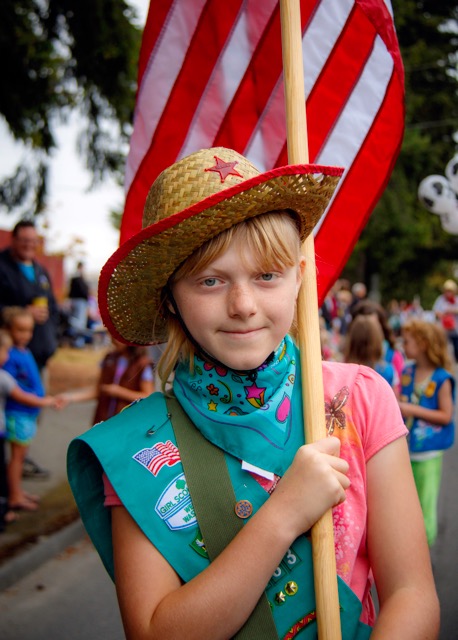
Patriotism is evident at the Maxwelton Fourth of July Parade. This year, Korean War Veteran Herbert Weissblum, of the Whidbey Island Marine Corps League Color Guard, led the parade.
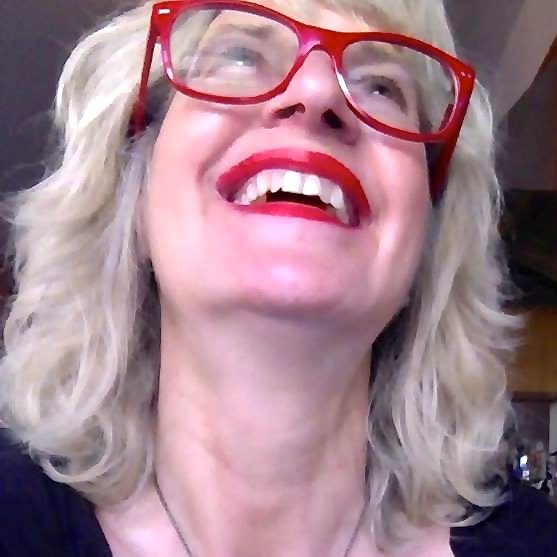
Whidbey Islanders like to dance! Debra Waterman celebrates life at one of many street dance opportunities.
David Welton is a retired cardiologist and a Whidbey Life Magazine photographer.
WLM stories and blogs are copyrighted and all rights are reserved. You may link to this story. To request permission to use or reprint content from this site, email info@whidbeylifemagazine.org.
Friends — greetings from San Antonio. I am here at the society of biblical literature with my husband Larry, who writes about interfaith dialogue between Jews and Christians.
Dialogue is good. On Whidbey, we like to talk to our neighbors and our drinking buddies and pretty much anyone we happen to meet.
Or that’s how it was, anyway.
On our island, we like to think that we are removed from the greater problems of our country and our planet. But imagine this: right after the election, Larry and I were scared to go to our usual Thursday wine tasting event because we didn’t know what to say to our drinking friends who didn’t vote the way we did. We made ourselves go, but friends, I felt afraid. And while the conversation was pleasant, it was strained.
I still feel afraid.
Full disclosure: I am a Jew by choice and therefore am technically white. So, I’m not going to get deported. I’m not going to get rounded up. Likewise, I tell myself I don’t have anything to fear. And our neighbors are nice.
But what about the confederate flag I saw here on the island when I drove to the beach this summer? Where are those people, and are there more?
What about my friend in Seattle who is trans? What about my Muslim friends at MAPS — the Muslim Association of Puget Sound? What about my friends who are aren’t white? What about my husband, who looks very Jewish?
I confess to you that I feel different walking in downtown Coupeville now. I’m wondering — for the first time ever — who would claim me as a fellow citizen and who wouldn’t? It feels like an open question.
What do we stand for on Whidbey island? That’s my question to myself and to you.
I do not want to be a part of any society that registers Muslims and seeks to deport people who are here, trying to make it here. I am for same-sex marriage too.
But I feel like I’m living in a different country, now. One where I and my husband are no longer welcome.
I hope I’m wrong.
So I think about this in a city that belonged to Spain, and then to Mexico, and then to itself, and now to “us.” Who is “us?” Who should “us” be? I know the answer to the second question. It’s the first one that stumps me.
Stephanie Barbé Hammer is a four-time Pushcart Prize nominee in fiction, nonfiction, and poetry. She is the author of a poetry chapbook “Sex with Buildings,” a full-length poetry collection “How Formal?” and a comic magical realist novel “The Puppet Turners of Narrow Interior.” You can follow her on Twitter, or read her blog “Magically Real” as she tries to read “100 Years of Solitude” in less than 100 years.
__________________
The views, opinions, and positions expressed by Whidbey Life Magazine bloggers, as well as those of the people who comment on their blog posts, are theirs alone and do not necessarily reflect the views, opinions, or positions of Whidbey Life Magazine.
WLM stories and blogs are copyrighted and all rights are reserved. You may link to this story. To request permission to use or reprint content from this site, email info@whidbeylifemagazine.org.
BY WENDY JONES
Whidbey Life Magazine Contributor
November 23, 2016
This rock was created as part of a gift basket awarded to celebrate the group reaching a membership milestone. (Photo by Wendy Jones)
Bright spots in the world often show up in odd places and strange forms. Sometimes, the biggest of those spots fall into our paths at unexpected moments or come from a complete stranger. It’s always a thing of beauty when they reveal themselves in the exact right place and time to flip our entire outlook from stormy to sunny in a split second.
Whidbey Island Rocks is a group dedicated to creating those serendipitous moments for locals and visitors. People create, then hide — or at times directly give — lovingly decorated rocks in locations all over the island. Some rocks carry images. Others carry a written message of love or encouragement. Some are created by children, who are developing their artistic ability while others come from the hands of Whidbey Island’s established artists. Regardless of appearance, the result is the same: these rocks are destined to deliver an anonymous hug and a smile to those who find them.
Rock decorators and recipients are connected via a Facebook group managed by Oak Harbor residents Shelly and Scott Darnell. Inspired by a similar group established in Port Angeles, the Darnells didn’t imagine things would grow beyond a small group of their friends and family.
“When we set up the Facebook page, I thought it would be a fun way for us to stay connected as a little group. Then I started noticing people that I didn’t even know liking the page and getting involved. It took on a life of its own and grew from there,” Shelly says.
Bailey Darnell’s connection with the treasures she has collected as part of Whidbey Island Rocks is deep, just like the relationships she has built as part of her participation. (Photo by Wendy Jones)
Today, the Facebook group has 17,500 members with more people joining daily.
Scott and Shelly work hard managing the page as part of their busy family and professional lives. While Shelly was primarily responsible for getting the group started, Scott has moved over to doing more of the heavy lifting to keep things running. Every week, he plans and coordinates events that bring group members face-to-face.
Their daughter Bailey, 11, was the catalyst who put the social experiment in motion after she became aware of a similar group that had recently popped up in Port Angeles. “I get a little hyper-excited sometimes, and I was excited to start it,” says Bailey. “You know how moms can be. I had to keep asking her over and over, but finally, she got it done,” she adds.
As Bailey shows guests around the family home, her enthusiasm for the rock movement becomes easy to understand. There are multiple framed examples of Bailey’s artwork, and her talents have earned her impressive accolades for her young age.
Another thing that becomes evident is how much Bailey loves a good memento. Any item that falls into her field of vision has a unique story attached to it that she expresses with touching detail. To Bailey, each seemingly random artifact is part of her history, and she proves this by explaining its significance with a contagious, effervescent energy. Painting rocks that serve up a smile on impact, and then become part the finder’s history in a tangible form, is right up her alley.
Shelly Darnell and her daughter Bailey are a team when it comes to painting rocks for Whidbey Island Rocks activities, sharing feedback and suggestions for repairs when things don’t go according to plan (Photo by Wendy Jones)
Sending good vibes into the world is something the Darnells take seriously, and the whole family is part of the team. (While Shelly, Scott, and Bailey are more public-facing, Bailey’s big brother Brendon, 16, lends his technical skills to keep the digital aspects of the project running smoothly.) Whidbey Island Rockers can tell numerous stories of the way rocks have changed lives, and pivoted outlooks or made strangers into friends. Even a skeptic would have a hard time arguing against that point after hearing a few anecdotes of happy endings the rocks have facilitated, according to group members:
A couple on the verge of divorce found a rock while walking the beach. The walk was meant to be a time to discuss their separation, but the rock turned the tide on the conversation and sparked a new mutual interest.
A woman found Whidbey Island Rocks as a new mother and lost 20 pounds by hiding and finding rocks (and added a nice outdoor break to her routine).
Numerous visitors found a rock by accident, investigated Whidbey Island Rocks, and created their own versions upon returning home.
Whidbey Island Rocks member Barb Cope holds a special spot in the Darnell family’s hearts, and also in their kitchen. Her signature Chicken Rocks have their own place of honor. (Photo by Wendy Jones)
On a more local level, people are enriching their own lives by gaining friends (and artistic confidence) through the group. Coupeville resident Barb Cope exemplifies this. She hadn’t so much as touched a paintbrush when she got involved. A friend added her to the Facebook group when there were fewer than 200 members. Today, she is a “rock star,” known for dispensing an endless supply of encouragement and support to her fellow group members and also for her rocks, which are emblazoned with her signature image: chickens. She underplays her fame but loves having a personal brand that works in the economy of painted rocks.
“People ask if I will sell them one, and I don’t want to do that,” Cope says. “I am not an artist. I like trading them. Sometimes it’s someone I know and sometimes it might be a complete stranger. It’s nice to be able to create something that people appreciate.”
For Cope, being involved with Whidbey Island Rocks provides serenity and variety when life gets crazy. As much as she loves spending time with her family, tending her garden, and other hobbies, the group gives her a special outlet for connecting with her own thoughts and the world in general.
While some rocks are hidden in urban locations, hiding them on beaches and forests is most common. It is a special treat to find a bright gem like this tucked amongst the natural beauty. (Photo by Wendy Jones)
“It is a soft place to land. When I am doing this, I don’t have to think about politics or the pressures in the world. For me, it’s a wonderful, uplifting place where every person and their art can be celebrated. I have met amazing people that I simply wouldn’t have come across in my day-to-day life. It’s like a family.”
If Whidbey Island Rocks is a family, the family business of bringing happiness in unexpected packages is thriving. Learn more about how to get started here, and watch for rocks as you go through your daily routine. Remember, bright spots come when you least expect them!
Wendy Jones cut her professional teeth in print newsrooms, writing for a major metropolitan daily a couple time zones away. After too many years of chasing police cars and defense attorneys (and witnessing horrible examples of human suffering), she shifted into advanced marketing strategy. She is pleased to be writing on Whidbey Island, where she finds her car filled with notepads, index cards, and pens again, just as it should be.
WLM stories and blogs are copyrighted and all rights are reserved. You may link to this story. To request permission to use or reprint content from this site, email info@whidbeylifemagazine.org.
BY DEBORAH NEDELMAN
Whidbey Life Magazine Publisher
November 24, 2016
For more than 30 years, I lived in Mukilteo, in a house with windows looking out across the water to Columbia Beach and Possession Point. I loved that house, and Mukilteo worked for our family, but the magic of Whidbey called to me in a slow, seductive song for all those years. When I finally yielded, it felt like coming home.
Something similar, though far less prolonged, happened in my relationship with Whidbey Life Magazine. I had only known WLM as a reader when Sue Taves offered me the position of publisher. I’d been on the editorial team of Soundings Review, the literary magazine of the Northwest Institute of Literary Arts, for several years and was editor-in-chief when NILA, and consequently Soundings, died. I wasn’t really looking for a new gig. But Sue and the editorial team worked their own brand of magic on me and, before I knew it, I found myself jumping onto the moving train that is WLM.Now that I’ve taken the leap, I am thrilled to be on this journey with a talented and dedicated team to help me guide Whidbey Life Magazine into the future.
Many of you have been reading WLM since it began, and you’ve seen it morph from an online resource for local artists to a semi-annual glossy print magazine with a website where we publish new content every week. It began as a purely volunteer effort and is now a professional endeavor. As we look toward the future, our plans include expanding our distribution and fostering greater inclusion of voices from all parts of our island. We also hope to upgrade our website to make your reading experience more engaging and user-friendly. Stay tuned!
Whidbey Life Magazine is an organic, evolving enterprise dedicated to celebrating the treasures of art, culture, and people of our island. It has always been our intention to facilitate connections across our island community rather than to highlight divisions, and as we move forward, we are committed to maintaining the values on which the magazine was founded. While we have encouraged writers to share personal perspectives through their blogs, we have never been a platform for political issues. If you’re looking for controversy and divisiveness, look elsewhere.
Whidbey is a place full of its own brand of complex, surprising stories we are eager to share with you. Whether we are writing about Oak Harbor’s 50-year-old playhouse, folks who brew beer from nettles, fiddle players who farm, elegant wearable art made from flowers, or the life of our local bees, we are building bridges, shining light on beauty, and embracing the glory of our island life.
This is what we plan to keep doing, through dark times and when the sun returns. We hope you’ll come along for the ride.
As you read this, my house will be filling with Thanksgiving aromas and my heart with gratitude to be able to spend this holiday with loving family, to live on this beautiful island, and to be part of this community of inspiring, creative, caring people. I wish you all the greatest of blessings of the holiday!
Before becoming publisher and editor-in-chief at Whidbey Life Magazine, Deborah Nedelman, Ph.D., MFA, spent most of her time writing, editing, coaching writers, leading writing groups, and collecting advanced degrees. There was even a time when she worked as a clinical psychologist and raised two kids. These days, she wakes earlier, gets to bed later, and has Whidbey Island on her mind most of the time.
WLM stories and blogs are copyrighted and all rights are reserved. You may link to this story. To request permission to use or reprint content from this site, email info@whidbeylifemagazine.org.
BY KATE POSS
Whidbey Life Magazine Contributor
October 26, 2016
While parents have long wondered how to get kids to eat their veggies, Cary Peterson has cultivated a simple solution that has students clamoring for “garden tacos” that they grow themselves in their school’s backyard.
A once-neglected half-acre of rubble behind the South Whidbey Elementary School now grows tidy rows of veggies, including kale and French sorrel, pumpkins, tomatoes, field peas, nasturtium, sunflowers, and ground cherries—sweet little globes wrapped in a papery skin that taste like tomatoes, pineapple, and mangos all in one. Students from kindergarten through fifth grade enjoy working the garden and harvesting the fruit of their labor in a program pioneered by Peterson, a master at creating community through the land.
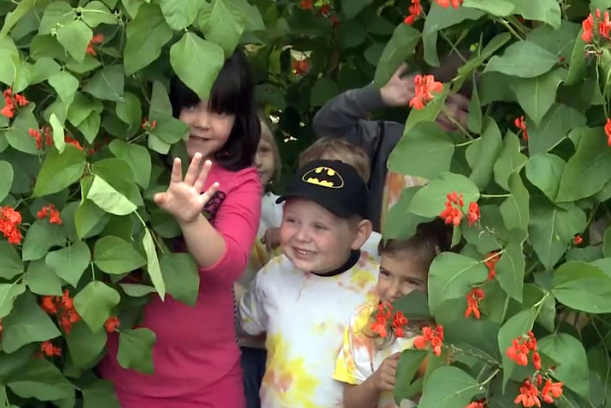
Students wave from a teepee of scarlet runner beans in their school garden. (from the film “Cultivating Kids” by Mark Dworkin and Melissa Young)
Local filmmakers Melissa Young and Mark Dworkin were so inspired by the garden’s success that they made a documentary, “Cultivating Kids,” which shows at the Clyde Theatre, Sunday, November 6, at 2 p.m. The event is free, but donations are welcome and will go toward matching a $30,000 grant provided by Goosefoot, a South Whidbey nonprofit dedicated to building community, preserving rural traditions, adding to the local economy, and creating a sustainable future.
Matching grant funds come from profits made by The Goose Community Grocer, which works with Goosefoot. The school garden received nearly $45,000 in funding in 2014, more than $52,000 in 2015, and has a goal of $60,000 for 2016. The funds pay for garden materials and the salaries of Peterson and her team: a curriculum coordinator and two apprentices. Goosefoot made a three-year commitment to the project, and future funding needs to come from the community. So far, the garden program has received grants from Whole Foods, proceeds from the South Whidbey Garden tour, community donations, and volunteer hours.
“We heard about the farm and went to visit it,” said Young. “We were totally entranced.” Dworkin has worked as a projectionist at the Clyde for more than 40 years. He and Young have made more than 20 notable documentaries, which have been shown on PBS and distributed internationally. Young, a long-time gardener herself, said that she and Dworkin are interested in broad issues of social justice and sustainability. Such themes are reflected in their films, which include “Shift Change,” a documentary about employee-owned businesses. “Good Food,” which aired on PBS in 2010, celebrates the comeback of the family farm and the importance of eating local produce. “Cultivating Kids” is one of their latest films.
“There are a lot of problems in the world,” Young said, “If we’re going to make it a better place, we need to look at what makes a difference.”
The couple began filming in 2015 during the growing season. They filmed students working in the garden through spring, summer, and fall, culminating in a Thanksgiving feast.
Middle schoolers use math skills when working in the garden. (photo courtesy of movingimages.org)
The film is already attracting praise, such as that from Lauren Howe, director of the Slow Gardens program for Slow Food USA. “Cultivating Kids is the ideal film to show all stakeholders that are either considering a school garden or have an existing garden that is needing an infusion of excitement,” she says. “The South Whidbey Island (Washington) project shows how school gardens connect to all aspects of a school day to support academic success, healthy eating habits, and connections to nature. Parents, teachers, school administrators, and community members will all find a special connection in this film that will motivate them to support a garden program for their school. The students are the real stars. A must see!”
On a recent visit to the garden on a cool misty afternoon, Peterson pointed out rows of squash and pumpkins curing in a greenhouse, awaiting a student Thanksgiving feast November 17. “The pumpkins were planted by last year’s third graders, and this year’s fourth graders harvested them for pies,” Peterson explained. “The potatoes pulled by this year’s third graders were planted by the children last spring when they were second graders.”
Mark Dworkin and Melissa Young created the film, “Cultivating Kids,” which will be shown at the Clyde Theatre November 6. (photo by David Welton)
Planting and harvest compliment student studies in math and science, Peterson explained. “We hold a picture of ‘Big Ideas’ for each grade.” The big ideas fostered for the elementary school students are like a foundation that gains strength as the children mature:
Kindergarten and first grade: We connect to the living world
Second grade: Soil nourishes life
Third grade: Life thrives through its diversity
Fourth grade: Our actions can support life
Fifth grade: All life is interconnected
Peterson’s big ideas for linking community and locally-grown food were founded in the creation of the Good Cheer food bank garden and the community garden at the Whidbey Institute. That work evolved to include working with students at the Bayview Alternative High School to restore their garden. When the school moved to the old primary school site and became the South Whidbey Academy, Peterson was asked to get a garden going there. She thought it was essential to serve the produce grown in the garden to students in the South Whidbey School District.
Cary Peterson, advocate for the Earth, community, and locally grown food is in her element in the school garden. (from the film Cultivating Kids by Mark Dworkin and Melissa Young)
Peterson consulted Chartwells, a corporate provider of school lunches nationwide, and together, they created protocols to ensure food safety. Now, South Whidbey School Farm and Gardens, sells its produce to Chartwells, which serves it at all schools in the South Whidbey School District. The student-grown produce also supplies Whidbey Island Nourishes, a nonprofit that provides food for needy students.
Meanwhile, a snack garden, which will provide healthy easy-to-pick veggies for the students’ snacks, is getting ready for spring. “The thing that distinguishes this garden, is that children can grow and eat their own food,” says Peterson. “This program happens due to the 150 percent support of the school and Goosefoot. What’s amazing is that these children know what a delicious carrot tastes like. That changes the system—to serve food that is delicious. It’s their benchmark. I think it’s a very powerful thing when it ripples out.”
Kate Poss worked as a library assistant at the Langley Library until last June. She was thrilled to work for three summers as a chef aboard a small Alaskan tour boat from 2008 to 2010. She was a newspaper reporter in Los Angeles for many years before moving to Whidbey Island where she likes “talking story,” hiking, hosting salons, and writing her novel.
WLM stories and blogs are copyrighted and all rights are reserved. You may link to this story. To request permission to use or reprint content from this site, email info@whidbeylifemagazine.org.
My friend Kathy Baxter is a very spiritual person. In fact, she made her living until recently as a spiritual coach, helping people overcome physical and emotional issues to find their own wisdom and truth with a variety of healing modalities.
So it’s no surprise that she uses meditation and visioning in her own life. In 2012, living in a rented cottage in Freeland while gradually winding down her practice in Seattle, she spent time imagining where her journey would now take her.
“I meditated a lot,” Kathy said, “and a vision came to me—a small farmhouse on a little piece of land on a prairie with a sweeping view. I invested in that vision and waited.”
Kathy Baxter’s house before restoration (photo courtesy of Friends of Ebey’s)
She didn’t wait long. Within days she opened a Whidbey real estate website and saw the exact picture she had in her vision. And what has happened since then has taken her on quite a journey.
The house for sale was on Ebey Road just outside Coupeville, almost exactly in the center of Ebey’s Prairie. It was a two-story, 1890 farmhouse on an acre of land with a squash barn and a horse barn.
______________________________
OPEN HOUSE Historic Perkins House
Sat. Oct 29, 1 to 3 p.m.
1405 Ebey Road near Coupeville
Sponsored by the Friends of Ebey’s
and its Ebey’s Forever grant program
No charge but donations accepted
for the Ebey’s Forever fund.
______________________________
But the house was a wreck, written off as a teardown by most potential buyers and their contractors. It had been terribly “remuddled” in the 1950s; its old vertical double-hung wooden windows were replaced with horizontal sliders, a “modern” front door was added, its clapboard siding was covered over with cedar shakes, and its original yellow exterior paint color was changed to pale lavender. “They tried to turn it into a ’50s ranch house,” Kathy said. Also, every room was filled with stuff: boxes of junk, old furniture, kitchen bric-a-brac, etc.
Baxter’s house after restoration (photo courtesy of Friends of Ebey’s)
But the price was certainly right—$135,000. By the time Kathy made her offer the property already had an accepted offer with four backup offers, many from buyers who expected to tear it down and build a new house. But, true to her vision, Kathy waited and, one by one, all the other offers fell out. She struggled for several months to find a bank that would lend on such a dilapidated house. But finally, on Christmas Eve, 2012, the house was hers.
“I had blind faith that I could do this,” she said. “I had been told there were no ‘little properties’ on Ebey’s Prairie like the one in my vision, that nothing was for sale anyway, and that I likely couldn’t afford a house there even if one did come up.”
She didn’t know how it could happen, only that she believed it could. “Every step along the way has been an unlikely long shot. I just decided to keep taking forward steps until I couldn’t.”
Shakes removed from front and new cedar shingle roof installed (photo courtesy of Friends of Ebey’s)
Things began to fall into place. Her vision was to restore the house as much as possible to its original look and configuration as a prairie farmhouse. After one large contractor flatly turned her down, she found a small contractor on Whidbey who was absolutely sure it could be restored, and who really wanted the work. Staff members at the Ebey’s Landing National Historical Reserve office were enthusiastic supporters and helped her find many resources to make the restoration as accurate as possible. (The staff maintains the inventory of contributing historic structures in the Reserve that now includes 426 buildings—including Kathy Baxter’s house.)
With help from the Reserve office and long-time prairie residents, Kathy has pieced together a bit of the history of her house. An unknown owner built the four-room house in 1890; a local farmer may have used it as a home for his seasonal farm workers. A dining room and kitchen were added around 1900, but it had no indoor plumbing. By 1915, ownership had passed to the family of Sabine Abbott, a Whidbey homesteader in the 1860s who returned to the island late in life after working in Seattle.
In the late 1920s, the house passed to Abbott’s granddaughter, Thirza Cawsey. She never lived in it but rented it for much of the ’30s to a branch of the Sherman family, pioneer farmers on Ebey’s Prairie. The Shermans bought the place in the ’40s and divided the original five acres among themselves except for the acre with the house and barns. In 1950, the Shermans sold the property for $1,000 to the Smith family, who still operate the nearby Willowood Farm. The Smiths did a major remodel, adding the house’s first indoor bathroom and a laundry porch.
A Navy captain bought the property in the early ’60s and added perhaps its most unique feature: an above-ground nuclear fall-out shelter in the horse barn with concrete walls two feet thick.
Edwin Perkins and his family, operators of a chainsaw and lawnmower repair shop in Oak Harbor, purchased the house in the ’80s and lived there until Edwin died in 2011.
All that history made Kathy even more determined to give the house back its “old dignity.” But it took a lot of work. She organized volunteer groups to help rip off the shakes and expose the original clapboard siding; I happily joined that rigorous effort one Saturday morning in 2013, earning blisters on my hands in the process.
Boarded-up frame of the original front door (photo courtesy of Friends of Ebey’s)
Then came a very lucky break. The non-profit organization, Friends of Ebey’s, had been founded in 2011 to raise funds that would help property owners preserve and restore historic structures in the Reserve. Kathy applied for and received an $11,000 matching grant that paid for a new cedar shingle roof like the one the house had in 1890 as well as clapboard siding that was milled to match the original and used to replace rotted sections.
“I doubt I could ever have afforded those expensive things without the Friends of Ebey’s grant,” she said. “These grants are an accelerator that take a restoration from ‘serviceable’ to accurate. They preserve historic integrity in a way that nobody else is doing.”
Once the shakes were removed, architectural discoveries were made. The openings of the original double-hung windows were found. And the biggest surprise was the boarded-up frame of the original front door on the north corner of the front wall. Kathy has installed newly milled double-hung windows where the originals once were and she found, in a South Whidbey barn, a front door at least 100 years old that was exactly the right size for the original doorframe.
The restoration took nearly two years but today Kathy is proud to show off her beautiful home, which she will do this Saturday (Oct. 29) from 1 p.m. to 3 p.m. during a public Open House sponsored by the Friends of Ebey’s.
And, being the spiritual person she is, Kathy is aware that this space has been shared by many before her. A friend of hers who she describes as a shaman, or spiritualist and healer, visited her not long after she moved into her historic home. He immediately sensed that there were “a lot of spirits here,” Kathy said. Four of them, he believed, were Native Americans who had lived on the prairie long ago and loved it so much that they stayed around to “guard the land.”
“That explained so much to me,” Kathy said. “It tells me why people love this place and families have stayed here for decades or more, and maybe it’s even why we created the Ebey’s Landing National Historical Reserve.”
Image at top: Kathy Baxter and her completed “new” home (photo by Harry Anderson)
Once upon a time, Harry Anderson made an honest living as a reporter, editor, and columnist at the Los Angeles Times. He now lives in central Whidbey where he spends his time gardening and ruminating on things that interest him.
WLM stories and blogs are copyrighted and all rights are reserved. Linking is permitted. To request permission to use or reprint content from this site, email info@whidbeylifemagazine.org.
BY MARSHA MORGAN Whidbey Life Magazine Staff Photographer October 19, 2016
When one thinks of Whidbey Island, the iconic Deception Pass Bridge and State Park often come to mind. Any time of the year, including Fall, the bridge and park offer nature at its scenic best.
For more about the Deception Pass area, read Dianna MacLeod’s article, “The Power of Deception,” in the new print edition of Whidbey Life Magazine. The article features photos from many of our island photographers and will be available by October 24 by subscription and at our local retailers.
Several excellent hikes begin underneath the iconic bridge. View the park map online at Deception Pass Park Foundation. Bring your dogs – but don’t forget the leashes.Oops, camo dog Zoe almost got left behind!The trails are thick with native vegetation, evergreen trees, and arbutus.
After rains, mushrooms and fungus sprout.There are beautiful views in all directions.
Our circle trail brought us back to the bridge and a view of this lone tree guarding the passage.
Marsha Morgan is a Whidbey Life Magazine Staff Photographer.
WLM stories and blogs are copyrighted and all rights are reserved. You may link to this story. To request permission to use or reprint content from this site, email info@whidbeylifemagazine.org.
BY DAVID WELTON Whidbey Life Magazine Contributor October 12, 2016
October, always my favorite month, brings Fall to life, quickening the senses with color, scents, and sudden winds.
The sculptural, angled light at sunrise establishes the color palette for autumn leaves.As the days grow shorter and nights stretch longer and cooler, we are comforted by orange and black as we sit beside the fire.Within our broad swaths of deep evergreen forests, Whidbey Island presents pockets of intense color.Within our broad swaths of deep evergreen forests, Whidbey Island presents pockets of intense color.A weathered, worn fire hydrant is magically transformed by the glow of a burning bush (euonymus alatus) at South Whidbey High School.Sherman Farm pumpkins and jeweled spider webs set the stage for Halloween.Yellow grape leaves at Whidbey Island Winery contrast with the blue and green windsock and a 12th Man scarecrow.A Seahawk supporter struts his mutt at Bayview Farm and Garden.Puppies, forever youngA child frolics in treefall from the bigleaf maple.But childhood ends, and we transition from entertained to entertainer, and pursue adult pastimes.
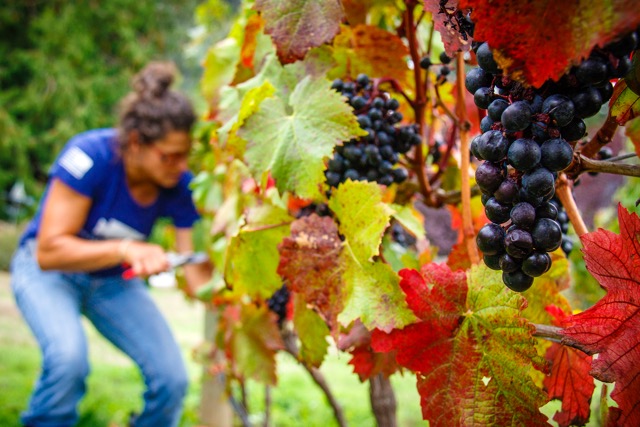
October winds stir up a favorite pastime: to windsurf with migratory birds at Double Bluff.Fall richness provides time for harvesting Pinot Noir at Spoiled Dog Winery.An early snowfall calls for a brisk walk with the dogs and announces the coming of a joyous Winter.
David Welton, a retired physician, is a Whidbey Island photographer who credits his grandmother’s travel slide shows and her gift to him of a Kodak Starflash camera for his interest in photographic art. His goal is to use his photographs to inspire others to realize their unrecognized potential. To learn more about Welton, visit his Web site www.davidweltonphoto.com.
WLM stories and blogs are copyrighted and all rights are reserved. Linking is permitted. To request permission to use or reprint content from this site, email info@whidbeylifemagazine.org.
Begin at the beginning. That’s what they always tell you to do, so that’s where I’ll start: at the beginning.
My earliest memory of seeing artwork that inspired me to become an artist did not come from a museum or a gallery. I think the first artwork that I ever saw that made me say, “I want to do that!” was my copy of “Winnie the Pooh” by A. A. Milne, illustrated by Ernest H. Shepard. These are the original drawings: simple, black and white ink drawings, elegant in their simplicity, but so moving.
Winnie the Pooh, contemplating nature (drawing by Ernest H. Shepard from a collection in the Victoria and Albert Museum, photo by Anne Belov, courtesy of the V & A)
Time moves forward. Art school and oil paint and Impressionism and all the other “isms” of the art world followed, but I have had a continuing and abiding love of Pooh Bear ever since then. Not only did Shepard’s drawings make me want to be an artist but when I began to think about being an illustrator of children’s stories and a cartoonist, his drawings were always front and center in my mind.
So, upon reading Margaret Chodos-Irvine’s series of blog posts about visiting the Victoria and Albert Museum in London and making an appointment to examine drawings in their collection that are not on display, I was intrigued. She wrote a three-part series about her visit to the museum on her blog, Books Around the Table, which she shares with several other kid-lit writers. When she posted a photograph of one of Shepard’s Pooh Bear drawings, my brain went into hyper-drive.
I. Must. Do. That…
…I said to myself. And on a recent trip to London, I screwed up my courage and called the print and drawing study room and asked if I could have an appointment. (What if they say NO!!!???) But of course they didn’t say no. They said, “When would you like to come in?” and I said “tomorrow.” And so I did. I went to the V & A (as it’s referred to in London) and headed to my meeting with Winnie the Pooh.
“Be sure to be on time to meet the group that will be using the study room. We don’t wait if you’re late.” They have you wait at a specific place, check your name on a list and give you a special name badge to wear and then they lead you up to the study room, which is a labyrinthian maze of stairs and corridors and doors and elevators until finally you reach the study room and sign in with your badge number and there, on the table they have set aside just for you…
An entire box of actual drawings by Ernest Shepard himself. The. Real. Thing.
Rough sketch of Pooh (drawing by Ernest H. Shepard from a collection in the Victoria and Albert Museum, photo by Anne Belov, courtesy of the V & A)
Now, I have long loved pencil drawings for themselves and not just as a means to another end, like a finished, polished oil painting. So, to see these drawings with no frame or glass between me and the drawings was nothing short of a religious experience. (They are matted with wide eight-ply archival museum board mats, so you don’t actually touch the paper, but still!!!!)
The finished ink drawings in the books are very clean and sure of themselves. The pencil drawings I saw here were raw and rough, with erasure marks as he changed his mind about the position of a head or leg or number of honey jars that Pooh was counting. In some cases there were multiple drawings of the same subject as he tried to capture the exact pose or composition of each drawing.
Pooh meets Tigger w/ Shepard notes on drawing (drawing by Ernest H. Shepard from a collection in the Victoria and Albert Museum, photo by Anne Belov, courtesy of the V & A)
When we see finished artwork, we rarely see the struggle that went into making it look the way it does. The more polished and effortless something looks, the more likelihood the artist struggled and fumed (and possibly said some very bad words) and started over multiple times before achieving that effortless grace we see in a gallery or picture book.
This is worth remembering as we look at art and dismiss it as looking “too easy.” And those of us who try to make art that looks as if it descended whole and glorious from on high need to remember this, too. The struggle and the eraser is what makes it great. Thanks, you silly old bear, for the reminder.
Anne Belov paints, writes and illustrates in her house that might be in the Hundred Acre Wood on Whidbey Island. Her paintings can be found at The Rob Schouten Gallery at Greenbank Farm and at The Fountainhead Gallery on Queen Anne Hill in Seattle. She is Mistress of Pandas at her blog, The Panda Chronicles, and is working on her graphic novel, a detective story with art and pandas, which she hopes will be finished someday.
WLM stories and blogs are copyrighted and all rights are reserved. Linking is permitted. To request permission to use or reprint content from this site, email info@whidbeylifemagazine.org.
BY DIANNA MACLEOD Whidbey Life Magazine Contributor October 12, 2016
When the Friends of Clinton Library decided to hold a fundraiser, they settled on the idea of a spellathon–and then set about finding folks who would be willing to form teams, don costumes, invent names for themselves, and then spend Saturday evening, Oct. 1, testing their knowledge of words.
Elaborate costumes included the gray hippos, representing hippopotomonstrosesquipedaliophobia: the fear of long words. (photo by Marcia Wiley)
According to Clinton Library manager Debby Colfer, the Friends consulted with staff of the Everett Public Library, who had learned lessons from their own spelling bees. “The costumes were our own addition,” said Colfer. “Because we were holding it in October, it seemed right.” The Friends decided to offer prizes for best spellers and best team names and costumes.
Jane Jeszeck, Georgia Gerber and Sara Benum made up the Hedgehog WannaBees. (photo by Marcia Wiley)Rebel Readers (photo by Marcia Wiley)Spellbound (photo by Marcia Wiley)Stellar Spellers (photo by Marcia Wiley)
Thirty-six adults entered the competition, dressed in costumes from minimalist (The Queen’s English) to maximalist (gray hippos, representing hippopotomonstrosesquipedaliophobia: the fear of long words). Each team–consisting of three individuals–was part of a swarm of four teams. The competition within a swarm produced one winning team, who went on to compete against the winners from the other two swarms. Each team had 30 seconds to write the given word on a white board, which–at the ringing of a bell–was held up to the audience and the judges. Those 30 seconds passed remarkably quickly for both the teams as they arrived at their decision about a word and also for spectators, who were entertained by the music and musings of Clinton resident (and Rural Character) Randy Hudson and Joe Jeszeck, one of the members of Hudson’s band, Heggeness Valley Boys.
Each team had 30 seconds to confer and write their chosen spelling of a word. (photo by Marcia Wiley)
In addition to the monies raised by the teams’ entry fees, several local businesses acted as sponsors. During the event, which was free to the public, a silent auction was also held. According to Colfer, the spellathon generated over $2,000. She and Friends’ president Arlene Stebbins were pleased by the community response; the funds will help pay for library programs in 2017.
“And we were happy to be able to rent the Clinton Community Hall and support the Clinton Progressive Association,” Colfer said. The hall, a gathering place for the Clinton community, was built by the 100 year old Association in the 1960s.
The winning team, The Brainiacs, included (right to left) Marshall Goldberg (Oak Harbor), Dianna MacLeod (Langley), and Paul Thompson (Freeland) took home trophies for best costume and best spelling.
The Spellathon title for the evening went to the Brainiacs, who sweated and spelled their way to victory against The Queen’s English. The winning word was onychophagia: the practice of biting one’s nails.
And a nail-biting finish it was.
This was Dianna MacLeod’s first spelling bee. Despite her hippopotomonstrosesquipedaliophobia, she looks forward to the next one.
WLM stories and blogs are copyrighted and all rights are reserved. Linking is permitted. To request permission to use or reprint content from this site, email info@whidbeylifemagazine.org.