Tag: Whidbey Island

  • Sirithiri || LOVE 4 Ever

    Sirithiri || LOVE 4 Ever

    By Siri Bardarson
    June 22, 2016

    It started two months ago with a phone call from my sister.

    “Have you seen the wild blackberry blossoms?”

    blackberry blossomsThere was a hint of challenge in her voice, she—the middle child, me—the oldest sister: the beginning of the seasonal contest of wild blackberry picking.

    I had seen the tiny white blossoms. They covered vines everywhere I drove and walked on South Whidbey.

    “It’s the earliest I have ever seen them,” she said and I agreed.

    Two months ago, most Whidbey Island residents stood at the shoreline and squinted into the distance for a chance sighting of the gray whales and orcas. My sisters and I have been occupied otherwise. We’ve slowed our cars, scoured the ditches, gauged the sun and mentally calculated the time of year. We’ve secretly prayed about rain (we are not the praying kind). We hoped for the right balance, not too much to wreck the pollination or mold the flowers but enough to encourage plump fruit. The two hot days last month held the key.

    The phone rang.

    red blackberries“The wild blackberries are out. I have never seen so many red berries!”

    A blackberry pie in time for the Fourth of July is rare and a pie in June is unheard of.

    These Pacific Northwest days—the days immediately after school lets out—the weather is gray and damp in the morning and the afternoon is clear and warm. The blackberries love the hothouse steam of the tall grass and the heat of the afternoon filtered by the nettles poised like bayonets over the growing fruit.

    *   *   *

    On cue with the blackberries, my family—minus our working father—would load up the station wagon in Seattle, prepared for the summer. It was stuffed to the rafters with my mom, five girls, flannel sleeping bags, the cat basket that could not contain the cat, the Coleman cooler, groceries, library books and suitcases with shorts, t-shirts and swimsuits and beach towels.

    There was no I-5. We drove a meandering route up the east side of Lake Washington, Issaquah and Bothell and finally down the tree-lined road to the Mukilteo ferry landing. When we saw Puget Sound, we sang the “Doxology” at the tops of our lungs. (We are the singing kind.)

    We ferried over on the new boats—the Rhododendron or the Olympic—and drove up the island on the old highway to Freeland, then ducking down Cameron Road to the cabin on the edge of Holmes Harbor. With luck, the yard had been mowed but most likely not. We hauled the gear into the cabin, through the large wooden door without a frame or lock—only a long worm-eaten board with the name of the cabin, “Wit’s End,” rendered in red paint.

    Unloading the car in the tall wet grass was the beginning of summer dampness: tennis shoes that never quite dried out, swimsuits that were clammy and rimey with salt, sleeping bags full of sand and pillows that absorbed saltwater from still-wet hair.

    We hurried over the plywood floors, staking out our bunk beds. My favorite was the upper bunk across from the open doorway into the living space. From that spot I could see the flicker and shadowy light of the fireplace and the kerosene lamps. Out of sight, at the picnic table, my mother would sit tackling a volume of Dickens that she wouldn’t finish. I’d hear the strike of a match and she would smoke one Pall Mall. Below me, my little sisters slept end to end under old sheets and army blankets and breathed sweet open-mouthed noises.

    blackberries-handfulIn a few weeks, when the weather warmed up, we went blackberry picking. It’s tough going—the picking gig. In my family, there’s a moral subtext to picking that has something to do with courage, dumb fortitude and no whining. After a brief discussion about containers (the Revere Ware quart saucepan had a great handle, the Pyrex pitcher, too), we would give small metal cups to the little girls and get into the car.

    It took a good two hours to pick the minimum two to three cups necessary for a pie. The berries were the size of your little fingernail and the vines had tiny, mean stickers. Vines trailed over fallen logs and camouflaged holes in the ground that you stepped into with a crash. The nettles were fresh and fiery, the snakes always a horrible surprise and the first berry made an insubstantial “plink” going into the container.

    It’s a demoralizing sound: you must not look into the bottom of the cup until you’ve picked the first layer and the plinking stops.

    There was the thrill of consolidating into our mom’s larger container with the hope that she would call it good—enough for a pie—and we’d struggle out of the brush and load back into the car. We’d lick our wounds but not complain too much —our forearms scratched and full of tiny stickers, our ankles burning with nettle stings, our fingernails dyed purple and black, and streaks of berry juice on our skin like sailor tattoos.

    My mom would fire up the Great Majestic woodstove stove and we’d go swimming. After dinner we’d have pie, always with whipping cream because we never had a refrigerator. My mom would discuss the quality of the crust and we’d bob our heads and peep our praise and make our first tentative remarks about crusts that were too short, too thick or underdone, and filling that was too sweet or not sweet enough.

    Blackberry pie with hearts
    Siri’s blackberry pie, early this year! (photo by Siri Bardarson)


    My sisters and I are all terrific pie makers because we learned from the best. But the real reason we care so much is that we know that blackberry pie means, “LOVE 4 Ever.”

    I’ll close with a horrible poem I wrote in 1973 in pencil on a piece of ripped grocery bag. I had picked the berries and baked a pie in the Great Majestic all on my own. It hung on a nail in the cabin forever.

    Ode to the Blackberry

    I shall now praise the rare prize,
    The finest fruit in Paradise,
    Who in the sunny field doth dwell
    And under summer’s sunny spell
    Bursts forth in bounteous multitude
    A rare jewel worthy of platitude.

    Amongst garter snake and nettle high
    You attempt to thwart the avid picker
    With prickly claw and stickly sticker.
    But in the end must resigned be
    To clever hand in pastery.
    Forever with the God’s fare to vie,
    Your true realization, the blackberry pie.

    A Northwest native, Siri Bardarson is a writer with an emotional hotline to the vibrant natural beauty of Puget Sound. When not writing about the importance of the wild blackberry, daisies and natural time, she practices her cello a lot and sings at the same time. She loves her Whidbey Island home.

    __________________

    CLICK HERE to read more WLM stories and blogsHave a great story idea? Let us know at info@whidbeylifemagazine.org.

    WLM stories and blogs are copyrighted and all rights are reserved. Linking is permitted. To request permission to use or reprint content from this site, email info@whidbeylifemagazine.org.

  • Guardian Trees: Ragged Remnants of the Great Coastal Forests that Used to Be

    Guardian Trees: Ragged Remnants of the Great Coastal Forests that Used to Be

    BY KATE POSS
    Whidbey Life Magazine Contributor
    June 22, 2016 (corrected 6/24/16)

    We can time-travel here on Whidbey Island. A visit to the guardian trees, which protect our coastal old-growth woods, becomes a walk with elders who are hundreds of years old.

    Guardian trees form a barrier line to defend their brothers and sisters behind them. Grizzled veterans that bear the brunt of wind, saltwater, sun, rain and snow, these trees become gnarled and sculpted over the many seasons during which they stand guard. Walking through a forest of these old giants along Ebey’s Bluff trail or in the Admiralty Inlet Preserve in Coupeville, one can imagine being a hobbit walking in the Fangorn Forest of “Lord of the Rings.” The trees have a supernatural quality about them.

    Twisted guardian trees protect their forest brethren behind them.  (photo by Jamie Whitaker)
    Twisted guardian trees protect their forest brethren behind them.  (photo by Jamie Whitaker)

    “The branches of the old-growth Douglas fir trees twist and turn making their way under and around each other,” Whidbey Camano Land Trust’s website notes. “At over four feet in diameter and 250 years old, you can tell these trees have weathered many coastal storms.”

    Golden Indian Paintbrush is an endangered plant that grows on the Naas prairie, adjacent to the Admiralty Inlet Preserve (photo by Kate Poss)
    A signboard illustrates Golden Indian Paintbrush.  (photo by Kate Poss)

    Admiralty Inlet Preserve was bought three years ago for $3.3 million by the Land Trust (WCLT) from Seattle Pacific University. The 46-acre site was once considered for expansion by the university, which proposed building additional cabins for its retreats. However, following a campaign waged by the Whidbey Environmental Action Network for protection of the heritage forest, the school eventually sold its holdings and used the proceeds to upgrade its existing Camp Casey facilities. An endangered plant, the yellow Indian Paintbrush grows in the Naas Prairie, adjacent to the preserve.

    Support for this $3.3 million project came from WCLT member donations and public grants, Endangered Species funding from the U.S. Fish and Wildlife Service and an urban wildlife grant from Washington Wildlife and Recreation Program. Additional funds, secured by former Senator Mary Margaret Haugen and current Representative Norma Smith, completed the purchase.

    Supernatural shaped-limbs of an old Douglas fir at Admiralty Inlet Preserve (photo by Kate Poss)
    Supernaturally shaped-limbs of an old Douglas fir at Admiralty Inlet Preserve   (photo by Kate Poss)

    While the west coast of Coupeville hosts spectacular guardian trees along its bluffs, there are other stands of the old trees as well.

    4. Admiralty Inlet Preserve
    Admiralty Inlet Preserve was acquired three years ago by the Whidbey Camano Land Trust. (photo by Kate Poss)

    “They are everywhere,” said Whidbey environmental consultant Elliott Menashe. “Scatchet Head, Possession Point and Double Bluff on the south end, at West Beach, throughout North Whidbey, Deception Pass, Fidalgo Island, Lummi Island, the San Juans, the Strait of Juan de Fuca—anywhere there are strong prevailing winds and [adjacency to] fetch. The ones at Ebey’s are the best and most classically developed forms because the forest is largely intact. Mostly all we have left, any more, are ragged remnants of the great coastal barrier forests that used to be.”

    The trees that used to be. Once upon a time, between 7,000 to 10,000 years ago, Douglas firs were giants that grew in abundance on Whidbey Island, with a height of 245 to 330 feet and diameters of five to seven feet. With the European discovery of Whidbey Island in the 1790s, early sailors remarked on the lush forests Black bear, wolves and red fox once lived in the great forests, but were later hunted to extinction. When Europeans began arriving to homestead land in the 1860s, the old trees were logged and have not achieved the same size since.

    Thigmomorphogenesis shapes guardian trees (photo by Elliott Menasche, Greenbelt Consulting)
    Thigmomorphogenesis shapes guardian trees.  (photo by Elliott Menashe, Greenbelt Consulting)

    In our current times, Menashe noted, it pays to be mindful about maintaining guardian trees on private property.

    “It’s important for people who ‘live on the edge’ to be aware of the importance of these trees,” he added. “Folks who build their permanent homes in temporary locations like Puget Sound shorelines need to pay more attention to their management practices. It’s unfortunate that many landowners, in their efforts to ‘improve’ their views, unwittingly damage their shore land by removing these unique and beneficial trees.”

    Local hikers at Admiralty Inlet Preserve said they were heartened that the trees were preserved for the public to enjoy and admire for all time.

    “I call them Grandpa trees,” said Kathy Sivertsen, while stopping to chat on a walk with the neighbor’s Golden Retriever, Sandy.

    7. Barrier_forest-Mason 1 Lecture_6-7-2016_Menashe
    “Barrier forest” is another name for guardian trees at Ebey’s Bluff   (photo by Elliott Menashe)

    Coupeville resident Yvonne Guida was struck by the power the trees had on her, “I had the feeling that these trees were saying, ‘Welcome to our home, the forest, and we surround you with love and light.’ These trees gave me a strong sense of feeling rooted and connected to the earth…a great feeling of peace and tranquility.”

    The trees of Ebey’s Bluff and Admiralty Inlet Preserve are part of Ebey’s Landing Natural Historical Reserve, comprising nearly 20,000 acres. The reserve is an active farming community that operates in a partnership between the town of Coupeville, Island County, Washington State Parks and the National Park Service.

    For more information on the natural history of the island, visit https://archive.org/stream/historicresource00evan/historicresource00evan_djvu.txt.

    Whidbey Camano Land Trust’s website for the Admiralty Inlet Preserve: http://www.wclt.org/projects/admiralty-inlet-preserve/

    10. Rachel Carson
    A quote by Rachel Carson on a placard at Admiralty Inlet preserve  (photo by Kate Poss)

    Image at top: Mr. Majestic perches on a guardian tree branch along Ebey’s Bluff trail (photo by Jamie Whitaker)

    Kate Poss recently retired from her job as a library assistant at the Langley Library. She was thrilled to work for three summers as a chef aboard a small Alaskan tour boat from 2008 to 2010. She was a newspaper reporter in Los Angeles for many years before moving to Whidbey Island where she likes ‘talking story,’ hiking, hosting salons and writing her novel.

    __________________

    CLICK HERE to read more WLM stories and blogs. Have a great story idea? Let us know at info@whidbeylifemagazine.org.

    WLM stories and blogs are copyrighted and all rights are reserved. Linking is permitted. To request permission to use or reprint content from this site, email info@whidbeylifemagazine.org.

  • Castle on Whidbey || OH, DEER

    Castle on Whidbey || OH, DEER

    BY CAMERON CASTLE
    Whidbey Life Magazine Contributor
    June 22, 2016

    WARNING: If you happen to be a person who loves deer so much that they can do no wrong, and jokes about deer are not funny but offensive, stop reading.

    If you keep a public tally sheet of deer mishaps, PLEASE stop reading.

    Now, if you happen to be an avid deer hunter, also please stop reading. You are guaranteed to feel insulted.

    For the six of you on this island that fall between those groups, read on!

    Seven years ago, on a misty autumn morning, shortly after moving to Whidbey Island, I called my three-year-old son to the back window. “Look Carter, deer! Three of them, just strolling on our property. They’re lovely. Here, I’ll open the door. Wow, look how they run. They bound. The little one is bouncing on all four legs like as if on springs. Nature. Oh, my . . .”

    Fast forward to yesterday evening, a bottle of Liquid Fence® in my hand, stumbling to slip on my shoes. Grumbling. “Those misersable, rotten . . . grancrablick, grrr, errr.” I sounded like the dad in “A Christmas Story” after the Bumpass dogs ate the turkey. I am like that all the time. “Rats with hooves!”*

    What happened?

    I, like a complete imbecile, decided it would be nice to plant some things I like on our property. What was I thinking? In my previous homes I always grew magnificent roses. Ha. When I planted my marvelous rose plants, they were to the deer as a plate of warm chocolate chip cookies would be to a table of hungry teenagers.

    The deer eat everything. That’s not accurate. The deer only eat things I care about. We live on five acres surrounded by woods. There is enough for the deer to eat even if their population grew to the hundreds—on our property. But, no. They wander out of the woods, mosey over, and nip off my 16 new, happy, perky, perfectly formed, sweet-smelling rose buds. I can just picture a deer, her top lip scrunched back, little front teeth plucking off delicate tidbits. The total amount of sustenance in those little bites is practically nothing to the girth of that mother deer.

    Some of you are thinking, “They love the smell and taste of those roses. Of course they eat them.” Yeah, sure. Like these deer have some refined palate.

    “Debbie, over here. These roses are called ‘Orange Sherbet’ and—golly gee—I think I can taste it. Yum.”

    No.

    They eat the roses because they know I love them.

    (Photo by David Welton)
    Photo by David Welton

    I will walk out in the morning and the decimation is tragic. But it’s just the stuff I love. Hydrangeas? Gone. Lilac tree? Slaughtered. The carnage is so complete it’s like it’s executed as a military op.

    “Okay folks, listen up. We are hitting the Castles at oh-four-hundred hours. Now we’re going to split up into groups: Becky, Bucky, you two are on flowers. We are talking roses, geraniums, columbine. Anything with blooms or buds. And this time I want the dahlias hit. I know, Becky, they’re bitter. But that’s not the point. We’re going there to inflict harm.

    “Okay, our intel says he’s planted new tree seedlings, and he loves them. Rodney? How are those antlers feeling?”

    “Itchy as hell, Sir.”

    “Excellent. Now remember. You’re scraping off the bark ALL THE WAY AROUND. If you leave a third or so like last time, that tree might make it. I need you to focus.”

    “Yes, Sir.”

    “Fruit trees. Elva, you been practicing the hind-leg stand? How far up can you get? “

    “At least eight feet, Sir.”

    “Excellent. Munch your heart out. I want him to come out in the morning and, instead of seeing his beloved apple tree, I want him to see a big green umbrella.”

    “Okay, we got word he’s planted his garden. Big Foot, oh, sorry. Forgot you hate that. Bessie—just jump in. Jump out. Couple passes with those clod-hoppers, that garden will be toast.

    Everybody know what to do?”

    “What about his strawberries, Sir”

    “Good catch, Biff. But that’s me. I know that one hurts him the most. So, let’s meet back here at oh-three-hundred. Go get some rest.”

    When one is attacked, one has to defend oneself. I’ve tried a lot of stuff. The first advice I got was to pee around the areas I wanted left alone. Besides all the reasons I don’t need to list here of why that isn’t a great idea, the main one is, as I mentioned before, we live on five acres. The amount of coffee and, possibly, beer I would have to imbibe before noon to simply produce the volume needed is quite undoable.

    Next was the strategy of fishing line between poles that the deer can’t see as they bump into it. Theory is—their little pea-sized brains can’t figure it out and it spooks them. Crazy thing is, it works! It actually works. Until one’s roses have grown to luxurious heights in naïve, false feelings of comfort and safety. Because when those roses are finally awe-inspiring, the deer just say: “F**k the spooky invisible string. CHOMP!”

    Next, Bobex® Spray deer repellent. Worked pretty good. But two drawbacks. The deer get used to it. And before that, it only repels deer from the leaves and buds that have the stuff on them. If the buds grow up over night, the deer just reach past the stinky parts and nibble away.

    When I catch deer in the act, I scream and run at them in an effort to terrorize the deer and make them think twice about coming back. They just stand there and look at me. Once, one had a branch of my apple tree in its mouth. I picked up a rock off the driveway and, ala my old Little League days, pegged her right in the rib cage. It made a hollow plunk sound. The deer stopped chewing. Looked down at the stone and sniffed. Resuming her chewing, she looked back at me like, “Did you see that?” “Yeah, I saw it. I threw it!”

    I don’t ever want to actually hurt a deer, but I am planning on whapping one with a whiffle ball bat.

    That brings me to deer hunting. I’m so confused. How difficult could it be to shoot one of these things? I could walk up to it and smack it in the head with a golf club if I wanted.

    I have a hunter friend who says, “We hunt them for food.”

    Okay, I can buy that. But if you’re hunting them for food, I would think you should have to beat one to death with a soup ladle. We could start a whole new thing. Chef/Hunter. I can picture a couple of guys sitting around the “Rod and Bun Club.”

    “Yeah, I prefer my eight-ounce stainless steel ladle. Some guys can get by with your four-ouncer, but not me. I like that “swopp twang” sound you can only get from the big boy, the eight-ouncer.”

    They could take it to higher levels.

    “Hey, Fred, heard you got one last week with kabob skewers. Impressive. Sounds a little messy if you ask me. Jim, what about you?”

    Adjusting his 12-inch paper chef hat, enhanced with the camouflage of basil leaves and bunches of thyme, leaning back, he says, “Well, boys, I’m bagging my next one with a turkey baster. Don’t ask.

    oh Deer_0019
    Photo by David Welton

    But now I have found Liquid Fence®. I’m sure I have disappointment just waiting around the corner, but for now it’s working. Very well. I don’t know how they accumulate all that coyote urine, but who cares, it’s working like a charm. I do order the stuff in 55-gallon drums delivered on flatbed trucks. But it works.

    Today I’m happy. My roses are magnificent. I have flowers galore. And my apple tree is nervous but, as yet, unchomped. All is well.

    I do have to add, though: if—tomorrow morning—I walk out on my deck, and my barrel that’s teeming with a rainbow of wafting petunias is merely a barrel of stems, you might see a crazed lunatic screaming and running across his property, madly wielding, a four iron.

    Just look away.

    Photo by David Welton
    Photo by David Welton

    Cameron Castle is an author and a stay-at-home dad. His recently published memoir is entitled, “My Mother Is Crazier than Your Mother.” He lives on Whidbey Island.

    Photo at top by David Welton

    *A line from Lewis C.K.

    __________________

    CLICK HERE to read more WLM stories and blogsHave a great story idea? Let us know at info@whidbeylifemagazine.org.

    WLM stories and blogs are copyrighted and all rights are reserved. Linking is permitted. To request permission to use or reprint content from this site, email info@whidbeylifemagazine.org.


  • A Red Carpet Night on Ebey’s Landing

    A Red Carpet Night on Ebey’s Landing

    TEXT BY MADISUN ELIZABETH
    PHOTOS BY DAVID STERN
    Whidbey Life Magazine Contributors
    June 15, 2016

    To celebrate their Centennial Anniversary in 2016, the National Park Service has challenged people all over the country to “find your park” and “share your story.”

    Ebey’s Landing National Historic Reserve responded by challenging independent filmmakers to participate in a 50 Hour FilmSlam Competition: writing, producing, filming, editing and completing short films within a specified 50 hour time period. Filmmakers were asked to show what makes Ebey’s Landing nationally significant, and the results were described by the judges as “love letters” to the Reserve.

    The competition culminated with a grand premiere of these films on Saturday night, June 11, at the “Ebey’s Reserve FilmSlam Film Festival”, at the Coupeville High School Auditorium. The audience was full of supportive community members and visitors alike who bought tickets to benefit the Reserve. Many purchased VIP tickets, enjoying a Red Carpet experience complete with gourmet catering. All proceeds of this event directly benefited the Friends of Ebey’s, who are working to preserve, protect and enhance the Reserve.

    An award ceremony followed the screening; filmmaking team “Dakota Guys” was awarded the Judges’ Choice Award and team “WINOT!?” received the People’s Choice Awards. Team SOULLESS, made up of local Girl Scouts, received their Film Making Badges. The main consensus was that it was a tough decision to choose the winners, while the whole event was a win for Ebey’s Landing National Historic Reserve.

    1 - Copyright 2016 - Whidbey Custom PhotographyCompetitors were asked to show and tell what makes Ebey’s Landing National Historic Reserve so unique. Many of them found inspiration in the nature that abounds within the Reserve’s 1,800 acres. This seagull was seen on the Reserve during the weekend of filming.

    2 - Copyright 2016 - Whidbey Custom PhotographyAll films shown at the premiere were created from start to finish within the 50 hours permitted, with most filmmakers utilizing the full time allowed.

    3 - Copyright 2016 - Whidbey Custom PhotographyOn the night of the premier, VIP ticket holders felt as though they were walking into an exclusive party as they approached the entrance.

    4 - Copyright 2016 - Whidbey Custom PhotographyThe VIPs were swept onto the Red Carpet and photographed by local “paparazzi” as soon as they arrived.

    5 - Copyright 2016 - Whidbey Custom PhotographyGourmet catered delicacies and all-ages-friendly sparkling juice were served at the Red Carpet party leading up to the grand premiere of the FilmSlam showing.

    6 - Copyright 2016 - Whidbey Custom Photography

    The VIP area was standing room only. It was an intimate affair.

    7 - Copyright 2015 - Whidbey Custom Photography

    Filmmakers were Special Guests on the VIP Red Carpet and anxiously awaited show time while they mixed and mingled at the party. Photographer David Stern managed to take this portrait away from the bustling scene.

    8 - Copyright 2016 - Whidbey Custom Photography

    The audience filled the Coupeville Auditorium and, before showtime, looked over the program, which included their People’s Choice ballot to cast a vote for their favorite film.

    9 - Copyright 2016 - Whidbey Custom PhotographyAfter the films were shown, there was commotion in the illuminated auditorium as filmmakers made their way to the stage for the awards ceremony.

    10 - Copyright 2016 - Whidbey Custom PhotographyThere will be ongoing celebrations and community service work for Ebey’s Landing National Historic Reserve during the National Park Service Centennial in 2016. Visit www.nps.gov/ebla for more ways to support the Reserve and become part of the community that protects it.

    David Stern and Madisun Elizabeth participated as a team making their film debut in the 50 Hour FilmSlam competition. Ebey’s Landing National Historic Reserve is a place they call home and regularly find inspiration. More about their various endeavors can be found at WhidbeyCustomPhotography.com or find Whidbey Custom Photography on Facebook.

    __________________

    CLICK HERE to read more WLM stories and blogsHave a great story idea? Let us know at info@whidbeylifemagazine.org.

    WLM stories and blogs are copyrighted and all rights are reserved. Linking is permitted. To request permission to use or reprint content from this site, email info@whidbeylifemagazine.org.

  • Rock Bottom Line || A Modest Proposal to Disarm a Dangerous Moment

    Rock Bottom Line || A Modest Proposal to Disarm a Dangerous Moment

    BY HARRY ANDERSON
    June 15, 2016

    So I wonder. The Orlando massacre. Could four-dozen people be mowed down in five minutes by a deranged, hate-inspired individual with a military assault rifle on Whidbey? Here, on this peaceful, blissful, beautiful, slow-paced, placid, agreeable, mild-mannered Rock where arguments are usually resolved over a cup of coffee?

    I’ve been wrestling with that since I awoke Sunday to news of the slaughter at a crowded Florida gay bar at closing time. The too-easy answer to my question is, “No, of course not!” We’re too small, too far away from crazy troublemakers. And besides, we don’t have crowded gay bars and we go to bed long before last call for alcohol. We also don’t have deranged, hate-filled individuals running around with assault rifles . . . do we.

    But take a read of the crime reports in our three island newspapers. Murder. Assault. Threats of violence. Robbery. Alcohol and drug-induced rage. Meth labs in the woods. Semi-automatic gun practice near homes where children play. Then take a look at the online comments sections in those papers or on social media. People write scary, sometimes threatening things with strong and nasty words they’d never say out loud in public.

    People who don’t like Navy jet noise are called traitors and told to shut up and get the hell out. Navy supporters are branded as warmongers who want to militarize the entire island. Conservationists are job killers; foresters are habitat destroyers.

    There are other worrisome things. A Bernie Sanders sign at Highway 20 at Arnold Road is defaced with angry symbols not once but twice. A portrait of President Obama doctored to make him look like Hitler is proudly displayed by political protesters on a sidewalk by the Coupeville Post Office. Gun advocates bring their weapons to an Oak Harbor city council meeting to demand the right to carry those guns in public parks and playgrounds, all in order to “protect” themselves and us from somebody, anybody else.

    Are we really as polite and peaceful as we think we are on this Rock? Judging by the evidence, I’d say no. We kid ourselves if we pretend otherwise. The bumper-sticker, 140-character Twitter universe in which our entire planet now exists has infected even sweet, bucolic Whidbey. It has truncated and coarsened our public dialogue. Even our local churches are at odds and won’t even talk with each other about gay marriage and women priests, among other things.

    All this threatens one of our most precious attributes on Whidbey: our sense of community. It really is much easier here than in a big to city to cocoon ourselves, withdraw among our tall trees and gardens, talk only to those we like and tune out what we don’t agree with. Before tweets, posts and online comments overtook us, we trusted a few resources to tell us the truth. But now we don’t know whom to trust, so we don’t trust anybody.

    This is no way to live in our beautiful place, so I will make a modest proposal. Starting tomorrow, each of us will pledge to ignore or not send an angry tweet, snarky remark on Facebook or nasty online comment. Instead, each of us will call someone and ask them to have coffee and talk about something controversial or difficult. Let there be peace on Whidbey, and let it begin with me!

    Once upon a time, Harry Anderson made an honest living as a reporter, editor and columnist at the Los Angeles Times. He now lives in central Whidbey, where he spends his time gardening and ruminating on things that interest him.

    __________________

    CLICK HERE to read more WLM stories and blogsHave a great story idea? Let us know at info@whidbeylifemagazine.org.

    WLM stories and blogs are copyrighted and all rights are reserved. Linking is permitted. To request permission to use or reprint content from this site, email info@whidbeylifemagazine.org.

  • Spoiled Dog is Growling for Wine

    Spoiled Dog is Growling for Wine

    BY STEVE KILISKY
    Whidbey Life Magazine Contributor
    June 15, 2016

    For hundreds of years, a cork has been the classic closure for wine bottles. It’s often the star of the show when serving wine in a restaurant.

    The server carefully removes the foil from the mouth of the bottle and the cork is gingerly extracted and presented to the patron who ordered the wine. The ceremony continues with an examination of the cork for moisture and maybe a sniff to detect any potential spoilage.

    This drama unfolds a countless number of times every day in restaurants around the world. It’s no wonder that we have an emotional attachment to corks.

    A one-liter growler of Pooch, red table wine (photo by David Welton)
    A one-liter growler of Pooch, red table wine   (photo by David Welton)

    It’s taken decades for wines with screw caps to shed the stigma of being associated with cheap “hobo” wines. Screw caps reduce wine faults typically associated with corks and are definitely more convenient to open.

    Now, just as the majority of consumers are finally accepting screw cap wines as a viable alternative for corks, wine on-tap and wine bottled in growlers are emerging as the next big thing in wine packaging. Here on Whidbey Island, Spoiled Dog Winery is leading the pack with this new way of delivering and consuming wine.

    While growlers are familiar to most beer lovers, they’re relatively uncommon as a container for wine drinkers. A growler is a refillable container that’s designed to be securely sealed and used for off-premise consumption of wine or beer. Washington State is one of a handful of states that allows wineries to sell wine this way. Spoiled Dog Winery recognized this emerging trend and has embraced the idea as a way to reduce their carbon footprint and encourage recycling of glass by offering their Pooch red table wine in a one-liter growler.

    Jake Krug, Director of Operations at Spoiled Dog Winery manning the tap
    Jake Krug, Director of Operations at Spoiled Dog Winery manning the tap    (photo by David Welton)

    Spoiled Dog introduced their Pooch red table wine in 2015 as an experiment to see if there was demand from their customers for a lower-priced wine intended for casual drinking. Pooch was a success, which led the Owner-Winemaker Karen Krug to expand Pooch production and launch the winery’s entry into the world of wine growlers with the current release. It was a natural fit for Pooch, as it allowed them to reduce their production costs without compromising the quality of the wine.

    Krug realized that filling the growlers directly from the barrel was not practical, so she and her son, Jake, who recently joined Spoiled Dog as Director of Operations, began an exhaustive search that resulted in locating a unique keg and tap system especially designed for storing and serving wine. They quickly recognized that the kegs they were using to fill their Pooch growlers would also be a cost-effective and space-saving solution for restaurants serving wine by the glass or carafe.

    The Pooch tap, protruding from a decorative barrel that contains the wine keg (photo by David Welton)
    The Pooch tap, protruding from a decorative barrel that contains the wine keg   (photo by David Welton)

    Jake Krug pointed out that restaurants typically open a bottle of wine to serve by the glass and if the wine is not consumed in a timely manner, the quality and freshness of the wine can be compromised. Krug stated, “Kegs not only provides the best customer experience but also reduce the amount of glass used and storage space historically required for cases of wine. We love the idea of reducing waste and preserving the freshness of wine served by the glass in restaurants.”

    The compact kegs Spoiled Dog is using hold a little over two cases of wine and will stay fresh for six to eight months. As the wine is tapped from the keg, the resulting empty space in the keg is displaced with nitrogen to prevent oxidization of the wine. “Our growlers are also sparged* with nitrogen when we fill them,” Karen Krug noted “and they can be stored for several weeks without risk of spoiling. However, once opened, they should be treated the same as any other bottle of wine. All you need to do before refilling is run the empty growlers through the dishwasher or wash by hand and rinse well.”

    The current release of Pooch is a blend of Carmenere and Cabernet Sauvignon grapes grown in the Columbia Valley in Washington. A one-liter bottle costs $18 (plus a one-time $10 charge for the growler). In addition, every 10th refill is free. If you can’t make it to the winery to sample a growler of Pooch, you can find it on tap and sold by the glass at Penn Cove Brewing Company in Coupeville; it will be coming to other restaurants on the island soon.

    *Sparging: Nitrogen (N2) is applied in the form of very fine gas bubbles in order to remove dissolved oxygen from the wine. (http://www.southtektalk.com/2010/04/nitrogen-uses-in-wine-industry.html)

    Spoiled Dog Growlers_0241
    Winemaker Karen Krug welcomes having her son Jake bring new blood and fresh ideas to the winemaking family.   (photo by David Welton)

    Steve Kilisky has lived on Whidbey Island since 2008. When not satisfying his insatiable thirst for wine, he spends his working hours delighting customers of Adobe software. He holds a Certificate in Wine Business Management from Sonoma State University and occasionally shares his thoughts and musings on the art, science and business of wine on his blog: https://winingonwhidbey.wordpress.com.

    __________________

    CLICK HERE to read more WLM stories and blogsHave a great story idea? Let us know at info@whidbeylifemagazine.org.

    WLM stories and blogs are copyrighted and all rights are reserved. Linking is permitted. To request permission to use or reprint content from this site, email info@whidbeylifemagazine.org.

  • Pigment, Perspectives and Pandas  ||  Busy, Busy, Busy

    Pigment, Perspectives and Pandas || Busy, Busy, Busy

    BY ANNE BELOV
    June 15, 2016

    You hear it everywhere you go: I’m so busy; I’m too busy; my children have a packed schedule; Lunch? Let me look at my calendar… I think I have a Tuesday next August. Does that work for you?

    I thought, when I moved to Whidbey Island 27 years ago, my life would become calm and serene and, more importantly, far less busy. At first that seemed to be the case, since I only knew a couple of people and had little disposable cash to go to many things. WICA did not yet exist and The Clyde Theater only showed two movies a week.

    Street work; Anne Belov; Oil on Linen (c) the artist
    Street Work; Anne Belov; Oil on Linen (c) the artist

    While in college and graduate school, I always had part- or full-time jobs, so I learned to juggle class work with making a living and even (occasionally) having a little fun. This learned ability to multi-task allowed me to keep a roof over my head and continue to make paintings when I left school.

    When I finally hit the tipping point of being able to make a living with only my artwork, the juggling didn’t stop. If you think making a living in art consists solely of staring at the lovely landscape till inspiration strikes, and then you create a masterpiece that instantly sells—well, I’ve got news for you. There’s the paperwork and record-keeping and making sure you have supplies. And then there’s framing and scheduling and transporting the work. Oh yeah, and then there is doing the work itself.

    Eventually, in order to have money coming in more regularly, I added printmaking with a small company that sold etchings around the US and in Canada. This worked great for a while, until it didn’t.

    Eight years ago I started drawing cartoons, and, shortly after that, decided to dip my toes in the waters of children’s illustrating and writing. Boy, do I know how to find (non) lucrative, time-intensive pursuits or what?

    Pandamorphosis by Anne Belov
    Pandamorphosis by Anne Belov

    What works for me is having several creative irons in the fire all the time. While scheduling all these different aspects of my creative life can be challenging, it’s not impossible and—truth to tell—I kind of like it. I must have a short attention span or something, because working at different activities throughout the day keeps me mentally engaged.

    When all I did was paint, I would sometimes find myself doing stupid things late in the day because my attention had wandered off somewhere. Breaking up my day into one to three hour segments allows me to keep all the balls in the air, only occasionally dropping one on my head. I keep a calendar (mostly…Oh, yeah, I need to go write this week’s schedule in the calendar!) with notes about what I’m working on in each of those varied projects. And, oh, let’s not forget gardening, yoga, and hanging out with friends.

    Add blogging and website maintenance and keeping up with fans of my panda cartoons to the mix and you have a very busy life.

    There is a vast online community of writers in every genre you can think of, and I’m lucky to have connected with the KidLit writing community, mostly through SCBWI (Society of Children’s Book Writers and Illustrators). Unlike the Seattle folks who can get together regularly in person, since I prefer not to “go to America” as we islanders call it, I’m more active online. This has led to creeping internet obsession, and I finally had to take myself in hand to cut down the amount of time I was hanging out online.

    There’s an App for that…

    Fortunately there is a Facebook group for that. Yes, I belong to a Facebook group, whose goal is to stay off the internet until we have completed at least one hour of creative work each day. Started by Bay Area children’s writer Deborah Underwood, this group keeps us accountable so that our day’s productive potential does not get consumed by watching panda videos or trading witty dialog for photos of pandas, or…well, you get the picture.

    Because, in this group, we are all swimming in the KidLit pool, we have interests and challenges in common. It is an accountability group, for sure. But it has also become a support group, as we navigate the turbulent waters of children’s publishing.

    It was a liberating revelation to realize that I don’t want to get rid of “busy,” since I finally realized that it’s what drives me ever forward. The best I can do is to keep “busy” under some amount of control. And isn’t that the best we all, in this busy world, can hope for?

    Doesn't everyone feel like this some days?
    Doesn’t everyone feel like this some days?

    Anne Belov is a painter, printmaker, cartoonist and writer living on Whidbey Island. You can find her paintings at The Rob Schouten Gallery at Greenbank Farm and The Fountainhead Gallery on Queen Anne in Seattle. Her pandas hang out at Panda Chronicles. You can find the six-book Panda Chronicles collection at Moonraker Books in Langley or at the Whidbey Writer’s Network booths at the Bayview, Coupeville, and Oak Harbor farmer’s markets. She is working on a graphic novel starring pandas. Don’t miss seeing her work, along with a baker’s dozen of other painters, printmakers and sculptors at this year’s Froggwell Biennale, Friday through Sunday, August 5-7.

    __________________

    CLICK HERE to read more WLM stories and blogsHave a great story idea? Let us know at info@whidbeylifemagazine.org.

    WLM stories and blogs are copyrighted and all rights are reserved. Linking is permitted. To request permission to use or reprint content from this site, email info@whidbeylifemagazine.org.

  • Cultivating Connections to the Past and the Land at Whidbey Island Waldorf School

    Cultivating Connections to the Past and the Land at Whidbey Island Waldorf School

    BY KATE POSS
    Whidbey Life Magazine Contributor
    June 8, 2016

    One way to learn history is by studying the culture and stories of the people who made it. An annual “potlatch,” hosted each May by the Whidbey Island Waldorf School, brings indigenous traditions to life when students meet and learn from Native American elders.

    The potlatch is a traditional, ceremonial gift-giving feast practiced by indigenous peoples of the Pacific Northwest Coast.

    Waldorf teacher Angela Lindstrom hosts and directs annual potlatches. (photo by Norma Fickel)
    Waldorf teacher Angela Lindstrom hosts and directs annual potlatches.  (photo by Norma Fickel)

    Honoring the tradition of our coastal Native Americans, Angela Lindstrom directs and hosts the event each year for fourth grade students in Waldorf schools from Bellingham to Olympia. A teacher at the Whidbey Island Waldorf School, her cultural background includes Ojibwa and Cherokee ancestry. Over the years Lindstrom has cultivated a cadre of Native American elders who teach skills and traditions that leave the students awed in the end.

    The elders include:
    • Angeles Peña, a Navajo, who acts as master of ceremonies. Peña is a storyteller as well and has taught students how to make walking staffs
    • Bonnie Pemberton, or Soaring Eagle Woman, who has come each year to teach students how to create drums
    • Paul “Che oke ten” Wagner, an award-winning Native American flutist and Coast Salish member
    • Sondra Simone Segundo, a Haida artist, singer and author
    • Julie Pigott, an honorary elder who teaches Native American games

    Paul “Che oke ten” Wagner, an award-winning Native American flutist, shares his music with Waldorf students. (photo by Norma Fickel)
    Paul “Che oke ten” Wagner, an award-winning Native American flutist, shares his music with Waldorf students.  (photo by Norma Fickel)

    “These elders become like rock stars to the students,” Lindstrom said. “In fourth grade curriculum, students study the history of their state. It is wonderful that they study our Native Americans. The benefit of a potlatch is that the people are alive [and bring their traditions with them] today. If you just read about history, you don’t get a chance to meet these wonderful people. We hope that by understanding other cultures, our students come away with a way to look at different people with understanding and without judgment.”

    Students were asked to escort the elders and served them during meals. In return, they learned to carve, play flutes, make drums, and play traditional games.

    It was clear, while the students talked immediately following the potlatch, that their enthusiasm ran high.

    Students learning to carve staffs as taught by Angeles Peña (photo by Norma Fickel)
    Students learning to carve staffs as taught by Angeles Peña  (photo by Norma Fickel)

    “Being with the elders and serving them was fun,” said Priscilla. “I found the potlatch special—it felt like I made lots of new friends when we waited in line for our food and played games. Our class was the last to get food because we were the hosts.”

    Hazel added: “I liked it. It was both fun and really interesting to see the ways of all the cultures. I liked seeing the elders. I liked serving the elders.”

    Students learning to carve staffs as taught by Angeles Peña (photo by Norma Fickel)
    Staffs carved by students  (photo by Norma Fickel)

    Many of the students raved about the food prepared by Chef Christyn Johnson, who prepares healthy meals, often locally sourced, for the Whidbey Institute.

    “I very much liked the food,” said Sterling. “I also liked carving…everything. I met a new friend.”

    During potlatch, students were assigned to different clans—wolf, bear, eagle, raven and orca. Adults were assigned to the salmon clan. Segundo taught students how to draw their clan animals and they showed them proudly after the event.

    “I really liked the paintings,” said Ruari.”

    Sondra Simone Segundo teaches students how to create clan animals.  (photo by Norma Fickel)


    WIWS fourth grade students and their clan animal (photo by Kate Poss)
    WIWS fourth grade students and their clan animal  (photo by Kate Poss)
    More clan animal drawings by WIWS fourth grade (photo by Kate Poss
    More clan animal drawings by WIWS fourth grade  (photo by Kate Poss)

    Susan Jones, whose fourth grade hosted the potlatch, has taught at other Waldorf schools in the Bay area and said she originally came to Whidbey Island to retire, but was asked to take this year’s class.

    “I hadn’t heard of potlatch and did not know what to expect,” Jones, a veteran teacher, said. “I was able to experience the reverence, beauty and sincerity of the elders who brought a depth of spirit. Sharing their spiritual path…this was a once in a lifetime experience. I think we all came away better.”

    Bonnie Pemberton, “Soaring Eagle Woman,” teaches students to make drums. (photo by Norma Fickel)
    Bonnie Pemberton, “Soaring Eagle Woman,” teaches students to make drums.  (photo by Norma Fickel)

    Norma Fickel, whose daughter Amber is in Susan Jones’ fourth grade, volunteered at the event and said she was impressed by what Waldorf education can bring to families. “This beautiful way of teaching helps children grow. The elders gave wisdom through their stories.”

    Meanwhile, the Whidbey Island Waldorf School is hosting two Summer Camps; the first is from June 20 to 24 and the second from June 27 to July 1. The deadline for registering is this Friday, June 10. Geared for students from age seven to 13, students will learn outdoor education skills, environmental awareness, writing and dance. To register for the camp, contact Robin Jacobs at 360-341-5686.

    WIWS student drums made at Potlatch. (photo by Kate Poss)
    WIWS student drums made at Potlatch  (photo by Kate Poss)

    •  •  •

    Europeans used the word potlatch to refer to the Nootkan word p’alshit’ which means “to give.” Northwest coastal tribes hold potlatches each year to share their wealth, feast, dance and tell stories. Coastal tribes include Haida, Nuxalk, Tlingit, Tsimshian, Nuu-chah-nulth (Nootka), Kwakwaka’wakw (Kwakiutl), and Coast Salish. Their region extends from the coast of Alaska to British Columbia and Washington.

    For more information on potlatches, go to nativeamericannetroots.net/diary/631.

    Robin Jacobs and Alea Robertson will facilitate this summer’s camps at Whidbey Island Waldorf School. (photo by Kate Poss
    Robin Jacobs and Alea Robertson will facilitate this summer’s camps at Whidbey Island Waldorf School.  (photo by Kate Poss)

    Kate Poss worked as a library assistant at the Langley Library and recently retired from that post. She was thrilled to work for three summers as a chef aboard a small Alaskan tour boat from 2008 to 2010 and continues working now as a personal chef. She was a newspaper reporter in Los Angeles for many years before moving to Whidbey Island where she likes ‘talking story,’ hiking, hosting salons and writing her novel.

    __________________

    CLICK HERE to read more WLM stories and blogs. Have a great story idea? Let us know at info@whidbeylifemagazine.org.

    WLM stories and blogs are copyrighted and all rights are reserved. Linking is permitted. To request permission to use or reprint content from this site, email info@whidbeylifemagazine.org.

  • Samuel C. Walker  ||  ‘Whidbey Writes’ June 2016

    Samuel C. Walker || ‘Whidbey Writes’ June 2016

    June 1, 2016

    Congratulations to Samuel C. Walker, our “Whidbey Writes” featured writer for June. We’re pleased to be able to share his poem, “Strings,” with you.

    The purpose of “Whidbey Writes” is to encourage writers with a Whidbey connection to submit short fiction and poetry for publication in Whidbey Life Magazine, thereby giving our readers an opportunity to enjoy these creative writings. Throughout 2015 and the beginning of 2016, Whidbey Writes has published monthly selections of short fiction and poetry online. The most popular of these entries were also published in the Fall/Winter 2015 and Spring/Summer 2016 print editions of Whidbey Life Magazine.

    We publish the original work of selected winners at the beginning of each month as part of Whidbey Writes. Thanks to volunteer editors Heather Anderson, Mureall Hebert and Chris Spencer, who review submissions on Solstices and Equinoxes and pass on the work they enjoy most to Whidbey Life Magazine for publication online and in print.

    This competition, originally created as a collaboration between Whidbey Life Magazine and the  Northwest Institute of Literary Arts, will now continue as part of the creative writing section of Whidbey Life Magazine.

    To find out more about Whidbey Writes and the submission criteria, visit the Whidbey Writes Submission page. To see previously selected writings, visit the Whidbey Writes page here. 

    ___________________________

    Strings

    By Samuel C. Walker

    Dear Child of mine
    hidden deep
    from my touch,
    my eyes –
    I love you!
    You move and
    kick the strings
    of my heart alive
    in quiet song and
    Hope stirs.
    Little hands, little feet,
    Little heart in silence beat,
    Wombly warm,
    Hidden deep,
    Sleep!

    _____________________________

    Featured photo courtesy of Samuel C. Walker.

    Born and raised in Africa, and having lived most of his life in the Middle East and the Pacific Islands, Samuel C. Walker brings a world of experience to his writing. He is a professor of ancient history and an archaeologist currently working in Ethiopia. An award-winning author for the 2014 PNWA contest, his newest release, “Adam Without Eden” is available online and at bookstores. 

    __________________

    CLICK HERE to read more WLM stories and blogsHave a great story idea? Let us know at info@whidbeylifemagazine.org.

    WLM stories and blogs are copyrighted and all rights are reserved. Linking is permitted. To request permission to use or reprint content from this site, email info@whidbeylifemagazine.org.
  • When a Town Remembers: Coupeville Memorial Day Parade

    When a Town Remembers: Coupeville Memorial Day Parade

    TEXT BY MADISUN ELIZABETH
    PHOTOS BY DAVID STERN AND MADISUN ELIZABETH
    Whidbey Life Magazine Contributors
    May 30, 2016

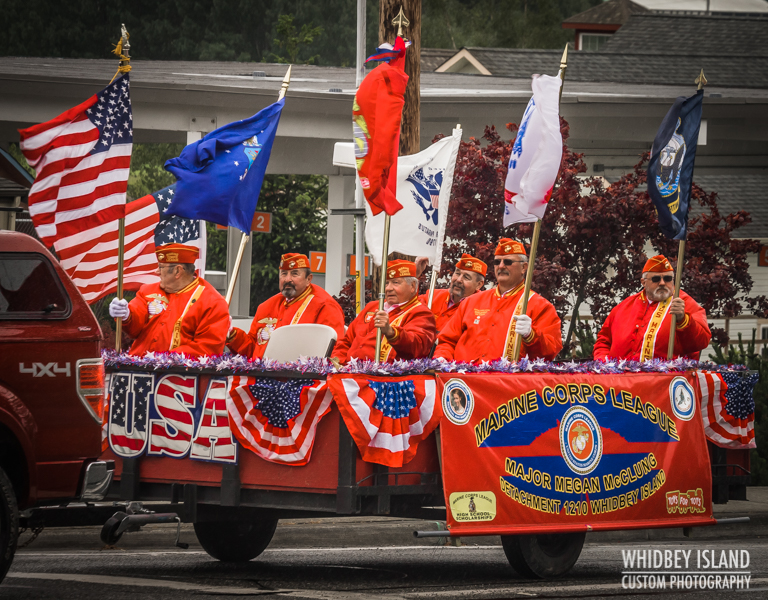
    On Saturday, May 28, the town of Coupeville remembered the greatest sacrifices made by fallen heroes. To honor these sacrifices, the community marched in the streets in celebration of freedom at the Memorial Day Parade.

    Heroic survivors lead the parade, followed by passionate tributes and vibrant local color in a procession across the town to a community picnic in Town Park. During the picnic, the Coupeville Lions Club served a seemingly endless amount of complimentary hot dogs and ice cream bars while families enjoyed a musical salute to the Armed Forces and the nearby playground bustled with youthful energy.

    Mayor Molly Hughes lead a Remembrance Service, with a keynote speech by Captain Geoffrey Moore, new commanding officer at Whidbey Island’s Naval Air Station.


    1 WCP - Memorial Day Sign - MD#1 (1 of 1)

    The Coupeville Memorial Day Parade took place on Saturday, May 28 during Memorial Day weekend.

    2 WCP - Marine Corp Float MD#2 (1 of 1)
    Veterans of the Marine Corps League proudly represented fallen heroes at the head of the Memorial Day Parade.

    3 WCP - Pearl Harbor Survivor - MD#3 (1 of 1)
    Pearl Harbor Survivor John Hunting of the US ARMY was joined by many other local Veterans at the head of the Memorial Day Parade in Coupeville.

    4 WCP - Marching Lion - MD#4 (1 of 1)
    Many generations of The Coupeville Lions Club participated in the march across town in honor of Memorial Day.

    5 WCP - Kids Getting Candy - MD#5 (1 of 1)
    There was inspirational joy during the Memorial Day Parade as candy was tossed into the streets, while smiles were shared by all-ages.

    6 WCP - Orca Attacking Salmon - #6 (1 of 1)
    While the mood was respectful, there was still lighthearted fun to be had at the Memorial Day Parade.

    7 WCP - Classic Cars - #7 (1 of 1)
    A cavalcade of Classic Cars cruised through Coupeville in honor of Memorial Day. Many of the drivers are Veterans.

    8 WCP - Fire Dept Vets - #8 (1 of 1)
    Whidbey’s bravest marched alongside the community for whom they have dedicated their service.

    9 WCP - Jacket with Patches - #9 (1 of 1)
    A view from the back: veterans and young family members lined the Memorial Day Parade route as spectators.

    10 WCP - Mayor Molly and Captain - #10 (1 of 1)
    A powerful Remembrance Service with Mayor Molly Hughes and Captain Geoffrey Moore followed the Parade.

    11 WCP - ROTC students - #11 (1 of 1)
    Young community members are proud to represent the Armed Forces.

    12 WCP - Empty Bottles - #12 (1 of 1)
    The Coupeville Lions Club served complimentary hot dogs and ice cream bars to the whole community following the Memorial Day Parade in Coupeville.

    Whidbey Custom Photography is a married duo of local photographers who believe in capturing the custom community that surrounds us. David Stern and Madisun Elizabeth use artistic approaches to showcase real life on Whidbey Island, which can be both industrial and romantic. In addition to event photography, they provide a variety of professional production services. Learn more about what they do at www.WhidbeyCustomPhotography.com and find Whidbey Custom Photography on Facebook for more of their photos.

    The couple is grateful to Whidbey Life Magazine for supporting them as local contributors.

    __________________

    CLICK HERE to read more WLM stories and blogsHave a great story idea? Let us know at info@whidbeylifemagazine.org.

    WLM stories and blogs are copyrighted and all rights are reserved. Linking is permitted. To request permission to use or reprint content from this site, email info@whidbeylifemagazine.org.