Tag: Whidbey Island

  • Public Forum on March 16:  Who’s in charge of your drinking water?

    Public Forum on March 16: Who’s in charge of your drinking water?

    March 9, 2016

    Two major gatherings on water and community will be convened at the Whidbey Institute from Wednesday, March 16 through Sunday, March 19.

    The initial event is a Public Forum that is free and open to all. It will consider the question: “Who’s in charge of your drinking water?” To explore this question, join with other community members on Wednesday, March 16 from 7 to 8:30 p.m. at Thomas Berry Hall, Whidbey Institute

    If you live in Island County, chances are that you are, in fact, in charge of our drinking water. The majority of water systems in Island County are community-owned and are accountable to their members through a council, commission, or board.


    WhidInstitutePhoto

    Could Flint, Michigan happen here? What are the threats to our drinking water? Attend our local drinking water forum to voice your questions and concerns and find out how you can help safeguard your water supply. Meet your State, County, and municipal drinking water staff. Join small group discussions to identify common concerns and find out how to participate.

    The panel assembled will consist of:

    •  Helen Price-Johnson, Island County Commissioner, District 1
    •  Keith Higman, Director, Island County Public Health Department
    •  Jennifer Kropack, Regional Planner, Washington State DOH Office of Drinking Water,
    •  Randi Perry, Utilities Manager, City of Langley
    •  John Lovie, Sun-Vista/Sunlight Beach HOA

    The session is supported by the Whidbey Institute and Thriving Communities Bioregional Conference.

    Thriving Communities Conference 2016:
    Water and Community

    A second gathering, “Thriving Communities Conference 2016: Water and Community” is scheduled for Thursday, March 16 through Saturday, March 19. The three-day conference will include films from the Duwamish River, Methow Valley, Vancouver BC and Whidbey Island’s Whidbey Watershed Stewards.

    For more information about Thriving Communities, go to www.Thrivingcommunities.org.

    For additional information about the three-day conference and/or to register, go to http://whidbeyinstitute.org/event/thriving-communities-2016/.

    Thriving Communities is a team of committed people from all walks of life who believe in the vitality and possibility that every community offers. There are many organizations focused with this view. We feel we are just one thread in the tapestry of wonderful people that do this work.

    Whidbey Institute launched this work in 2011 as part of its thoughtful approach to work for the greater good.

  • Heather Anderson || ‘Whidbey Writes’ March 2016

    Heather Anderson || ‘Whidbey Writes’ March 2016

    March 3, 2016

    Congratulations to Heather Anderson, our Whidbey Writes featured writer for March.

    Throughout the last year we recognized the volunteer editors of Whidbey Writes by publishing an entry from each of them. This month we are pleased to introduce Heather Anderson and her short fiction “Black Sunday.” We invite you to read the work from the other editors, Mureall Hébert and her short fiction selection “Welcome to the Party,” and Chris Spencer’s selection, “Bare Naked Betty.” We thank them for their dedication and talents and are grateful for their continued support of Whidbey Writes.

    The purpose of “Whidbey Writes” is to encourage writers with a Whidbey connection to submit short fiction and poetry for publication in Whidbey Life Magazine, thereby giving our readers an opportunity to enjoy these creative writings. Throughout the past year, Whidbey Writes has published monthly selections of short fiction and poetry online. The most popular of these entries will be published in the next Whidbey Life Magazine print issue; so if you like a story, share it!

    This program, originally created as a collaboration between Whidbey Life Magazine and the  Northwest Institute of Literary Arts, now continues as part of the creative writing section of Whidbey Life Magazine. Whidbey Life Magazine extends thanks to the Northwest Institute of Literary Arts for their ongoing support of Whidbey Writes.

    We are open to submissions year-round and we review all submissions quarterly; the next review will happen following the spring equinox on March 20. To learn more about Whidbey Writes and the submission criteria, visit the Whidbey Writes Submission page. To see previously selected writings, visit the Whidbey Writes page here.

    _______________________

    Black Sunday

    BY HEATHER ANDERSON

    Friday, April 12, 1935

    Texas

    The sun was almost white against the pale blue sky, but the rest of the world was brown, dirt brown. The sun bleached house, wagon, barn and plow, the people, animals and even the clothes laundered fresh that morning held a dingy, grungy dirt brown cast to them. The dirt was everywhere; in your hair, in your nose and even in the cupboards. The heat index was well over 90 for the the second month in a row.

    “Tilly said last week that the Tuner’s was leavin’.” Susanna snapped the ends off the green bean and tossed it in the bowl. A board creaked softly beneath the porch rocker.

    “Oh, Suzie. That’s hogwash. You know very well, Tilly Miller is a couple teaspoons short of soda in her biscuits.” Loretta tossed a peeled spud in a pot of water and replaced the lid.

    “I’m surprised at you. Talking ‘bout our neighbor that way. You know true as the color of your hair she’s the one’s been stirring up the dust. Without her we’d be flooding up to our eyes and our crops would be waterlogged.”

    Loretta shook her head.

    Bobby slammed through the screen door stopping the women’s conversation.

    “Bobby! Stop that, you’ll break the door. Did you set the table?” Loretta asked.

    “Yes’m.”

    “And you flipped the plates and cups?”

    “Yes’m.” Bobby stood in front of his momma. His leather shoes were worn at the toes and his socks sagged against the boy’s chicken legs. The rest of his moth eaten clothes hung lose on his skinny frame as well.

    “Good boy. Now go on’n take your pa some water!” Loretta said as Bobby leaped from the porch.

    “You should of seen this land before, Bobby. Rows ‘pon rows of wheat, sometimes as high as my chest, as far as the eye could see. The wind would sweep across it and the stalks moved like that shiny fabric your momma likes. It was a beaut’ before the rains came.” Smitty pulled the dirt encrusted red bandana away from his mouth and took a swig of water from his dented canteen.

    “I sure wish I coulda saw it. Pa, do you think it’ll ever be like that again?” Bobby asked, his voice muffled by his own bandana.

    Weathered wrinkles fanned out from Smitty’s eyes as he squinted against the glaring sun, trying to bring the picture back. Instead all he saw was dirt; in his eyes, on the ground, and swirling in the air as if taunting them. Two miserly rows of vegetables had sprouted despite the desiccated land. His lips pursed and his teeth gnashed together, bits of grit crunching between his teeth. He spit. “I reckon. Long as we can keep the rains at bay. We gotta cleanse the land first. Let it dry out some.”

    “When will it be clean?”

    “Soon, Bobby. Soon. You got chores to finish. Now go’on.”

    “Yessir.” Bobby snagged the canteen before he hopped off the wooden crate and ran toward the barn.

    “And remind your ma that there’s a meetin’ tonight after supper!”

    Bobby waved his hand.

    Smitty grumbled under his breath and started the gasoline tractor. The engine rumbled and he continued the plodding, halting path down the row, the plow scoring the dehydrated earth.

    After supper, Suzie, Loretta, Bobby, and Smitty piled into the wagon and went into town. As soon as they hit the edge of town, Bobby jumped from the back.

    “See y’all after the meetin’!” He waved and ran toward a group of boys loitering on the street.

    Smitty tethered the horse, then helped the women from the wagon. “Best not stay too long at the feed store, Smit. They’ll just get you all riled up. Meetin’ starts in ten minutes,” Loretta said and she and Suzie walked over to the school house to get set up.

    “We’ve done everything we can. There’s only a short time left now. Did ya’ll bring the soil?” Tilly Miller stood at the front of the classroom a wooden bucket in hand as the heads of the townsfolk nodded, murmurs surfaced then died down. “If ya’ll’ll come up one at a time and deposit your soil. I believe we’re almost ready.”

    One at a time families brought their satchels of dirt to the front and up ended them so every granule of dirt poured into the bucket. Dust curled up to float along the air as each satchel emptied. A dozen families later and Smitty emptied his satchel. The bucket was full. Tilly Miller’s thin lips spread in a broad smile spread across her face.

    “The time nears. You were asked to make sacrifices and you have done so. You were asked to desecrate the land with the new farming tools and sow unsuitable crops and you have fulfilled your responsibilities. The land is barren, overworked and primed.”

    The sweat, hunger, hard labor and sacrifices were finally about to pay off. The boys who’d been playing in the street crowded into the doorway, their youthful voices boisterous.

    Tilly Miller raised her hands in the air.“Black Sund’y approaches!” she said over the voices.

    “It’s about dang time,” Smitty said and crossed his arms over his chest. A smile tickled the edges of his mouth. Chatter rolled through the crowd, neighbors talking excitedly over each other. Heads nodded and hands slapped him on the back.

    Tilly Miller waited until the noise died down. “Ya’ll’ll need to prepare. Gather ya’ll’s loved ones. Gather only what ya’ll can carry. Leave behind all ya’ll’s possessions. Sund’y morning the storm will rise and the sand will fly.”

    Saturday, April 13, 1935

    Smitty woke early, checked his livestock and secured them in the barn. The sun had yet to wake but the stars began to fade. After his morning chores he headed inside for breakfast.

    “You ‘bout ready?” Smitty asked a sleepy eyed Bobby.

    “Yessir.” Bobby soaked up grease with a biscuit and shoved the rest in his mouth.

    “Bobby, smaller bites.” Loretta frowned at him.

    Bobby smiled around the biscuit. Then picked up his plate and handed it to his ma.

    “Head on out, I’ll be there shortly.” Smitty scrapped the last of his breakfast off his plate.

    Bobby ran outside with a whoop, the screen door slamming behind him.

    Smitty handed his empty plate to his wife, then leaned back in his chair to finish his coffee. “You ready?”

    “I am. It’s been a long time coming.”

    “It has.”

    “You best get out there. That boy’s liable to try and take the whole barn if we let him.”

    Smitty chuckled. The feet of his chair slammed against the wood floor, then screeched as he pushed back. “Ah’ight.”

    Smitty followed his son’s laughter into the barn and to the back stall.

    Bobby lay in the hay, surrounded by puppies.

    “Can I take them all?” Bobby asked as he looked up at his pa.

    Smitty shook his head and held up two fingers. “Two.”

    “Ah, Pa.”

    “There’s not enough room.”

    “Then I’ll take a boy and a girl. That way they can have pups.”

    Smitty nodded and smiled. “We gotta get ready now. Get the wood from behind the barn and take it on up to the house.”

    “Yes’sir.” Bobby scampered out of the stall and slammed the barn doors behind him.

    Smitty shook his head, then headed for the tools.

    April 14, 1935, “Black Sunday”

    “Pa! Pa!” Bobby, arms full of squirming pups, stared at the sky.

    Smitty, heaved the last of the supplies onto the truck, then headed toward his son’s hollerin’.

    “Look, Pa.” Bobby pointed to the sky with his elbow.

    When Smitty looked behind him, past the barn, the sky that had finally lightened to day grew dark.  “Here it comes. Go get your ma!”

    Smitty grabbed up the pups and stuffed them in the wooden crate tied to the back of the truck.

    “Smitty? Smitty!” Loretta said, her hand held tight in Bobby’s as he pulled her from the house.

    “Time to go, Etta.”

    She stopped at the side of the truck and pulled Bobby pulled his hand free of his ma’s.

    “Look, Ma!”

    “Oh, my word.” Hand on her chest, Loretta stared at the growing clouds of dust.

    “Time to go! Get in.”

    Smitty, Loretta and Bobby clambered into the truck.

    Dust rolled over the plains, blanketing the ground and filling the sky like storm clouds. The sky faded from light blue, to gray, to black and swallowed the barn.

    Smitty cranked the truck to life and headed west, away from the dust. Winds picked up as the clouds loomed near and before long, the torrent of winds drowned out Bobby’s excited laughter.

    Light gray winds raced past them and Smitty looked back just as the cloud of black enveloped the house. The truck bumped and rattled along the pocked road. Despite the gusts of wind drawing the dust storm near, Smitty felt only a slight summer breeze. The cloud around them grew darker and the road began to smooth.

    Blackness covered them like a sleeve and lifted the truck from the ground on a wave of dust. For the first time in months, the air around them was clean and it was easy to breath.

    They had been cleansed.

    Heather Anderson spends her days teaching and her nights writing. She is currently finishing up her first novel/thesis. She’ll be graduating with a MFA from Northwest Institute of Literary Arts in August of 2016. She writes flash, short and novel length fiction and has dabbled in creative non-fiction. She is currently an assistant fiction editor at Soundings Review and a volunteer editor at Whidbey Writes. Connect with Heather @heatherma17 and learn more at https://about.me/andersonheather

    __________________

    CLICK HERE to read more WLM stories and blogsHave a great story idea? Let us know at info@whidbeylifemagazine.org.

    WLM stories and blogs are copyrighted and all rights are reserved. Linking is permitted. To request permission to use or reprint content from this site, email info@whidbeylifemagazine.org.

  • Lumens || For the Joy of It!

    Lumens || For the Joy of It!

    BY SHARON BETCHER
    Whidbey Life Magazine Contributor
    February 24, 2016

    While sociologists of religion speak of the Pacific Northwest as the epitome of “the none zone” (where the majority of persons register no official religious preference on a census), most residents know Whidbey Island to home contemplatives, mystics, naturalists and activists of many religio-spiritual strains with a paradisal dream of living in intimate reciprocity with all beings. Lumens lifts up the voices and wisdom of those who live among us—the creatives whose very creativity, their luminescence, opens out from the taproot of the spiritual path and/or religious faith.

    Heron  (image by Frances Wood)
    Heron  (image by Frances Wood)

    For Frances Wood, naturalist, painter and author, birds are co–celebrants in a religiously tuned life. The beauty of a tanager, the intrigue of chasing a bushtit with the eyes, the power enfolded in the fragile bone structure of a hummingbird, and, yes, their 10,000 species—many with unique songs and some with regional accents, no less—open us to and, indeed, share with us the central existential character of the spiritual life—namely, joy.

    Wood is co–founder with Chris Peterson (also of Whidbey Island) of “Bird Note,” the two-minute daily vignettes on National Public Radio introducing the habits and habitats of the world’s birds. Asked to describe how birding fits into her spiritual life, she winks and then confesses: “I am a member of two churches—a Unitarian Universalist, who meets for ritual, community and social action, and a follower of the Church of the Low Tide. Both are needed to feed the spirit.” While inspiring and critical exploration with and through words might be like birdsong for the human community, Wood is adamant that as humans we must also learn to still our rational chatter, so as to let in the animal and vegetative immediacy of our world.

    Church of the Low Tide at Haida Gwaii with husband Bill Graves (photo courtesy of Frances Wood)
    Church of the Low Tide at Haida Gwaii with husband Bill Graves   (photo courtesy of Frances Wood)

    Asked to define the spiritual life, Wood quotes the Quaker theologian Parker Palmer: “The heart of the spiritual quest is to know the rapture of being alive and to allow that knowledge to transform us into celebrants, advocates, defenders of life.”

    “Nature,” Wood insists, “gives me…gives us that joy.” And if one is looking for a spiritual practice, birding requires a meditative discipline all its own—a presence to the “now”; a calm, serene, attentiveness that sets aside the ego; an appreciation of sensual stimulation, of beauty. Well, maybe it’s a bit more zen than that, Wood chuckles, since one must ever in birdwatching cope with the futility of it all as the bird takes to the sky or dives deep in blackberry tangles. Even if sometimes a futile chase, birdwatching does offer spiritual reward, leaving one feeling ever more alive. For Wood, the Church of the Low Tide is not that many feet from the doorstep of her rural Langley home, perched above Possession Sound.

    Wood’s daughter and granddaughter at Low Tide, 2015   (photo by Frances Wood)
    Wood’s daughter and granddaughter at Low Tide, 2015   (photo by Frances Wood)

    Nature is—for Wood, as for many in Cascadia, something of a cathedral—that place where self–consciousness drops away and we settle into animate immediacy to our world. With her own joy as obvious as a robin in the newly resurging warmth of the spring sun, Wood’s insights remind one of primatologist Jane Goodall’s reflection on “primate spirituality”—a question, really, as to whether the gorillas’ dance at the base of the waterfall in the Kakombe valley might be a proto-religious ritual. In light of Wood’s reflections, I find myself asking: might not birds, given the way they abandon themselves to song, be—as Goodall queries—co-religionists? And might birds, perpetually interacting with our human species, invite us into a joyful communion not so much a transcendental supplement but as the sheer ecstasy of being alive?

    Wood, who moved her residence from Mercer Island to Whidbey in 2000, has been wandering the low tides of Whidbey since childhood. In fact, four generations, extending over 100 years, have summered at the family cabin on Brighton Beach in Clinton. And it was on that beach when Wood was six that her eyes settled on a blue heron, a heron that—much to her indignation—was quickly chased off by a neighbor’s dog. It was her first memorable lesson in ecological habitat: “That weekender’s dog was a disruption in the daily habits of that blue heron.”

    “Bird Note,” begun about 15 years ago when Wood and Peterson both worked for the Seattle Audubon Society, was conceived as a way to invite listeners to enjoy the rapture of bird song and redress the connection to environmental habitat disruption. Given the immediacy of birds to our everyday world, here was a way beyond the “what’s in it for us humans” approach to environmental stewardship—a way that moved through joy to advocacy.

    Birding in France (photo by Bill Graves)
    Birding in France  (photo by Bill Graves)

    Although she had been painting birds for years, it was after a tour of Russia and an introduction to its religious iconography that Wood began to depict birds as icons. That work is packed away somewhere, and Wood now shakes off the iconographer’s sensibility: See the bird not as a “window to the divine,” but in and for itself, she proposes. Her own artistic renderings insist as much—their pen and ink ornithological specificity complemented by an abstract watercolor flourish that sets off the personality of each bird. Don’t look through it for the divine; see it rather as “this” bird here, this Steller’s jay that raucously rides the head of the eight-foot tall sunflower. “To me, the bird says it all,” Wood adds.

    Marsh Wren   (image by Frances Wood)
    Marsh Wren   (image by Frances Wood)

    “Naming” is really, really important, Wood, ever the teacher, tells me. Naming—as in “this bird with the taupe body and dark head now eating berries from my barberry bush here in January is a junco”—promotes deeper caring connection and, then, inevitably, protection. If I care about the red footed pigeon guillemot disappearing from the shores of Possession Point, then I will worry about what goes down the drain in my home or runs off my yard and what then leaches into ground water and runs into the ocean. Caring connection, in Wood’s view, is the precipitate to a moral life. Intimacy with the world will surface the moral duty—that is, the reflective recalibration of one’s life habits in light of the environmental crisis.

    Wood in her Langley Garden 2015   (photo by Bill Graves)
    Wood in her Langley Garden 2015   (photo by Bill Graves)

    Amidst climate change and earth’s sixth great extinction, joy is as much a necessity as ever. Joy, Wood proposes, is not just pleasure or mere happiness. Joy is a more profound relationship to the world which isn’t necessarily undone by loneliness or suffering. Joy names the ecstasy of being alive, the adoration of the nested communion we call home. The cultivation of that joy-filled life is as close as the whisper of a wing, the “cronk” of a heron, the pip of a duck.

    Wood’s book, “Brushed by Feathers: A Year of Birdwatching in the West” (Fulcrum Publishing, 2004) is available at Moonraker Books in Langley. Her paintings are available through the Rob Schouten Gallery, Greenbank.

    Image at top: Wood amidst Spring on Whidbey 2015.   (photo by Bill Graves)

    An academic theologian and philosopher by background, Sharon Betcher is now an independent scholar, writer and wannabe farmer living on south Whidbey. As a writer, she won the 2012 Short Story Smash and took first place in the memoir category of the Whidbey Island Writers Association’s 2012 contest. In March 2015, Betcher presented at the annual Women of Whidbey (WOW) Stories Conference.

    __________________

    CLICK HERE to read more WLM stories and blogs. Have a great story idea? Let us know at info@whidbeylifemagazine.org.

    WLM stories and blogs are copyrighted and all rights are reserved. Linking is permitted. To request permission to use or reprint content from this site, email info@whidbeylifemagazine.org.

  • The Not-So-New Kid on the Block || Go Take a Flying Leap

    The Not-So-New Kid on the Block || Go Take a Flying Leap

    BY LES McCARTHY
    February 24, 2016

    Lizards do it. Squirrels do it. Even baby lemurs do it. So, I am, too…taking a flying leap, that is.

    It’s Leap Year and February 29th is coming around…so, I’ll be leaping. I’m leaping at the opportunity for change and a new chapter in my life. I don’t know exactly what it will be, but every four years I challenge myself to take something new on—and the time is nigh.

    Leaping5Some might think this crazy or scary—but it’s also exciting. What lies before me? What will this next step bring?

    Luckily for me, this extra day gives me time to get my head around this next unknown (yet) adventure and prepare myself to be open to whatever “it” may be. It’ll dawn on me soon enough, but I need that time. Or maybe I’ll just mosey along as I walk the dog, adding some little leaps to my steps while I ponder all that is possible. This time only comes around once every four years—why not make the most of it?

    Leap Day…an extra 24 hours…an extra day! However, technically, it’s not really an extra day as much as one we stick into this month to catch our calendars up with the rotation around the sun. It actually takes 365 ¼ days each year to accomplish that feat. What happens to those extra six hours that we don’t count? We put them together every four years to make up an extra day… welcome Leap Day!

    Leaping4It is said that the Egyptians probably were the first ones to incorporate a Leap Year Day but Caesar was given the credit when it was added to the calendar, way back, in 46 B.C. And a little known fact—this added day doesn’t totally correct the offset of the rotation/calendar year as it’s off by about 11 minutes. So, Pope Gregory XIII came to the rescue of time and decreed that Leap Year would be skipped three times every 400 years. I don’t know when we’ll skip the next one…guess we’ll leap over it.

    And though Leap Year Day was established to keep our calendar aligned with nature, folklore states that babies born on February 29th (called leaplings or leapers) are unruly and difficult to discipline. Probably because they only get a real birthday once every four years! I’d be unruly, too! And, if you are a leapling, you are one of roughly 200,000 in the United States and one of the five million worldwide. Your chance of being born on this day is 1 in 1500 and, this year, over 10,000 leapers will join us in the United States. Happy Birthday to you, little leaplings!

    Thanks to early feminist, St. Bridget, some 400 years ago in Ireland, love is now associated with Leap Day, as well. At the time women were not allowed to propose marriage to their sweethearts. She complained to St. Patrick about this disparity and he allowed the reversal of proposals—but only on one day. And yep, you guessed it…Leap Day was then noted as a day of opportunity for the women who then were called “old maids” and for love.

    Leaping1Joshua-earleIn the 1879 opera “The Pirates of Penzance,” the character Frederic is apprenticed with a band of pirates until his 21st birthday. When that day arrives he goes ashore, falls in love and plans to marry. UNTIL … dun-da-dun-dun… the pirates realize that Frederic was born a leaper and (due to the Leap Year cycle), wouldn’t finish his duties on ship until 1940, when he would be well into his 80s. Poor Frederic had to leave his love and go back to sea. Argh!

    A few years back (four years ago, actually) my son and his girlfriend happened to be at the Duke Lemur Center in Durham, NC on Leap Day so they, oddly enough, were surrounded by actual leapers—of a different variety.

    leaping2You’ve got a few days to think about this—so make a plan and whatever you do on this Leap Year Day—leap into it. Do something you’ve never done before—take a leap at something new, something fun; open yourself to a new chapter. Enjoy these extra 24 hours and, well—I say this with only good will in my heart—go take a flying leap!

    Les McCarthy is an author, entrepreneur and IPPY bronze medalist for her yearly “Healthy Living ~ Healthy Life: 365 Days of Nutrition & Health for the Family” calendars. She’s been nearly 20 months on the island and in the NW and loves every gorgeous bit of it (especially the fog). She joyfully tends to her dwindling geriatric fur factory and looks forward to the return of the slugs and snails (and sunshine)!    (photos courtesy of Les McCarthy.)

    __________________

    CLICK HERE to read more WLM stories and blogsHave a great story idea? Let us know at info@whidbeylifemagazine.org.

    WLM stories and blogs are copyrighted and all rights are reserved. Linking is permitted. To request permission to use or reprint content from this site, email info@whidbeylifemagazine.org.  


  • Langley is for the Birds—Big, Colorful Birds…

    Langley is for the Birds—Big, Colorful Birds…

    PHOTOESSAY BY DAVID WELTON
    Whidbey Life Magazine Staff Photographer
    February 17, 2016

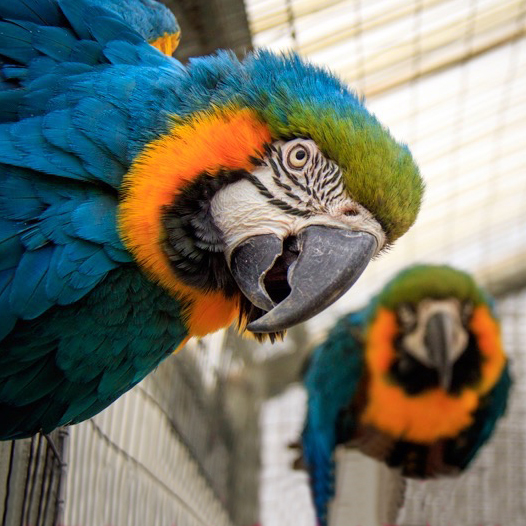
    Don’t be alarmed! If you happen to spy a large, multicolored, tropical bird flying through the forest on the south end of Whidbey Island, you’re not hallucinating or losing your mind. The parrot or macaw is likely a resident of Flying Colors Aviary.

    Susan Hilliard and Mark Hockett operate the aviary with a staff of seven professionals, several of whom possess degrees in zoo-keeping. Hilliard, a lifelong animal lover, has a canine rescue background and previously owned a performing parrot show. She rarely failed to adopt homeless birds as she discovered them, and was eventually forced to search for a place to properly care for her growing foster flock. This search led her to the Langley area.

    Georgia Edwards has been vetted by her new friends: Jude, Angel and Midori.
    Georgia Edwards has been vetted by her new friends: Jude, Angel and Midori.

    Flying Colors Aviary is one of at least seven parrot rescue facilities that exist in Puget Sound. Parrots, macaws and cockatoos are among the longest-lived animals. The larger of these “psittacines,” with lifespans of 60-80 years, can outlive their owners and must be re-homed when circumstances change.

    The couple’s 120 feathered friends live in a spacious aviary with shelter and heated perches on a large estate, but each bird has a private space in which to retreat when needed. Hilliard is recognized for her ability to train her free-flying birds so they don’t wander, always returning to their roosts for their “three hots and a cot.”

    Midori loves our photographer, David Welton, and wants a “selfie.” Welton, however, had to assist, since Midori tried to eat his camera.
    Midori loves our photographer, David Welton, and wants a “selfie.” Welton, however, had to assist, since Midori tried to eat his camera.

    Birds are available for adoption and may be returned to the Aviary, Hiliard said, “if things don’t work out.”

    Hilliard and Hockett can be contacted, for further information, via Flying Colors Aviary on Facebook.


    Each bird has a distinct personality and Susan Hilliard has named each of them. She is hand-feeding Joule, while Midori, who befriends everyone, hopes for a handout.
    Each bird has a distinct personality and Susan Hilliard has named each of them. She is hand-feeding Joule, while Midori, who befriends everyone, hopes for a handout.


    Mark Hockett cuddles Clarence, a hyacinth macaw with a three-foot wingspan.
    Mark Hockett cuddles Clarence, a hyacinth macaw with a three-foot wingspan.


    Visitors sign in and are encouraged to leave jewelry outside. Glasses however are shiny and equally attractive to Huey, a Rose Breasted Cockatoo.
    Visitors sign in and are encouraged to leave jewelry outside. Glasses however are shiny and equally attractive to Huey, a Rose Breasted Cockatoo.


    Carissa Kraszewski gets a kiss from Rowdy!
    Carissa Kraszewski gets a kiss from Rowdy!


    The deck is crowded, so Angel, the cockatoo, moves on, searching for someone else’s head.
    The deck is crowded, so Angel, the cockatoo, moves on, searching for someone else’s head.


    Huey and Angel take flight at the edge of bare January alder forest at Flying Colors Aviary.
    Huey and Angel take flight at the edge of bare January alder forest at Flying Colors Aviary.


    Ariel stretches her wings through the conifers, and then returns to her home at the aviary.
    Ariel stretches her wings through the conifers, and then returns to her home at the aviary.


    Scarlet MAcaw in Flight


    Grace, a Macaw, displays her colors and imitates a rainbow.
    Grace, a Macaw, displays her colors and imitates a rainbow.

    Image at top: Visitors must undergo a bird-scan by security officers Max and Frostbite before entering the aviary. Peanuts in the pocket will move one to the head of the line.

    David Welton is a retired physician and staff photographer for Whidbey Life magazine.

    __________________

    CLICK HERE to read more WLM stories and blogsHave a great story idea? Let us know at info@whidbeylifemagazine.org.

    WLM stories and blogs are copyrighted and all rights are reserved. Linking is permitted. To request permission to use or reprint content from this site, email info@whidbeylifemagazine.org.
     

  • Ladies of the Beach: Walking the Island’s Edges for the Last 40 Years

    Ladies of the Beach: Walking the Island’s Edges for the Last 40 Years

    BY DEB CRAGER
    Whidbey Life Magazine Contributor
    February 17, 2016

    Whidbey Island is unique in its shape and terrain, beautiful, and a little rugged. Just ask the group of women who know the edges of the island better than anyone.

    Harriet Hertzog, Alice Field and Alice Hanson started walking on the beaches around the island in 1975. Hertzog noted in her journal that they were seeking fresh air, exercise, a new and exciting experience and the fellowship of kindred spirits. Initially calling themselves The Whidbey Walkers, they quickly became known as the Ladies of the Beach.

    Three generations of walkers, Nan El-Sayed on the right, daughter Christi Shaffer in the middle, and granddaughter Megan Bean on 2003 (Photo courtesy of Christi Shaffer)
    Three generations of walkers, Nan El-Sayed on the right, daughter Christi Shaffer in the middle, and granddaughter Megan Bean on 2003 (Photo courtesy of Christi Shaffer)

    It took two years for Hertzog and Field, in their “short pants,” to go completely around the island. By then, two more women, Idelle Bailey and Marilyn Visser, joined. Three others completed the route by 1980, with at least six new members working on it. As the group became larger, a logo was designed and T-shirts and notecards created.

    Ladies of the Beach started on South Whidbey, but has since spread geographically, with members coming from all areas on the island, said Ann Christensen, a former leader, current member, and Clinton resident. It’s still going strong, although under new leadership.

    From the archives—two ladies in their “short pants” (Photo courtesy of Ladies of the Beach)
    From the archives—two ladies in their “short pants” (Photo courtesy of Ladies of the Beach)

    Every week, a different route is chosen, and communicated to all the walkers.. Car pools help with parking and protection of the environment. The group has divided the walk around the island’s edges into 48 different segments, each with an average distance of three to four miles.

    There is only one area on the island that cannot be walked on the beach, according to Joanne McMillen, current leader. “The route from Deception Pass to Cornet Bay has only cliffs—no sand and no beach.” Some walks may be cancelled if the weather is too rough. Flexibility is the key, the ladies agreed. The women must be willing to carpool, have meeting points, and work as a group.

    It may take several years to complete the 156-mile trek; some women take longer, but completion is dependent on the schedules, routes, weather and the tides. Many of the women are retired, although others may take off work to complete the weekday commitment.

    Many women have participated over the years, walking year-round in all kinds of weather. “It was such a glorious experience!” Barbara Lindahl, another early walker, said. “We shared new ideas and—every week—a new adventure.”

    Ladies of the Beach logo, designed by Barbara Lindahl (Courtesy of Barbara Lindahl.)
    Ladies of the Beach logo, designed by Barbara Lindahl (Courtesy of Barbara Lindahl)

    Some women stay for only a few years, leaving the group once they finish their walk; others have walked the perimeter several times. Membership has always been by invitation only, and three walks must be completed during the months of October through March before a walker is officially accepted as a member. No umbrellas or pets are allowed, and cell phones are discouraged except for emergencies and coordination. Those who complete the entire trip around the island celebrate with a graduation ceremony, a certificate and small gifts, handmade from beach flotsam.

    “There may be anywhere from four to 30 walkers, so the group may be loud and talkative, but usually we break up into smaller groups and talk quietly,” McMillen said. The women have permission to travel along the beach, gaining access from private owners as well as public places. Christensen said the group carries a copy of the state statute allowing them access, in case homeowners question their travels. They enter and exit the beaches through well-known public areas or approved private access points. Safety is critical to the group, and they walk only as fast as the slowest walker. In their efforts to be good island stewards, they also pick up the debris along the beaches while they walk.

    People have been very accommodating, member Betty Discher, said. “‘Are you those ladies?’ we’ve been asked. Now we have a reputation!”

    Lindahl said the Navy stopped their target practice once so they could walk the beach near the firing range. She remembers crossing the range with Tommie Byers, another walker, on a very hot day at the end of their four-mile walk. Two or more groups had already been turned away, she said, but Byers didn’t want to walk another mile or more to get the car.

    “We started across and a very young enlisted man came out of the bunker and told us to leave,” she recalled. “Tommie—with her hand on her hip and the other pointing at him, said: ‘Now son, we left our car over there and we are going to walk to it. Just tell your Chief that is what we are going to do.’

    “As we left, we could hear the Chief admonishing this poor kid, in no uncertain words, and with plenty of expletives. To this day I can still see Tommie standing there, pointing her finger and saying ‘Now, son…’ That is one of my favorite memories.”

    More recent times—Melahn Murphy, Marty Kortebein, Sue Bansbach, Margaret Land and Andrea Loeser (Courtesy of Ladies of the Beach)
    More recent times—Melahn Murphy, Marty Kortebein, Sue Bansbach, Margaret Land and Andrea Loeser (Courtesy of Ladies of the Beach)

    Noreen Warnock still has her marked map from years ago, when she spent three years completing her journey. She found the other women so interesting, she said, with their own histories and families. She added that each walk was unique, and recalled seeing tires and other objects that had been placed along the banks to slow their erosion. She left the group in 1994.

    In addition to friends, there were a few mother-daughter teams too. Nan El-Sayed joined at the age of 76, completing her walk when she on her 80th birthday. “She was very excited about finishing,” said her daughter, Christi Shaffer, who also was in the group. “It took me a little longer, but I finished, too. And we have the closest friends here because we were part of it,” she added.

    “I’ve made my way around the island several times,” Mollie Leengran said. She retired as the leader of the group in 2000. “Then it was more about just getting together; there wasn’t any pressure.” But what is most important—all the women agreed—is meeting up for lunch afterward, whether it’s in a restaurant, or the “driftwood inn” on the beach. According to Gwen Coughenour, another member, the Ladies are a “walking, talking, eating group!”

    Now there are field trips during the worst winter months when there may be little walking because of the tides. “There’s the holiday party, the trip to Port Townsend, the trip to Seattle and cranberry picking,” McMillen said. The group is also responsible for the highway cleanup from Bush Point Road to Scott Road in Freeland.

    Ladies of the Beach at the beach of South Whidbey State Park(Photo by David Welton)
    The larger group, heading down to a beach walk near South Whidbey State Park (Photo by David Welton)

    Discher grew up on the island, but knows it so much better now, she said. “I’ve dedicated myself to learning what the island is all about. We’ve learned that the beaches change throughout the year and—over the years—sometimes we’ve had to go over logs, under logs, and through the water.”

    In the last 40 years, there have been lots of changes to the island’s “edges,” but the pull to be part of this group of women walkers is still there. “I really wanted to join this group after I heard about it,” Christensen said. “I’ve had a chance to know the island better, and I’ve made so many friends. Ladies of the Beach was an opportunity for exercise and an environment for socializing,” she added, “and most of the Ladies still feel the same way.”

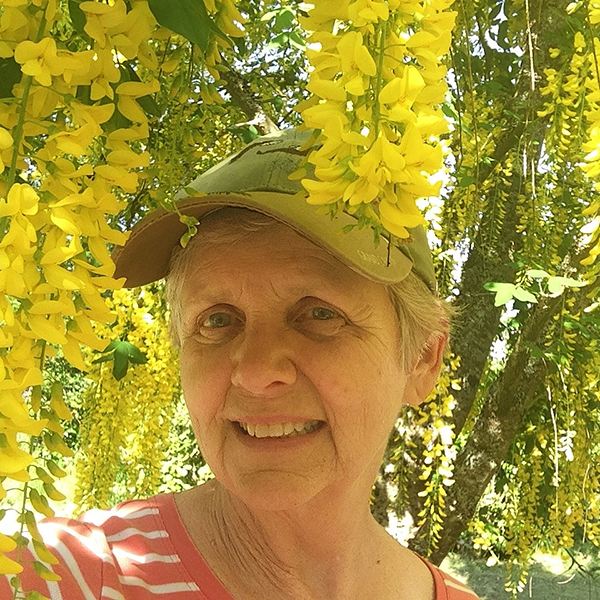
    Image at top: Nan El-Sayed celebrating the completion of her walk at 80, after four years of walking (Photo by Pat Brookes)

    Deb Crager is originally from the Midwest but has lived on the island for 25 years. She wrote the book “101 Things to do on Whidbey Island: for a Day, a Weekend, or a Lifetime” available on iPad and Kindle Fire, with older copies in print from Amazon and ebay.

    __________________

    CLICK HERE to read more WLM stories and blogsHave a great story idea? Let us know at info@whidbeylifemagazine.org.

    WLM stories and blogs are copyrighted and all rights are reserved. Linking is permitted. To request permission to use or reprint content from this site, email info@whidbeylifemagazine.org.

  • Chocolate Means Love in the Language of the Senses

    Chocolate Means Love in the Language of the Senses

    BY BETTY FREEMAN
    Whidbey Life Magazine Contributor
    February 10, 2016

    Walking into Sweet Mona’s Chocolate Boutique in Langley opens a visitor to a smorgasbord for the senses. One inhales the lovely chocolate aroma, imagining sweetness melting in your mouth.

    “Chocolate fills a basic human need,” said Matt Habib, the son of owner Mona Newbauer, as he manned the front counter. “Chocolate is known for producing euphoria,” he said with a smile. “People can’t seem to stop giggling when they come to the counter.”

    Mona makes these chocolate lollies for Valentine’s Day. (photo by Betty Freeman)
    Mona makes these chocolate lollies for Valentine’s Day. (photo by Betty Freeman)

    “It’s the food of the gods.”

    I knew that. What I didn’t know was the history of this delicious treat that everybody loves. So I asked Mona’s husband, Tony Newbauer, for a tutorial.

    Chocolate, the fermented, roasted, and ground beans of the Theobroma cacao, can be traced to the Mokaya and other pre-Olmec people in Central America, with the earliest evidence of chocolate beverages dating back to 1900 BC.

    The Aztecs believed that cacao seeds were the gift of Quetzalcoatl, the God of wisdom, and the seeds had so much value they were used as currency.

    It was also believed to have aphrodisiac powers and to give the drinker strength.

    “Spanish explorers in Central and South America brought it back to Spain, but people didn’t like the bitter taste until they tried a concoction made by nuns who sweetened it with honey,” Tony said.

    “So drinking chocolate was born, and it became the preferred drink of royalty and the wealthy.”

    “The Europeans, especially the Swiss and Belgians, added milk to the sweetened chocolate to make their own product,” he added, “but the cacao beans they use come from Central America or Africa.”

    These chocolate ladybugs are one of Mona’s pet inventions. (photo by Betty Freeman)
    These chocolate ladybugs are one of Mona’s pet inventions. (photo by Betty Freeman)

    Mona Newbauer originally bought chocolate for her confections from France but, after a trip to Ecuador to a chocolate plantation, she decided to switch to “origin” cacao beans from Columbia, the Dominican Republic, Ecuador, Mexico, Papua New Guinea, Peru, Tanzanie, Sao Thomé, and Venezuela.

    “Chocolate needs a hot, wet climate to grow, so it grows best within 20 degrees north and south of the equator,” she said.

    “I fell in love with origin chocolate because Tony and I went to Ecuador and walked a plantation, whacked open fresh cacao pods and saw the harvesting process first-hand.”

    “It’s one thing to make candy, but another to see families working together as they have for generations in these cacao groves,” she added.

    Newbauer started out in the chocolate business 13 years ago, creating truffles for Second Street Bakery in Langley. After the bakery closed, she opened her first shop, Island Angel Chocolates, which eventually morphed into Sweet Mona’s Chocolate Boutique.

    Mona created these dark chocolate loganberry liqueur medallions for Whidbey Island Distillery for the Red Wine & Chocolate event. (photo by Betty Freeman)
    Mona created these dark chocolate loganberry liqueur medallions for Whidbey Island Distillery for the Red Wine & Chocolate event. (photo by Betty Freeman)

    In 2014, the Newbauers bought and renovated a building in Langley Village. In addition to increased kitchen space, the new shop offers a cozy soda-shop atmosphere where people like to gather. Outside, lovely gardens frame the shop year-round.

    Currently, Newbauer and her staff are preparing for one of the busiest holidays for chocolatiers, Valentine’s Day. In addition, she is contributing to two chocolate-themed events on Whidbey this month—the Red Wine and Chocolate Tour of local wineries and distilleries and the Coupeville Chocolate Walk.

    Tristan Stanley, who was personally trained by Newbauer in the art of working with chocolate, can be found backstage in the shop most days, creating confections that tempt the senses—delights like solid chocolate hearts or Newbauer’s signature truffles or salted caramels.

    Sweet Mona’s employee Tristan Steele creates chocolate hearts for Valentine’s Day. (photo by Betty Freeman)
    Sweet Mona’s employee Tristan Stanley creates chocolate hearts for Valentine’s Day. (photo by Betty Freeman)

    Mona Newbauer sees her hand-made chocolates as luxurious treats that also connect people to fond memories. “My dad bought me chocolate for every holiday,” she said. “I think people equate chocolate with being loved.”

    “Our motto is: ‘We sweeten the world,’” Newbauer said. We want people to have a sweeter day, a sweeter life.”

    For additional information about Sweet Mona, click onto their website here: sweetmonas.com.

    Image at top: Mona Newbauer stands beside her shelf of origin chocolate, which she imports from several Central American countries.   (photo by Betty Freeman)

    Betty Freeman is an admitted chocoholic who thinks Mona Newbauer’s salted caramels are indeed the food of the gods.

    __________________

    CLICK HERE to read more WLM stories and blogsHave a great story idea? Let us know at info@whidbeylifemagazine.org.

    WLM stories and blogs are copyrighted and all rights are reserved. Linking is permitted. To request permission to use or reprint content from this site, email info@whidbeylifemagazine.org.


    Two Chocolate Extravaganzas on Whidbey this Month

    In February, the message of chocolate is clear—chocolate signifies love.

    Sweet Mona’s will be creating chocolates for two Whidbey Island events in February.

    Red Wine & Chocolate Tour

    The annual Red Wine & Chocolate Tour continues on Feb. 12-13, at five venues on South Whidbey.

    Local winemakers and distillers will pour a selection of handcrafted wines and spirits paired with specially selected chocolates, including the loganberry liqueur medallions commissioned from Mona by Whidbey Island Distillery.

    Tickets for the Red Wine and Chocolate Tour are $20 in advance and can be purchased online at www.brownpapertickets.com/event/2413214.

    Or get your ticket from the participating venues: Blooms Winery, Holmes Harbor Cellars, Whidbey Island Distillery, Spoiled Dog Winery and Comforts of Whidbey.

    For more information, visit http://www.whidbeyislandvintners.org.

    Coupeville Chocolate Walk

    The Coupeville Chamber of Commerce and The Whidbey Examiner invite you to spend Saturday, Feb. 13 from 11 a.m. to 3 p.m. enjoying all the sweet things local merchants have to offer at the first-ever Coupeville Chocolate Walk.

    Participating businesses will offer a free chocolate-themed gift, including fine chocolates from Whidbey Island chocolatier Sweet Mona, a chocolate beverage, or other treat.

    Tickets are available for $20 per person in advance and can be purchased from the Coupeville Chamber of Commerce, Whidbey Island Heritage Bank in Coupeville and Cascade Insurance.[/vc_column_text][/vc_column][/vc_row]

  • Surviving the ‘Really Big One’ by Linda Russell

    Surviving the ‘Really Big One’ by Linda Russell

    BY LINDA RUSSELL
    Whidbey Life Magazine Contributor
    February 10, 2016

    “…everything west of Interstate 5 will be toast.” So said Kenneth Murphy, director of FEMA’s Region X in the July 20, 2015 edition of the New Yorker magazine article, “The Really Big One.”

    According to the article’s author, Kathryn Schulz, “An earthquake will destroy a sizable portion of the Pacific Northwest. The question is not if but when.”

    Fear-mongering? Hyperbole? We on Whidbey Island know that we live in an earthquake-prone area, but what does fear accomplish? I decided to be proactive and find out what we on the Island can do to prepare for the eventuality of a really big earthquake, so I made an appointment with Rusty Palmer, the Fire Chief for South Whidbey Island. Not surprisingly, he has studied earthquake survival and has plenty of advice for those of us who live on the Cascadia Subduction Zone.

    Have plenty of fresh water in stock. ((photo by Les McCarthy))
    A first aid kit will come in handy. (photo by Les McCarthy)

    He emphasizes that, on Whidbey Island, we will be a low priority for emergency workers. Conventional wisdom suggests a three to four day’s supply of food, water, medicines and other necessary supplies. We, however, must prepare to be totally self-sufficient for three or more weeks. “You’ll be totally on your own,” Palmer advises, “so ask yourself what you’ll need in order to survive without any help from the outside world.”

    What does that look like? Establish a place to collect necessities such as food and water. As for food, freeze dried food is good but canned foods that don’t require cooking are fine. A supply of beef jerky affords a quick way to get necessary protein. And don’t forget dog and/or cat food if you have a pet.

    Have plenty of water—at least one gallon per person per day! A good first aid kit and any necessary medicines are a must. Flashlights, a battery-operated radio, extra batteries and a battery charger are crucial, as is a cell phone charger that is solar powered. Or plan to charge your phone from your car. A fire extinguisher is also a must. In addition, Palmer says it’s essential to have a “supply stash” in your car, as you may be forced to spend considerable time there!

    Have a stash of cash; small bills are best. (photo by Les McCarthy)
    Have a stash of cash; small bills are best. (photo by Les McCarthy))

    Other items that should be in your survival kit include a loud whistle to signal for help, and something that never occurred to me—a large supply of cash ($500 to $1,000) in small bills. Remember, the electrical grid will be out, so cash will be the only means of purchasing anything from food to gas. Be sure to have blankets and long-sleeved clothing, too. For other suggestions, download the “Emergency Supply List” at www.ready.gov/build-a-kit.

    With your post-earthquake supplies in stock, look at ways to protect yourself before an earthquake. There are several things that you can do. Palmer suggests taking a survey of your home to determine potential hazards. He recommends securing heavy furniture to the wall with flexible straps and attaching mirrors and pictures to the walls with earthquake putty. As for me, I have a collection of decorative glass vases and bronzes and, for what it’s worth, I plan to attach them more firmly to their shelves with earthquake putty. This won’t help in the event of the New Yorker’s “Really Big One,” but I’ll feel better!

    It’s also critical to secure your refrigerator, hot water heater and other appliances with straps screwed into wall studs to prevent them from falling and rupturing gas and electric connections. In addition, your hot water may become a valuable source of drinking water.

    photo-187
    Have plenty of fresh water in stock. (photo by Les McCarthy)

    Practice how to “Drop, Cover and Hold On” with your family. Identify a large, sturdy piece of furniture, such as a table or desk, to duck under as soon as the shaking begins. Cover your head and neck with your arms. Hold on to your “shelter” so you can move with the object until the shaking ends. If you don’t have a piece of sturdy furniture, identify an area where the walls will form a tripod over you. If you’re outdoors, move away from buildings that might fall and drop to your knees. If you’re in your car, stop as quickly as possible; it’s difficult to control a moving vehicle. Stay in your vehicle until the shaking stops.

    Remember, quick reactions are of the essence! Palmer stresses that you’ll have just five to ten seconds from the first tremors until things start to fall, so seek cover immediately.

    What to do after an earthquake? Once you’re sure the shaking has stopped, and if it’s safe, leave the building and move to open ground. Know how to turn off your propane and electric power and do it immediately. If you’re trapped, blow your whistle or pound on pipes—anything to attract attention.

    Flashlights, lanterns and extra batteries are essential.
    Flashlights, lanterns and extra batteries are essential. (photo by Les McCarthy)

    Stay away from damaged areas, and render assistance to injured parties if you have training. Remember, aftershocks will continue so if you feel shaking, drop, cover and hold. Because of our location, Whidbey will most likely not experience a large tsunami, but be aware of the Tsunami Evacuation Route in your neighborhood.

    Finally, if your home is no longer safe, text the word “SHELTER” plus your zip code to 43362 (4FEMA) to find the nearest shelter.

    We live in a beautiful place, a place shaped by landslides, flooding rivers, high tides and, yes, potential earthquakes. But, Whidbey Island is where I choose to live, so I’ll take prudent steps to safeguard myself, my loved ones and my home. And no amount of sensational journalism will convince me to leave.

    For more information, log on to www.ready.gov/prepare or email prepareAthon@fema.dhs.gov.  Also, the government has an excellent publication, “How to Prepare for an Earthquake,” which you can pick up at any fire station. You can also get a copy of the magazine, “Living on Shaky Ground” by calling 707-826-6019.

    Image at top:  Fill a bin with emergency supplies. Use or refill food and water every six months.   (photo by Les McCartney)

    Linda Russell is a transplanted Texan who has lived happily on Whidbey Island for 15 years. In a previous life, she taught English, theater arts and creative writing. She enjoys bird watching, beach walking with her Schnauzer, entering “The Short Story Smash” and traveling.

    __________________

    CLICK HERE to read more WLM stories and blogsHave a great story idea? Let us know at info@whidbeylifemagazine.org.

    WLM stories and blogs are copyrighted and all rights are reserved. Linking is permitted. To request permission to use or reprint content from this site, email info@whidbeylifemagazine.org.

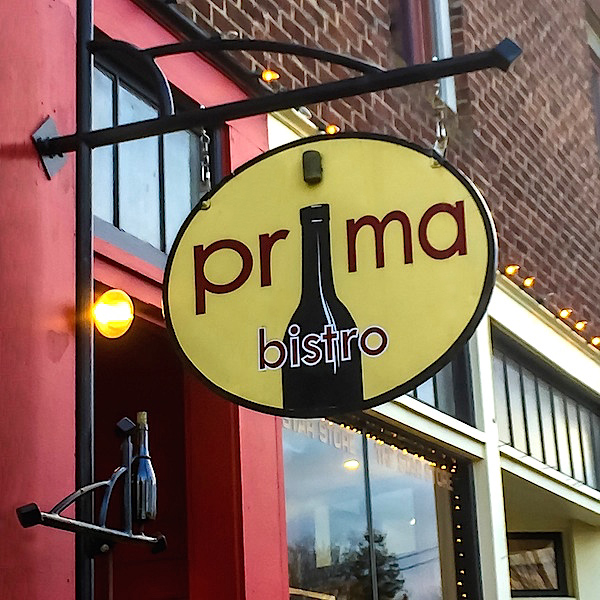
  • The Prima Bistro Wine List Decoded

    The Prima Bistro Wine List Decoded

    BY CHRISTY KORROW
    Whidbey Life Magazine Contributor
    February 3, 2016

    With his long braid and quiet demeanor, Sieb Jurriaans can often be seen at Langley’s Prima Bistro. Identifiable also by his white chef’s jacket and tattooed arms, Jurriaans and his wife Jenn opened the doors to their popular Whidbey Island restaurant in 2006.

    In addition to writing the menu—French cuisine with Pacific Northwestern influence—owner and head chef Jurriaans has thoughtfully built, and maintains, the eatery’s extensive wine list. I sat down with Jurriaans during that quiet calm between the lunch and dinner rush to get an insider’s view of the list that he carefully curates.

    Head chef Sieb Jurriaans and his wife Jenn opened Prima Bistro in 2006. (photo by Chris Korrow)
    Head chef Sieb Jurriaans and his wife Jenn opened Prima Bistro in 2006.  (photo by Chris Korrow)

    The Prima Bistro wine list is a well-focused selection of over 100 bottles and 30 glass-pours from Oregon, Washington and several regions of France. “That all has to do with what goes well with what we serve here and also because of my own personal tastes,” Jurriaans said.

    Region, price, taste, style and even the less tangible philosophical aspects of wine influence the selections when building a restaurant’s wine inventory. Jurriaans likes to think of wine as food. “Wine is meant to be an integral part of the meal, which is how they look at it in France. When I am building the list, I am thinking about what is going to go well with our food.”

    Jurriaans tastes wines twice and sometimes three times a week with his distributor and, over time, the style of wines he is looking for has become well-defined, “I can taste wine and know immediately whether it is a fit for our list or not,” he said.

    Specialty wines served by the glass are kept fresh in a WineKeeper. The Prima Bistro wine list features over 100 bottles and 30 glass-pours from France, Oregon and Washington. (photo by Chris Korrow)
    Specialty wines served by the glass are kept fresh in a WineKeeper. The Prima Bistro wine list features over 100 bottles and 30 glass-pours from France, Oregon and Washington.  (photo by Chris Korrow)

    So what are the chef’s favorites?“I’m a big Burgundy and Southern Rhone guy,” he said. Burgundy wines are made with Pinot Noir grapes and Southern Rhone wines are most often blends based on Grenache and Syrah. “I think Southern Rhones are probably the best food wines there are,” he added. Emphasizing the wine’s versatility, Jurriaans often steers customers in this direction. These reds range from the lighter Côte de Rhone, which he noted “are light enough to go well with fish,” to the bigger Chateauneuf du Pape.

    Jurriaans recommended a Southern Rhone as a wine pairing for Prima’s signature Ragu, a pasta dish rich with wild boar, olives and tomatoes. A glass of the Domaine de Piaugier from Sablet, a small village in the Rhone Valley, would be perfect with the boar, he said.

    When asked to comment about the Oregon Pinots on his list, Jurriaans smiled and said, “I love Oregon Pinot Noir.” The Prima Bistro wine list reflects his passion for Pinot with more than a dozen choices of Oregon Pinots. “They make amazing, well-balanced wine.” The chef’s seriousness about Oregon wine is underscored by the fact that he attended Oregon Pinot Camp, a three-day, invitation-only intensive that takes place across  Oregon’s Willamette Valley and draws sommeliers and other top wine professionals from around the world.

    Prima Bistro offers a wide selection of Pinot Noir from Oregon’s Willamette Valley. (photo by Chris Korrow)
    Prima Bistro offers a wide selection of Pinot Noir from Oregon’s Willamette Valley.  (photo by Chris Korrow)

    As much as he loves reds, Jurriaans said white wine is the way to go when it comes to shellfish. A white wine with a touch of residual sugar—a Pinot Blanc from Dopff and Irion in the northeastern French region of Alsace—is his pick to accompany Prima’s spicy clams and chorizo, which is served in a hot cast-iron skillet with plenty of bread and butter to soak up the broth. Another choice is the white Côte du Rhone from Domaine de la Becassonne. While it doesn’t have any sweetness, he said, “like many of the Rhone whites, it has a kind of mouth feel and a higher viscosity that works well with this kind of spicy dish.”

    With Whidbey’s local Penn Cove mussels, Jurriaans suggested a crisp, clean white without too much oak—the Joseph Drouhin from Macon-Village in the Burgundy region of France. This 100% Chardonnay is fermented in all stainless steel. Jurriaans likes to recommend this wine so people can see that Chardonnay doesn’t have to be buttery and oaky; it can be versatile.

    Jasper Hein is one of the Prima Bistro bartenders. (photo by Chris Korrow)
    Jasper Hein is one of the Prima Bistro bartenders.  (photo by Chris Korrow)

    And the best wine to drink with Prima’s burgers? Jurriaans made it simple. “Pretty much any red we have goes well with a burger.”

    Somewhere in between red and white, our conversation shifted to that delicate pink wine: Rosé. “To me and some of the friends I drink wine with—Rosé is like religion. When I discovered dry French Rosé, it changed my life.” A wine best known for summer drinking, Jurriaans drinks Rosé all year round. He said that the Campuget from the Costieres de Nimes appellation in the Rhone Valley, a Syrah and Grenache based Rosé, is amazing every year.

    He explained that further south into the French region of Provence, Rosés might get some oak treatment so “you’ll find they are more substantial, have more depth and are even age-worthy. The Côtes de Provence, Domaine de Rimauresq ‘Cru Classé’ is a good example of this.” Jurriaans’ list of Rosés expands in the summer and, for the last two years, has included Prima Pink, a locally made Rosé—one of three wines made for Prima Bistro by Whidbey Island Winery.

    Prima Red, Prima White and Prima Pink are custom blends by Whidbey Island Winery. Label art by Dave Gignac. (photo by Chris Korrow)
    Prima Red, Prima White and Prima Pink are custom blends by Whidbey Island Winery. Label art by Dave Gignac.  (photo by Chris Korrow)

    According to Jurriaans, Greg Osenbach of Whidbey Island Winery makes some of the best wine in the state of Washington. Besides the Rosé, Osenbach annually blends a custom Prima Red and Prima White for the bistro. The blends change every year and are meant to be versatile. Local artist Dave Gignac creates the labels. Expanding further on this local collaboration, Jurriaans noted the symbiotic relationship between the bistro and their downstairs neighbor. “When people like this wine and ask me where they can buy it—I send them downstairs to the Star Store!”

    Next time you stop in for a meal at Prima Bistro, spend some extra time reading the wine list. Ask your server for suggestions and find out what’s new on the list. Notice the color and the scent of your wine and pay attention to how the flavor blends with the taste of your entrée. This will add a new dimension to your meal and give you a glimpse into the mind of a chef. “The Prima Bistro wine list is an evolution,” Jurriaans stated. “Wine is a subject that you can never learn enough about. I am still constantly learning more.”

      *   *   *

    Prima Bistro, open seven days a week, sits atop the Star Store Mercantile and can be accessed from both First and Second Streets in Langley. It’s popular with locals, so yes, you are wise to make a reservation even on a winter’s weeknight. “Like” their Facebook page to keep up with daily specials, special wine and beer events, and other news.

    Christy Korrow lives in Langley and is employed full-time in publishing. She and her husband Chris are co-developers of the Upper Langley Cohousing Community, a 16-household neighborhood on 10 acres in the city limits of Langley. www.christykorrow.wordpress.com.

    __________________

    CLICK HERE to read more WLM stories and blogsHave a great story idea? Let us know at info@whidbeylifemagazine.org.

    WLM stories and blogs are copyrighted and all rights are reserved. Linking is permitted. To request permission to use or reprint content from this site, email info@whidbeylifemagazine.org.

  • Sound Waters: “One-Day” University of All That Surrounds Us

    Sound Waters: “One-Day” University of All That Surrounds Us

    BY DEB CRAGER
    Whidbey Life Magazine Contributor
    February 3, 2016

    Want to learn more about kayaking around Whidbey Island? Perhaps you’d like to join a research study involving the invasive green crab? Prepare for the big one? See beautiful underwater photography?

    We know what beauty surrounds us and, on Saturday, Feb. 6, we have the opportunity to learn how to preserve and enjoy it on a whole new level. Sound Waters, a local “one-day university” about all things environmental and beautiful, offers more than 60 classes that anyone can attend.

    Brian Atwater, a University of Washington geologist and research professor, will give the keynote address, discussing the “Cascadian Subduction Zone” where we live, and the site of a possible 9.0 quake. He’ll discuss how the earth’s layers—large tectonic plates—bounce back and forth, creating movement that can result in earthquakes. In the Pacific Northwest, the last large earthquake was in the 1700s, and there are strong indications that another one could occur in the near future.

    Some of last year’s audience, arriving for the morning’s keynote address (photo by Jill Hein)
    Last year’s audience, arriving for the morning’s keynote address (photo by Jill Hein)

    But the keynote address is just the beginning of the Sound Waters day.

    After the keynote, you can choose your day of classes—specific areas that you’re interested in, such as climate change, bluffs and beaches, the history of the Salish Sea or Ebey’s Reserve, or how the tides work. Of the 60 classes available, 40 are new offerings this year.

    Although Sound Waters has been operating as an extension of the WSU program for the last 26 years, it’s now independent and presenting its 22nd conference. “This is our first year as an independent organization called the Sound Water Stewards,” said Anne Baum, this year’s chair. The program is successful, she said, because all team members know their jobs, and it’s very well organized. “All who work here are volunteers, including the speakers, ” Baum said, “and all of them pay their own way into the conference.”

    Through the Sound Waters programs, the Sound Water Stewards organization (formerly Beach Watchers) has supported the creation of citizen scientists, as Baum described it, who assist in many ways, including taking part in research studies and observing water quality.

    Val Hillers, who was originally from Eastern Washington, has been coming to the conference for the last 11 years. When she moved here, she was interested in the area where she and her husband settled. Once she found the Sound Waters program, she has attended every year since. Hillers said it’s a time to spend the day with those who feel the same about the environment; there’s camaraderie and the speakers have always been incredible.

    “There are always new things to learn,” she said. “And I’m still learning.”

    Volunteers Connie Clark, Penny Harger and Cheryl Lowe, at last year’s Sound Waters, are prepared to welcome and register walk-in attendees. (photo by Jill Hein)
    Volunteers Connie Clark, Penny Harger and Cheryl Lowe, at last year’s Sound Waters, are prepared to welcome and register walk-in attendees.  (photo by Jill Hein)

    Attendance is expected to be more than 600 people, but because there are so many classes, you may only notice that many in the keynote address. The 50-plus exhibitors are more varied this year, according to Baum, and there will be a select group of commercial businesses that are involved in environmental issues and concerns such as earthquake preparation and energy savings.

    Although the online registration period has closed, people who are interested can still attend as “walk-ins.” Check out the Sound Waters webpage: http://soundwaterstewards.org/sw/2016/?q=htm.information-for-2016-walkins for further information. The walk-in price of $58 includes the keynote presentation and classes all day; notice that class sign-ups will be on a “first come-first served” basis. If you wish to purchase a lunch, it’s an extra $14, with a variety of food choices, including vegetarian, in environmentally friendly packaging.

    Deb Crager is originally from the Midwest but has lived on the island for 25 years. She wrote the book “101 Things to do on Whidbey Island: for a Day, a Weekend, or a Lifetime” available on iPad and Kindle Fire, with older copies in print from Amazon and e-bay.

    __________________

    CLICK HERE to read more WLM stories and blogsHave a great story idea? Let us know at info@whidbeylifemagazine.org.

    WLM stories and blogs are copyrighted and all rights are reserved. Linking is permitted. To request permission to use or reprint content from this site, email info@whidbeylifemagazine.org.