Tag: Whidbey Writes

  • Dianna MacLeod  ||  ‘Whidbey Writes’ August 2016

    Dianna MacLeod || ‘Whidbey Writes’ August 2016

    August 3, 2016

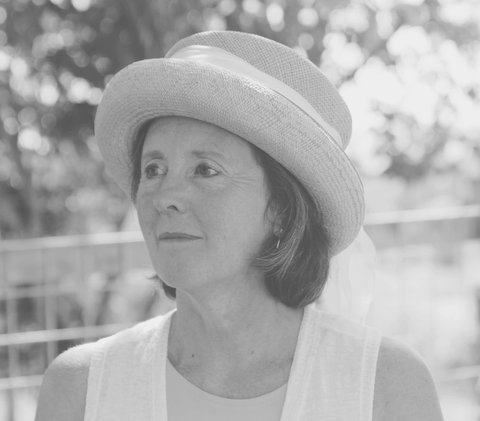
    Congratulations to Dianna MacLeod, our “Whidbey Writes” featured writer for August. We’re pleased to be able to share her short story, “Gloves,” with you.

    The purpose of “Whidbey Writes” is to encourage writers with a Whidbey connection to submit short fiction and poetry for publication in Whidbey Life Magazine, thereby giving our readers an opportunity to enjoy these creative writings. Throughout 2015 and 2016, Whidbey Writes has published monthly selections of short fiction and poetry online. The most popular of these entries were also published in the Fall/Winter 2015 and Spring/Summer 2016 print editions of Whidbey Life Magazine.

    We publish the original work of selected winners at the beginning of each month as part of Whidbey Writes. Thanks to volunteer editors Heather Anderson, Mureall Hebert and Chris Spencer, who review submissions throughout the year and pass on the work they enjoy most to Whidbey Life Magazine for publication online and in print.

    To see previously selected writings, visit the Whidbey Writes page here.

    ___________________________

    Gloves
    By Dianna MacLeod

    1919 October 12; morning
    The train that carried me clear across my native land—this country of plains and rivers, silver sagebrush and purple peaks—has deposited me here, at the ends of the earth. I imagined there would be a cliff. A sharp drop off. Rocks below on which, if I took a running leap and threw myself over, I would be dashed. But the ends of the earth are nothing like that…at least that I can discern. Because the ends of the earth are shrouded in fog.

    This place, MukilTEo—not Mucky-Leeto or Mah-Kilt-I-Oh—is a place of fog. And wood. Nothing like the stolid brick-encased drawing rooms of Boston, where I was, until so recently, forced to pour and pass cups of tea from a seemingly bottomless pot as mother, father, and their fusty friends exchanged views about me and my destiny—when will I marry? Who will I marry? Is hope of my marrying as dim as a lantern whose wick is burnt down to a stub? I poured, I passed, I pretended not to hear, all the while aware of my hands inside lace-trimmed white gloves meant to hide them. And my dangling sleeves, extra long—special request to my dressmaker—hiding the nicks, scrapes, and notches on my skin, the result of clumsy use of my tools in the half darkness while sculpting small pieces of stone worked quietly, beneath the cellar stairs, before dawn, while the house sleeps, an old shawl thrown over my nightdress.

    I’ve learned that Mukilteo means “good camping ground” in the language spoken by the Tu-LALL-ip—not “TOO-la-lip”—native people. And for me, it is but a temporary camp on my way to Whidbey Island. The name of the place seems straightforward, but there may be some mystery in its pronunciation I’ve not yet discovered. WHY-Dee-Bay. Or Wa-HID-Be-Why.

    As I wait for the steamboat, I observe this wooden world in which I find myself. Everything here is made of lumber, from sidewalks to storefronts to the lighthouse sounding its horn into the fog. From the little I can see inland, beyond the borders of the town, trees blanket the land in every direction, jostling for space in which to spread their branches. I can see nothing of my island destination, or, indeed, nothing at all in the seaward direction. When the steamboat arrives, it will require of me considerable faith to board it and allow it to carry me away into that dense fog toward the strangers I long and fear to meet. I find myself clenching my hands inside their traveling gloves. My other pair of gloves—white, trimmed with lace—are packed inside my trunk, should occasion demand I once again hide my hands from polite society.

    1919 October 12; afternoon
    “You look half starved.”

    Those were the first words of Margaret Camfferman when I arrived on the doorstep of the Brackenwood Artists’ Colony.

    She is correct about one thing: starved, I surely am, but not for food. Starved for the time, place, and privacy to tell my stories in stone. To sculpt. A most unsuitable pastime for a young lady of a certain social standing. For, perhaps, any female of any standing.

    Over luncheon of an orange-fleshed fish caught in these waters, Peter Camfferman tells me I am not the only artist in residence, and mine is not the only studio here at Brackenwood; several others are occupied, at the moment by members of the Women Painters of Washington. Will their hands be stained with indigo and smell of turpentine? Are the chipped nails and nicked flesh concealed beneath my dangling sleeves about to become a badge of belonging? Oh, that it may be so!

    The Camffermans consider themselves abstract painters—and I confess I don’t yet know what that means. I do know it is modern, and, if modern means that women are allowed—even encouraged!—to paint and sculpt and attempt all manner of artistic endeavor, then modern is fine by me.

    Did the Camffermans find it strange I kept my traveling gloves on during luncheon? I wanted to remove them, but much to my dismay found that my habit of hiding my hands prevailed…just as if I were pouring tea under father’s watchful eye. Physical distance is not emotional distance, it seems.

    1919 October 12; late afternoon.
    This island is populated by rampant ferns and dark wedges of conifers…at least, the little I could see of it in the dissipating fog as Peter Camfferman led me along a trail to my very own studio. Formerly a horse stable, he told me. I expected the studio to be made from wood, but to my great surprise it is not. It may be the only stone building west of the Cascade mountain range.

    The roof is not a roof in the conventional sense, but I suppose I am not a woman in the conventional sense. Strips of scalloped tin are fitted round immense plates of thick glass resting on beams. The studio was built to withstand the metallic temper of horses. Wood darkened by animal piss and sweat…bleached and whitewashed for me.

    The wood-paneled, arched double doors of the studio open onto a lane and permit delivery of large pieces of stone. (I am to go to a quarry and choose one tomorrow!) Through those same accommodating doors, I’m meant to send my finished pieces out into the world. I can’t quite imagine, as all my sculptures before this were conceived and executed so as to be small enough to smuggle upstairs in the pocket of a dress.

    On one wall, a smock and apron hang from pegs. No more sculpting in a nightgown! A pair of thick leather gloves rest on a pedestal. Clearly, these are intended to protect my hands against the possible injuries inflicted by working large pieces of stone. These gloves are padded and triple stitched, yet supple. Gloves made for a singular purpose. Gloves that know their reason for being. Will they fit me, I wonder.

    Shelves attached to the wall hold rows of brown and blue glass bottles filled with potions that pock and pit rock…baptismal water and breast milk for stone. In the weak sunlight now filtering through the transparent roof, the bottles shine like watery jewels.

    Against the chalk-white purity of this room, tools are scattered about like dark weapons. Saws rest horizontal on tables; mallets and chisels and hammers stand upright in tin cans. Each implement is prepared to split the air with directed force and bring itself up against rock that dares me to make it more beautiful than it already is.

    1919 October 13; midnight
    Too excited to sleep, I have just returned from a walk to the high bluff behind the studio. The fog had disappeared entirely, blown away by a brisk wind. The stars whirled and spun for their own pleasure, carving out their place in the sky. Even in the darkness, I saw I am indeed on an island, a world of its own, and I looked out on another island, most likely with a name I’ll be unable to immediately pronounce. But I will learn this new language.

    Why venture out so late into this unknown territory…where I could, indeed, step off the edge and perish on the rocks below? Why leave what safety and security I have managed to find? Because something of mine firmly demanded it. Strictly commanded it.

    A pair of white, lace-trimmed gloves.

    Standing on the bluff, looking into the expansive darkness, I held up one glove, and then the other, filling them like balloons with the salt air rushing past. I flung wide my arms and let go. Turning and curvetting in the air, blown this and that way over the water, the gloves waved in frantic flutter. “How will you hide yourself?” “What will become of you?” “Who will you marry?”

    I raised both of my naked and imperfect hands. Not to implore. Not to retrieve. Not to recite the old familiar prayers. I raised both hands—the nicked and roughened hands of an artist—in glad farewell to a pair of lace-trimmed white gloves disappearing into the night.

    _______________________________

    Dianna MacLeod earned her journalism degree at the University of Michigan. She discovered Whidbey Island in 1989 during a residency at Hedgebrook and moved to the island in 2011. A former grant and speech writer, Dianna now concentrates on fiction and plays.

    __________________

    CLICK HERE to read more WLM stories and blogs. Have a great story idea? Let us know at info@whidbeylifemagazine.org.

    WLM stories and blogs are copyrighted and all rights are reserved. Linking is permitted. To request permission to use or reprint content from this site, email info@whidbeylifemagazine.org.

  • Stefanie Freele || ‘Whidbey Writes’ July 2016

    Stefanie Freele || ‘Whidbey Writes’ July 2016

    July 6, 2016

    Congratulations to Stefanie Freele, our “Whidbey Writes” featured writer for July. We’re pleased to be able to share her poem, “Listen, Boy Of Belligerence,” with you.

    The purpose of “Whidbey Writes” is to encourage writers with a Whidbey connection to submit short fiction and poetry for publication in Whidbey Life Magazine, thereby giving our readers an opportunity to enjoy these creative writings. Throughout 2015 and the beginning of 2016, Whidbey Writes has published monthly selections of short fiction and poetry online. The most popular of these entries were also published in the Fall/Winter 2015 and Spring/Summer 2016 print editions of Whidbey Life Magazine.

    We publish the original work of selected winners at the beginning of each month as part of Whidbey Writes. Thanks to volunteer editors Heather Anderson, Mureall Hebert and Chris Spencer, who review submissions throughout the year and pass on the work they enjoy most to Whidbey Life Magazine for publication online and in print.

    To find out more about Whidbey Writes and the submission criteria, visit the Whidbey Writes Submission page. To see previously selected writings, visit the Whidbey Writes page here. 

    ___________________________

    Listen, Boy Of Belligerence
    By Stefanie Freele

    Those words will stay forever. You don’t see them
    stretched across an elderly forearm
    interrupted by Coumadin bruises and scars
    caused by decades of hard work

    You see wisdom, displayed along your limb
    and clear glass rightness, to remind you
    rules can kiss your all-knowing ass.
    Here you stand, fancying rape-filled anarchy,

    enlightened, believing in the anti-government
    lawlessness, disorder, confusion
    and hatred. Crime is meaningless to you.
    A regular devotee of Bad

    where public attention equals praise.
    Notice, no one congratulates you
    on your choice of noun to assault
    the unsuspecting gazer or

    studiers of sub-human oddities
    who make a point of proving their theories
    by searching for people like you, rule-breakers,
    the beings who refuse absorption

    while the remainder of vine-covered
    butterfly-dotted, serpent-raveled
    bodies agree with a tat, they too
    stand aside, leaving you to embrace your words.

    Stefanie Freele is the author of two short story collections, “Feeding Strays,” with Lost Horse Press and “Surrounded by Water,” with Press 53. Stefanie’s published and forthcoming work can be found in Witness, Glimmer Train, Mid-American Review, Chattahoochee Review. She is a graduate of NILA. 

    __________________

    CLICK HERE to read more WLM stories and blogsHave a great story idea? Let us know at info@whidbeylifemagazine.org.

    WLM stories and blogs are copyrighted and all rights are reserved. Linking is permitted. To request permission to use or reprint content from this site, email info@whidbeylifemagazine.org.

  • Samuel C. Walker  ||  ‘Whidbey Writes’ June 2016

    Samuel C. Walker || ‘Whidbey Writes’ June 2016

    June 1, 2016

    Congratulations to Samuel C. Walker, our “Whidbey Writes” featured writer for June. We’re pleased to be able to share his poem, “Strings,” with you.

    The purpose of “Whidbey Writes” is to encourage writers with a Whidbey connection to submit short fiction and poetry for publication in Whidbey Life Magazine, thereby giving our readers an opportunity to enjoy these creative writings. Throughout 2015 and the beginning of 2016, Whidbey Writes has published monthly selections of short fiction and poetry online. The most popular of these entries were also published in the Fall/Winter 2015 and Spring/Summer 2016 print editions of Whidbey Life Magazine.

    We publish the original work of selected winners at the beginning of each month as part of Whidbey Writes. Thanks to volunteer editors Heather Anderson, Mureall Hebert and Chris Spencer, who review submissions on Solstices and Equinoxes and pass on the work they enjoy most to Whidbey Life Magazine for publication online and in print.

    This competition, originally created as a collaboration between Whidbey Life Magazine and the  Northwest Institute of Literary Arts, will now continue as part of the creative writing section of Whidbey Life Magazine.

    To find out more about Whidbey Writes and the submission criteria, visit the Whidbey Writes Submission page. To see previously selected writings, visit the Whidbey Writes page here. 

    ___________________________

    Strings

    By Samuel C. Walker

    Dear Child of mine
    hidden deep
    from my touch,
    my eyes –
    I love you!
    You move and
    kick the strings
    of my heart alive
    in quiet song and
    Hope stirs.
    Little hands, little feet,
    Little heart in silence beat,
    Wombly warm,
    Hidden deep,
    Sleep!

    _____________________________

    Featured photo courtesy of Samuel C. Walker.

    Born and raised in Africa, and having lived most of his life in the Middle East and the Pacific Islands, Samuel C. Walker brings a world of experience to his writing. He is a professor of ancient history and an archaeologist currently working in Ethiopia. An award-winning author for the 2014 PNWA contest, his newest release, “Adam Without Eden” is available online and at bookstores. 

    __________________

    CLICK HERE to read more WLM stories and blogsHave a great story idea? Let us know at info@whidbeylifemagazine.org.

    WLM stories and blogs are copyrighted and all rights are reserved. Linking is permitted. To request permission to use or reprint content from this site, email info@whidbeylifemagazine.org.

  • Andrea Hurst  ||  ‘Whidbey Writes’ May 2016

    Andrea Hurst || ‘Whidbey Writes’ May 2016

    May 4, 2016

    Congratulations to Andrea Hurst, our “Whidbey Writes” featured writer for May. We’re pleased to be able to share her poem, “A Mouse in Flannel,” with you.

    The purpose of “Whidbey Writes” is to encourage writers with a Whidbey connection to submit short fiction and poetry for publication in Whidbey Life Magazine, thereby giving our readers an opportunity to enjoy these creative writings. Throughout the past year, Whidbey Writes published monthly selections of short fiction and poetry online. The most popular of these entries was also published in the Fall/Winter 2015 print issue and soon to be out Spring/Summer 2016 issue.

    We publish the original work of selected winners at the beginning of each month as part of Whidbey Writes. WLM congratulates Andrea and extends thanks to volunteer editors Heather Anderson, Mureall Hebert and Chris Spencer, who review submissions on Solstices and Equinoxes and pass on the work they enjoy most to Whidbey Life Magazine for publication online and in print.

    This competition, originally created as a collaboration between Whidbey Life Magazine and the  Northwest Institute of Literary Arts, will now continue as part of the creative writing section of Whidbey Life Magazine.

    To find out more about Whidbey Writes and the submission criteria, visit the Whidbey Writes Submission page. To see previously selected writings, visit the Whidbey Writes page here. 

    _______________________


    A Mouse in Flannel
    A Poem by Andrea Hurst

    He pushed me onto the stage. His glare dared me to run.

    I froze.

    He pointed to the microphone. “Sing.”

    Hundreds of people filled the auditorium. They stirred and waited.

    I clutched the microphone and stared at my feet. Brown Birkenstocks, slightly

    covered by a pink, nylon fancy dress. I wrapped my arms around me comforted

    by the plaid, wool flannel shirt buttoned to the top.

    Who dressed me today?

    My heart beats in my frozen airways. I didn’t sing. Certainly not in

    public.

    Rustling from the seats prompted the piano player to hit his cords.

    What was the song? I did not know the words.

    My voice came out in a high squeak. A mouse in flannel.

    The audition was over. Silence.

    “Next,” he said dismissing me with a brisk wave.

    My mother sang on stage.

    My father sang on stage.

    My sisters sang throughout the house.

    But I…I was afraid of my voice.

    _____________________

    When not visiting local farmer’s markets or indulging her love for chocolate, Andrea Hurst is an author and literary agent. Her passion for books drives her to find and write stories that take readers on a journey to another place and leave them with an unforgettable impression. Find out more at: www.andreahurst.com.

    _________________________

    CLICK HERE to read more WLM stories and blogsHave a great story idea? Let us know at info@whidbeylifemagazine.org.

    WLM stories and blogs are copyrighted and all rights are reserved. Linking is permitted. To request permission to use or reprint content from this site, email info@whidbeylifemagazine.org.

  • Marie Hartung  ||  ‘Whidbey Writes’ April 2016

    Marie Hartung || ‘Whidbey Writes’ April 2016

    April 6, 2016

    Congratulations to Marie Hartung, our “Whidbey Writes” featured writer for April. We’re pleased to be able to share her work, “Return,” with you.

    The purpose of “Whidbey Writes” is to encourage writers with a Whidbey connection to submit short fiction and poetry for publication in Whidbey Life Magazine, thereby giving our readers an opportunity to enjoy these creative writings. Throughout the past year, Whidbey Writes published monthly selections of short fiction and poetry online. The most popular of these entries was also published in the Fall/Winter 2015 print issue.

    We publish the original work of selected winners at the beginning of each month as part of Whidbey Writes. WLM congratulates Marie and extends thanks to volunteer editors Heather Anderson, Mureall Hebert and Chris Spencer, who review submissions on Solstices and Equinoxes and pass on the work they enjoy most to Whidbey Life Magazine for publication online and in print.

    This competition, originally created as a collaboration between Whidbey Life Magazine and the  Northwest Institute of Literary Arts, will now continue as part of the creative writing section of Whidbey Life Magazine.

    To find out more about Whidbey Writes and the submission criteria, visit the Whidbey Writes Submission page. To see previously selected writings, visit the Whidbey Writes page here. 

    _______________________


    RETURN 
    By Marie Hartung 

    –On Halloween in 2013, twin teenage sisters died from injuries sustained when a drunk driver, hit the car they were driving in near Coupeville, WA.


    In the final moment of clear light, before the oncoming headlights diminished darkness to a simple hole in the sky, before the collision that split us and the Acura in two, before the screech of rubber fused hot to metal, I said your name. I know you heard it like a lullaby, sweet like maple syrup and all the Sunday morning pancakes we ever giggled through, Daddy telling us to hush, Mom’s smile upturned like the quarter moon sleeping. The doctors tried to ease me from my coma, but you were not beside me so I followed your dark cry into the clouds laced with zeros.

    As the wind slackens, I whisper your name into tangled hollow veined in stone. I call to you: Meet me at the pond near the shortgrass hills, the one where we hunted toads in the sea fog, where damp ferns soaked the fringe of our daisy linen dresses. If you look straight through the rain of unraveling horizons, beyond the starless embroidery, you can follow the pebbles of light I’ve gathered from all the stars. In the flutter of autumn leaves like children without any sound, you’ll find me. We’ll rise together into the trees to sleep. 

    _____

    Marie Hartung writes from her living room recliner in the small-ish town of Monroe, WA. She holds an MFA in Poetry from the Northwest Institute of Literary Arts. Her poetry appeared recently in SLAB, Third Wednesday, Talking River and the anthology, The Burden of Light. She loves fishing and pizza.

    _________________________

    CLICK HERE to read more WLM stories and blogsHave a great story idea? Let us know at info@whidbeylifemagazine.org.

    WLM stories and blogs are copyrighted and all rights are reserved. Linking is permitted. To request permission to use or reprint content from this site, email info@whidbeylifemagazine.org.
  • Heather Anderson || ‘Whidbey Writes’ March 2016

    Heather Anderson || ‘Whidbey Writes’ March 2016

    March 3, 2016

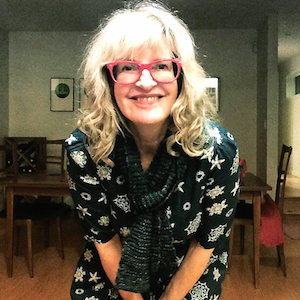
    Congratulations to Heather Anderson, our Whidbey Writes featured writer for March.

    Throughout the last year we recognized the volunteer editors of Whidbey Writes by publishing an entry from each of them. This month we are pleased to introduce Heather Anderson and her short fiction “Black Sunday.” We invite you to read the work from the other editors, Mureall Hébert and her short fiction selection “Welcome to the Party,” and Chris Spencer’s selection, “Bare Naked Betty.” We thank them for their dedication and talents and are grateful for their continued support of Whidbey Writes.

    The purpose of “Whidbey Writes” is to encourage writers with a Whidbey connection to submit short fiction and poetry for publication in Whidbey Life Magazine, thereby giving our readers an opportunity to enjoy these creative writings. Throughout the past year, Whidbey Writes has published monthly selections of short fiction and poetry online. The most popular of these entries will be published in the next Whidbey Life Magazine print issue; so if you like a story, share it!

    This program, originally created as a collaboration between Whidbey Life Magazine and the  Northwest Institute of Literary Arts, now continues as part of the creative writing section of Whidbey Life Magazine. Whidbey Life Magazine extends thanks to the Northwest Institute of Literary Arts for their ongoing support of Whidbey Writes.

    We are open to submissions year-round and we review all submissions quarterly; the next review will happen following the spring equinox on March 20. To learn more about Whidbey Writes and the submission criteria, visit the Whidbey Writes Submission page. To see previously selected writings, visit the Whidbey Writes page here.

    _______________________

    Black Sunday

    BY HEATHER ANDERSON

    Friday, April 12, 1935

    Texas

    The sun was almost white against the pale blue sky, but the rest of the world was brown, dirt brown. The sun bleached house, wagon, barn and plow, the people, animals and even the clothes laundered fresh that morning held a dingy, grungy dirt brown cast to them. The dirt was everywhere; in your hair, in your nose and even in the cupboards. The heat index was well over 90 for the the second month in a row.

    “Tilly said last week that the Tuner’s was leavin’.” Susanna snapped the ends off the green bean and tossed it in the bowl. A board creaked softly beneath the porch rocker.

    “Oh, Suzie. That’s hogwash. You know very well, Tilly Miller is a couple teaspoons short of soda in her biscuits.” Loretta tossed a peeled spud in a pot of water and replaced the lid.

    “I’m surprised at you. Talking ‘bout our neighbor that way. You know true as the color of your hair she’s the one’s been stirring up the dust. Without her we’d be flooding up to our eyes and our crops would be waterlogged.”

    Loretta shook her head.

    Bobby slammed through the screen door stopping the women’s conversation.

    “Bobby! Stop that, you’ll break the door. Did you set the table?” Loretta asked.

    “Yes’m.”

    “And you flipped the plates and cups?”

    “Yes’m.” Bobby stood in front of his momma. His leather shoes were worn at the toes and his socks sagged against the boy’s chicken legs. The rest of his moth eaten clothes hung lose on his skinny frame as well.

    “Good boy. Now go on’n take your pa some water!” Loretta said as Bobby leaped from the porch.

    “You should of seen this land before, Bobby. Rows ‘pon rows of wheat, sometimes as high as my chest, as far as the eye could see. The wind would sweep across it and the stalks moved like that shiny fabric your momma likes. It was a beaut’ before the rains came.” Smitty pulled the dirt encrusted red bandana away from his mouth and took a swig of water from his dented canteen.

    “I sure wish I coulda saw it. Pa, do you think it’ll ever be like that again?” Bobby asked, his voice muffled by his own bandana.

    Weathered wrinkles fanned out from Smitty’s eyes as he squinted against the glaring sun, trying to bring the picture back. Instead all he saw was dirt; in his eyes, on the ground, and swirling in the air as if taunting them. Two miserly rows of vegetables had sprouted despite the desiccated land. His lips pursed and his teeth gnashed together, bits of grit crunching between his teeth. He spit. “I reckon. Long as we can keep the rains at bay. We gotta cleanse the land first. Let it dry out some.”

    “When will it be clean?”

    “Soon, Bobby. Soon. You got chores to finish. Now go’on.”

    “Yessir.” Bobby snagged the canteen before he hopped off the wooden crate and ran toward the barn.

    “And remind your ma that there’s a meetin’ tonight after supper!”

    Bobby waved his hand.

    Smitty grumbled under his breath and started the gasoline tractor. The engine rumbled and he continued the plodding, halting path down the row, the plow scoring the dehydrated earth.

    After supper, Suzie, Loretta, Bobby, and Smitty piled into the wagon and went into town. As soon as they hit the edge of town, Bobby jumped from the back.

    “See y’all after the meetin’!” He waved and ran toward a group of boys loitering on the street.

    Smitty tethered the horse, then helped the women from the wagon. “Best not stay too long at the feed store, Smit. They’ll just get you all riled up. Meetin’ starts in ten minutes,” Loretta said and she and Suzie walked over to the school house to get set up.

    “We’ve done everything we can. There’s only a short time left now. Did ya’ll bring the soil?” Tilly Miller stood at the front of the classroom a wooden bucket in hand as the heads of the townsfolk nodded, murmurs surfaced then died down. “If ya’ll’ll come up one at a time and deposit your soil. I believe we’re almost ready.”

    One at a time families brought their satchels of dirt to the front and up ended them so every granule of dirt poured into the bucket. Dust curled up to float along the air as each satchel emptied. A dozen families later and Smitty emptied his satchel. The bucket was full. Tilly Miller’s thin lips spread in a broad smile spread across her face.

    “The time nears. You were asked to make sacrifices and you have done so. You were asked to desecrate the land with the new farming tools and sow unsuitable crops and you have fulfilled your responsibilities. The land is barren, overworked and primed.”

    The sweat, hunger, hard labor and sacrifices were finally about to pay off. The boys who’d been playing in the street crowded into the doorway, their youthful voices boisterous.

    Tilly Miller raised her hands in the air.“Black Sund’y approaches!” she said over the voices.

    “It’s about dang time,” Smitty said and crossed his arms over his chest. A smile tickled the edges of his mouth. Chatter rolled through the crowd, neighbors talking excitedly over each other. Heads nodded and hands slapped him on the back.

    Tilly Miller waited until the noise died down. “Ya’ll’ll need to prepare. Gather ya’ll’s loved ones. Gather only what ya’ll can carry. Leave behind all ya’ll’s possessions. Sund’y morning the storm will rise and the sand will fly.”

    Saturday, April 13, 1935

    Smitty woke early, checked his livestock and secured them in the barn. The sun had yet to wake but the stars began to fade. After his morning chores he headed inside for breakfast.

    “You ‘bout ready?” Smitty asked a sleepy eyed Bobby.

    “Yessir.” Bobby soaked up grease with a biscuit and shoved the rest in his mouth.

    “Bobby, smaller bites.” Loretta frowned at him.

    Bobby smiled around the biscuit. Then picked up his plate and handed it to his ma.

    “Head on out, I’ll be there shortly.” Smitty scrapped the last of his breakfast off his plate.

    Bobby ran outside with a whoop, the screen door slamming behind him.

    Smitty handed his empty plate to his wife, then leaned back in his chair to finish his coffee. “You ready?”

    “I am. It’s been a long time coming.”

    “It has.”

    “You best get out there. That boy’s liable to try and take the whole barn if we let him.”

    Smitty chuckled. The feet of his chair slammed against the wood floor, then screeched as he pushed back. “Ah’ight.”

    Smitty followed his son’s laughter into the barn and to the back stall.

    Bobby lay in the hay, surrounded by puppies.

    “Can I take them all?” Bobby asked as he looked up at his pa.

    Smitty shook his head and held up two fingers. “Two.”

    “Ah, Pa.”

    “There’s not enough room.”

    “Then I’ll take a boy and a girl. That way they can have pups.”

    Smitty nodded and smiled. “We gotta get ready now. Get the wood from behind the barn and take it on up to the house.”

    “Yes’sir.” Bobby scampered out of the stall and slammed the barn doors behind him.

    Smitty shook his head, then headed for the tools.

    April 14, 1935, “Black Sunday”

    “Pa! Pa!” Bobby, arms full of squirming pups, stared at the sky.

    Smitty, heaved the last of the supplies onto the truck, then headed toward his son’s hollerin’.

    “Look, Pa.” Bobby pointed to the sky with his elbow.

    When Smitty looked behind him, past the barn, the sky that had finally lightened to day grew dark.  “Here it comes. Go get your ma!”

    Smitty grabbed up the pups and stuffed them in the wooden crate tied to the back of the truck.

    “Smitty? Smitty!” Loretta said, her hand held tight in Bobby’s as he pulled her from the house.

    “Time to go, Etta.”

    She stopped at the side of the truck and pulled Bobby pulled his hand free of his ma’s.

    “Look, Ma!”

    “Oh, my word.” Hand on her chest, Loretta stared at the growing clouds of dust.

    “Time to go! Get in.”

    Smitty, Loretta and Bobby clambered into the truck.

    Dust rolled over the plains, blanketing the ground and filling the sky like storm clouds. The sky faded from light blue, to gray, to black and swallowed the barn.

    Smitty cranked the truck to life and headed west, away from the dust. Winds picked up as the clouds loomed near and before long, the torrent of winds drowned out Bobby’s excited laughter.

    Light gray winds raced past them and Smitty looked back just as the cloud of black enveloped the house. The truck bumped and rattled along the pocked road. Despite the gusts of wind drawing the dust storm near, Smitty felt only a slight summer breeze. The cloud around them grew darker and the road began to smooth.

    Blackness covered them like a sleeve and lifted the truck from the ground on a wave of dust. For the first time in months, the air around them was clean and it was easy to breath.

    They had been cleansed.

    Heather Anderson spends her days teaching and her nights writing. She is currently finishing up her first novel/thesis. She’ll be graduating with a MFA from Northwest Institute of Literary Arts in August of 2016. She writes flash, short and novel length fiction and has dabbled in creative non-fiction. She is currently an assistant fiction editor at Soundings Review and a volunteer editor at Whidbey Writes. Connect with Heather @heatherma17 and learn more at https://about.me/andersonheather

    __________________

    CLICK HERE to read more WLM stories and blogsHave a great story idea? Let us know at info@whidbeylifemagazine.org.

    WLM stories and blogs are copyrighted and all rights are reserved. Linking is permitted. To request permission to use or reprint content from this site, email info@whidbeylifemagazine.org.
  • Stephanie Barbé Hammer  ||  ‘Whidbey Writes’ February 2016

    Stephanie Barbé Hammer || ‘Whidbey Writes’ February 2016

    February 3, 2016

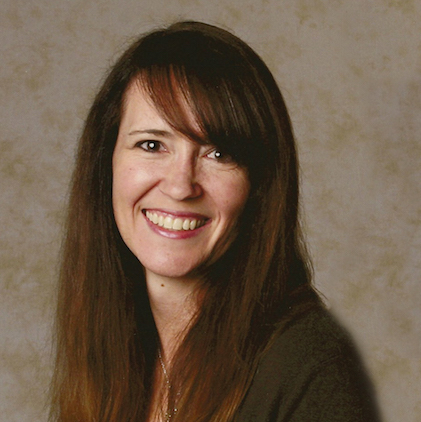
    Congratulations to Stephanie Barbé Hammer, our “Whidbey Writes” featured writer for February. We’re pleased to be able to share her work of poetry, “I experience nature myopically” with you.

    The purpose of “Whidbey Writes” is to encourage writers with a Whidbey connection to submit short fiction and poetry for publication in Whidbey Life Magazine, thereby giving our readers an opportunity to enjoy these creative writings. Throughout the past year, Whidbey Writes published monthly selections of short fiction and poetry online. The most popular of these entries was also published in the Fall/Winter 2015 print issue.

    We publish the original work of selected winners at the beginning of each month as part of Whidbey Writes. WLM congratulates Stephanie and thanks to volunteer editors Heather Anderson, Mureall Hebert and Chris Spencer, who review submissions on Solstices and Equinoxes and pass on the work they enjoy most to Whidbey Life Magazine for publication online and in print.

    This competition, originally created as a collaboration between Whidbey Life Magazine and the  Northwest Institute of Literary Arts, will now continue as part of the creative writing section of Whidbey Life Magazine. Whidbey Life Magazine extends thanks to the Northwest Institute of Literary Arts for their ongoing support of Whidbey Writes.

    To find out more about Whidbey Writes and the submission criteria, visit the Whidbey Writes Submission page. To see previously selected writings, visit the Whidbey Writes page here. 

    _______________________

    I experience nature myopically 

    By Stephanie Barbé Hammer

    We walk me and my dad
    Looking for pine cones
    To start the fire in the cabin —
    I don’t wear my glasses though
    They are new to me and sit strangely
    On my ears, so when I pick up the thing
    That is brown and mottled like a pine cone it
    Just feels wrong. Pine cones are brittle and dry
    This brown thing is wet and it’s cold so I
    Crouch down to investigate with my already
    Not very good eyes. A slug. I let go. Stand up.
    We walk to the stream and we skip tiny stones
    Forget about pine cones. But I personally never
    Forget the slime-wondrous feel of that being
    That I thought at first was a dead piece of plant.

    Stephanie Barbé Hammer’s prose poem chapbook “Sex with Buildings” appeared with Dancing Girl Press in 2012. Her 2014 collection, “How Formal?” is available from Spout Hill Press. Her first novel “The Puppet Turners of Narrow Interior” was published with Urban Farmhouse Press in 2015. 

    __________________

    CLICK HERE to read more WLM stories and blogsHave a great story idea? Let us know at info@whidbeylifemagazine.org.

    WLM stories and blogs are copyrighted and all rights are reserved. Linking is permitted. To request permission to use or reprint content from this site, email info@whidbeylifemagazine.org.

  • Mureall Hébert || ‘Whidbey Writes’ January 2016

    Mureall Hébert || ‘Whidbey Writes’ January 2016

    January 6, 2016

    The purpose of “Whidbey Writes” is to encourage writers with a Whidbey connection to submit short fiction and poetry for publication in Whidbey Life Magazine, thereby giving our readers an opportunity to enjoy these creative writings. Throughout the past year, Whidbey Writes published monthly selections of short fiction and poetry online. The most popular of these entries was also published in the Fall/Winter 2015 print issue.

    We’d like to recognize the volunteer editors of Whidbey Writes by publishing an entry from each of them. This month we are pleased to introduce Mureall Hébert and her short fiction selection “Welcome to the Party.” We published another volunteer editor, Chris Spencer, and his selection, “Bare Naked Betty,” in 2015 and will publish a selection from our third editor, Heather Anderson, later this year. We thank them for their dedication and talents and are grateful that they will continue to act as the editors for Whidbey Writes.

    This competition, originally created as a collaboration between Whidbey Life Magazine and the  Northwest Institute of Literary Arts, will now continue as part of the creative writing section of Whidbey Life Magazine. Whidbey Life Magazine extends thanks to the Northwest Institute of Literary Arts for their ongoing support of Whidbey Writes.

    To find out more about Whidbey Writes and the submission criteria, visit the Whidbey Writes Submission page. To see previously selected writings, visit the Whidbey Writes page here. 

    _______________________

    Welcome to the Party

    BY MUREALL HÉBERT

    The moment Mischief heard Pandora’s voice she knew Pandora would be the one to open the box. It was the tone of her speech, all soft and girly, like she didn’t have a brain. Mischief was good at reading people; it was one of her talents. All it would take would be a few suggestive comments and Pandora would do whatever Mischief wanted. It wasn’t Pandora’s fault. She’d been made out of clay. A start in life like that left a girl easy to manipulate.

    It had been over a century since the lid had closed, trapping Mischief inside with the others. Fifty-three of them, clustered together. They’d made a decent go of it. Vandal spray-painted the walls, which jazzed the place up considerably. Welcome to the party, Chill, and Tricky Bad was here were tagged in letters four feet tall. A parody of the Sistine chapel graced the ceiling: Zeus with his sickle, holding back fawning mistresses and angry wives while the Fates tsk tsked in the corner. Decadence handed out Russian tea cakes and chocolates, the good ones with liquid cherry centers. The Hedonist brothers enjoyed snifters of brandy and ogled Titillation as she pranced through Zumba moves in her leopard-print yoga pants. It wasn’t a bad life, really, a bit claustrophobic and sometimes it got loud, especially when Anger and Gluttony weren’t getting along, but, all in all, it was doable.

    Except beyond the chocolate and art, everyone inside pined for one thing—to find a way out of the box. It was Hope’s fault, her dogged optimism sparking an itch impossible to scratch; she kept them all dreaming of freedom. “Life,” she’d say, sweeping her bangled arms wide, “is filled with endless possibilities.” Annoying chick, especially before morning coffee. Hope didn’t belong in the box, anyway. She wasn’t like the rest of them. It was just a fluke she’d gotten stuck inside. Wrong place, wrong time, and one too many glasses of champagne.

    The day Zeus had captured them, he’d been having a rough day. Something to do with a pig-headed-no-good-woman-stealing giant. He spotted Mischief and the others chilling on the shores of Aegina and went crazy. Called them evil and heinous, and in league with the pig-headed-no-good-woman-stealing giants. Didn’t stop to find out what was what. He’d tugged on his beard, crammed the lot of them in the cube, and slammed the top shut, muttering that they were too destructive to roam the earth, which was kind of harsh and not exactly fair (the fact that Pyromaniac’s beach bonfire had taken out a temple might have had something to do with it.)

    Still, considering Zeus’s own vindictive side, he wasn’t one to talk about good manners and clean living.

    Case in point: Epimetheus and Prometheus, brothers who were given the task of populating the earth. They’d messed up the job, and then Prometheus had stolen fire, and Zeus had gotten pissed, which is why he’d made Pandora out of clay. The whole thing had gone down in earshot of the box; Mischief heard the argument through the walls. Zeus, never one to let sleeping dogs lie, gave Pandora to Epimetheus, along with the box, and advised the happy couple not to peek inside. Not that it mattered to Zeus if the lid was open or closed. The whole thing was a ruse to get Prometheus jealous (as if he’d fall for that one.)

    “Don’t open the box,” Zeus said, all Zeus-like.

    “Don’t open the box,” Epimetheus agreed and he placed it on a shelf next to his bowling trophy.

    But Pandora hadn’t been able to help herself, which had tickled Mischief no end. Every night, after Epimetheus’s snores filled the house, Pandora’s tiptoes whispered across the floor. Then Mischief would feel the wisp of Pandora’s breath through the seams of the box as she gave a sigh.

    “I wonder what’s inside,” Pandora said.

    “Open it and find out,” Mischief called, and Pandora’s sigh grew deeper and filled with longing.

    It took fourteen days for Pandora to give in, which was actually pretty long for a clay-girl. The night that it happened, Pandora lifted the box and breathed her sigh just like always, but this time the breath was filled with danger, which perked up Mischief’s ears. Danger was a prelude to mischievousness.

    The back door to the house creaked open and Pandora’s footsteps softened as her bare feet padded across the grass.

    “Perhaps if I just had one peek,” Pandora said.

    “Yes, one peek can’t hurt.” Mischief stretched on her toes to place her palms against the lid.

    Behind her, Narcissism and Selfish chattered away, oblivious to what was going on. Narcissism was talking about his exceptionally silky hair and Selfish was going on about the calluses on his hands and how Narcissism should offer him a pumice stone. “Pay attention,” she whispered to them. “We’ll only have one chance.”

    Hope, looking dangerously like Smug, smiled broadly at the idea that she’d been right all along. Her bangles clinked together as she clapped her hands in anticipation.

    “Yes, just a small look,” Pandora said, and the curiosity in her voice bloomed into intent.

    Everyone in the box fell still, caught by the lilt in Pandora’s voice. Everyone, that is, except Narcissism who began brushing his bangs in front of the mirror.

    The lid came off in a rush of cold air, and Pandora’s large, blue eyes peered in. A sound rose as the occupants of the box crowded toward the opening, a guttural growl of satisfaction and readiness. Pandora blinked, and blinked again. “Oh,” she said. “I don’t think this is good.”

    She tried to slide the lid back on, but they rushed against her, crushing her hand to the side. The lid tumbled off and then they were free, their bodies expanding into the night air, elongating into shadows or substance or whatever form they liked. They rose into the sky, skipped across the lawn, and sauntered down the road into town. Deception whistled The Devil Went Down to Georgia as he left.

    Savoring the rush of freedom, Mischief was one of the last to depart. Narcissism was still brushing his hair and hadn’t noticed the open lid. Hope waited patiently in the corner, probably wishing Narcissism would quit fooling around and get moving.

    Mischief stepped daintily to the ground, her dress swishing against her thighs. Around her, the world swelled with the taste of possibility. Eyes sparkling, Mischief smiled at Pandora, who looked rather ill.

    “What have I done?” Pandora glanced towards the house. “Epimetheus is going to kill me.”

    “Yes,” Mischief said. “He very well might. And if he doesn’t, there’s Zeus to consider. He has such a nasty temper.”

    Pandora gasped and put out a trembling hand. Mischief took it and guided Pandora to the porch.

    Down the street, alarms cut through the air. Greed sprinted past, fistfuls of money clutched in his hands. Gluttony followed him. Donuts, speared on baguettes, jutted from his pockets.

    “Stop!” Pandora’s voice squeaked in futile protest.

    “The best thing to do is to hide,” Mischief said. “At least for a while.” She held out the box. “Jump in. Epimetheus will never think to look for you here.”

    “Oh, no,” Pandora said. “I don’t want to go in there.”

    Mischief ran a soothing hand along Pandora’s arm. “But there’s a party inside, with tea cakes and cherry-filled chocolates. It’ll be a nice diversion. See, the invitation’s written on the wall.”

    Welcome to the party. Chill.

    Pandora squinted at the graffiti. “I don’t think I’m up to a party. I’m feeling rather tired. Maybe I should go back to bed. Epimetheus might not even notice what’s happened.”

    Across the street, Pyromaniac set light to a dumpster. Pandora turned two shades of pale.

    “Poor thing.” Mischief led Pandora through the opening of the box. “It’s sweltering this close to the flames. You’re over-wrought. Some quiet time will do you good.”

    “Quiet time,” Pandora said, chin trembling. “That does sound nice. It’s been so busy lately, what with Epimetheus’s bowling league and my Mary Kay parties.”

    Mischief nudged her forward. “Quick. I think I heard Epimetheus call your name. Perhaps you should squat down behind Hope. I’ll shut the lid, just temporarily, of course, and head him off.”

    “Do you promise you’ll let me out soon?” Pandora asked.

    “I promise,” Mischief said. “Right after the whole thing blows over.” She lobbed a kiss to Pandora, waved goodbye to Hope and Narcissism, then placed the lid on the box. As it closed, she heard Narcissism telling Pandora about his silky hair.

    Mischief slipped into Pandora’s house. Epimetheus, asleep and snoring in bed, twitched once and fell still. The box was lighter in her hands than she’d thought it would be and it slid easily onto the shelf next to the bowling trophy.

    She let herself out the back door, leaving Pandora’s box and Epimetheus’s snores behind, and followed the road to the center of town.

    Mureall Hébert is an MFA graduate from the Northwest Institute of Literary Arts, and volunteer editor at Whidbey Writes. Her writing has appeared in numerous print and online publications. You can find Mureall online at www.mureallhebert.com and @mureallhebert.

    __________________

    CLICK HERE to read more WLM stories and blogsHave a great story idea? Let us know at info@whidbeylifemagazine.org.

    WLM stories and blogs are copyrighted and all rights are reserved. Linking is permitted. To request permission to use or reprint content from this site, email info@whidbeylifemagazine.org.

  • Elizabeth Patterson  ||  Whidbey Writes December 2015

    Elizabeth Patterson || Whidbey Writes December 2015

    Dec. 2, 2015

    Congratulations to Elizabeth Patterson, our “Whidbey Writes” featured writer for December. We’re pleased to be able to share her work of short fiction with you.

    Whidbey Writes is a collaboration between the Northwest Institute of Literary Arts (NILA) and Whidbey Life Magazine (WLM). Its purpose is to give WLM readers an opportunity to enjoy short fiction and poetry by writers who have a connection to Whidbey Island.

    We look forward to publishing the original work of selected winners at the beginning of each month as part of Whidbey Writes. NILA and WLM congratulate Elizabeth and thank volunteer editors Heather Anderson, Mureall Hebert and Chris Spencer, who review submissions on solstices and equinoxes and pass on the work they enjoy most to Whidbey Life Magazine for publication online and in print.

    To find out more about Whidbey Writes and the submission criteria, visit the NILA website. To make a submission, use this page.

    _____________________

    One Hundred Last Words

    By Elizabeth Patterson

    I am weathered. Along with my soul, this body stands tested. Blessed with a long life, I tasted moments worthy of entertaining angels. Mementos of survival remain etched in living tissue. They’re reminders of my adventures and sorrows. Small and large pieces were broken and, in time, mended. All evidence of a rough and precious ride.

    Returned to the void are worries that once inhabited me. I still feel the happy weight of seashells and agates in my pocket, and the sandy, cool water between my toes. Laughter lingers, like a child’s kiss upon my check. Love carries me home.


    Elizabeth Ann Patterson is an author living on Whidbey Island, a book enthusiast, and currently owned by two adorable dogs. She enjoys writing a variety of genres, including: children’s books, cozy mysteries, romance, cookbooks, and some that defy classification. Her latest hobby is kayaking along the Whidbey Island coast. Visit elizabethannpatterson.com to hear about new and free books.

    _______________________

    CLICK HERE to read more WLM stories and blogs. Have a great story idea? Let us know at info@whidbeylifemagazine.org.

    WLM stories and blogs are copyrighted and all rights are reserved. Linking is permitted. To request permission to use or reprint content from this site, email info@whidbeylifemagazine.org.

  • Claire Gebben  ||  Whidbey Writes November 2015

    Claire Gebben || Whidbey Writes November 2015

    Nov. 5, 2015

    Congratulations to Claire Gebben, our “Whidbey Writes” featured writer for November. We’re pleased to be able to share her work of short fiction with you.

    Whidbey Writes is a collaboration between the Northwest Institute of Literary Arts (NILA) and Whidbey Life Magazine (WLM). Its purpose is to give WLM readers an opportunity to enjoy short fiction and poetry by writers who have a connection to Whidbey Island.

    We look forward to publishing the original work of selected winners at the beginning of each month as part of Whidbey Writes. NILA and WLM congratulate Claire and thank volunteer editors Heather Anderson, Mureall Hebert and Chris Spencer, who review submissions on solstices and equinoxes and pass on the work they enjoy most to Whidbey Life Magazine for publication online and in print.

    To find out more about Whidbey Writes and the submission criteria, visit the NILA website. To make a submission, use this page.

    _____________________

    END-OF-LIFE CRUISE

    By Claire Gebben

    They weren’t ahead of the curve, but they weren’t behind it, either. Dominick and Agnes retired on schedule, booking their ocean cruise, something that seemed expected, if not required. As far as Dominick and Agnes could tell, anyone who could afford to did the same.

    Agnes had been annoyingly mournful as they locked up the house, her eyes misting over as she stood on the apron of lawn in front of their white clapboard home.

    “Good-bye, little house. If we could stay, we would,” she said in sorrowful tones. She stood a while longer, watching the swallows flit in and out of the garage eaves. “Little birds, whatever will you do?”

    Dominick felt like honking the horn to give them one last startle. All those bird droppings and the repeated nests. He couldn’t permit sentiment. Every creature had to adapt, or perish.

    Even this far north, they could no longer escape the flood. Dominick said not one word of reproach to Agnes, enduring her tears as they drove past the patchwork of asphalt parking lots and neon business signs, the billboards that carved rectangles in the sun-blazed sky.

    By Dominick’s reckoning, this end-of-life cruise had been steering toward them for decades. Long ago, he’d given up the notion he could choose. Nonetheless, he’d counted on retiring in style. He’d lived modestly all these years, determined to save up against future misfortunes, proud of what he’d sacrificed for both of them.

    So it hurt Dominick, it really did, how, on their first night at sea, the ship plowing toward deeper waters, Agnes stood at the entrance to the casino, pocketbook in hand. He tugged on her arm to get her attention. She shrugged him off. He begged her to join him in their cramped cabin berth, smaller than he’d imagined, but not all that claustrophobic. Agnes acted as if he hadn’t spoken, her eyes peering into the dimly lit rooms toward the glowing slots.

    Dominick entered the casino with Agnes. His presence, he could tell, meant nothing to her, but still. For an hour or so, he watched the strawberries, bells, and lucky 7’s rattle by. Agnes gambled like a woman gone mad. Eventually, Dominick fled the casino to pace the upper deck in one complete circuit, then another. Pausing at the stern’s railing, melancholy and alone, Dominick tipped his head skyward at the dome of night. Stars bubbled across it like spilled champagne.

    Much later, just before night turned to day, Agnes entered their room and collapsed across the narrow berth. Dominick held his breath, his head and stomach stirring with nausea as the room rose and fell.

    “Why, Agnes?” he said.

    “We gambled and lost,” she said in a tired, flat voice. Moments later, her breath whispered in and out of a deep sleep.

    Dominick got up, dressed, and climbed back on deck to watch the dawn. Their ship had reached the last of the glaciers by now, a destination just like before, so for all appearances it could have been a cruise of old, out on a holiday. Blue-gray snow calved into the saltwater depths, pushing wave after wave toward their ocean liner.

    Dominick pictured their house, the water by now lapping ever so gently through the front door. Far below him in the ocean waves, a sea lion poked out its head and stared up at him with black, glistening eyes.

    The photo by and courtesy of Erica Patterson
    The photo by and courtesy of Erica Patterson

    Claire Gebben holds an MFA in Creative Writing through the Northwest Institute of Literary Arts. Her historical novel “The Last of the Blacksmiths” (Coffeetown Press, 2014) tells the moving story of a German immigrant blacksmith who pursues the American dream. More at http://clairegebben.com.

    _______________________

    CLICK HERE to read more WLM stories and blogs. Have a great story idea? Let us know at info@whidbeylifemagazine.org.

    WLM stories and blogs are copyrighted and all rights are reserved. Linking is permitted. To request permission to use or reprint content from this site, email info@whidbeylifemagazine.org.