I recently returned from what I would have to call a very improbable journey. When I first dipped my toes into the fast-moving stream of social media, it was reluctantly and with great trepidation.
(c) 2017 Anne Belov
What if everyone out there is a complete weirdo?
What if no one reads my blog?
What if they think I’m a complete weirdo???
I started my blog (The Panda Chronicles) to share my panda cartoons with a wider audience than whoever I could catch unawares in the produce aisles of Payless, waving a stack of cartoons in the air. I joined Facebook to see if people who didn’t know me would think they were funny.
I went to my first Panda Convention in 2013. Some of the people coming were familiar with my cartoons.
Would they like me?
Would I like them?
(c) 2017 Anne Belov
You can pretend to be anyone you want when you are hiding behind your computer. It’s another story when you step through the looking glass into the real world.
But here’s the thing: when you share a common interest, social media is like this amazing coffee shop, where everyone is table hopping and you can meet some fabulous people there. Okay, yeah, there are some dark corner tables way in the back, where there are some people you would rather not meet alone in a dark alley, but for the most part, the people I have met as a result of jumping into the social media pool are pretty wonderful, in person as well as online.
It’s not just the panda people either. (Attack of the Panda People sounds like a sci-fi movie, doesn’t it?) I belong to an organization for writers and illustrators of books for children: SCBWI. While I initially met many people IRL (in real life) at one of their conferences, I’ve gotten to know far more writers from this group online. Some of the folks in one of my groups have made an effort to meet in person, and the other writers in the mentorship program I took part in last year keep in touch through email, Twitter, and Facebook.
There seems to be a fluidity to these on- and offline friendships. They are no less real than the ones that happen because you sat next to someone in sixth grade, or because you had a random stranger as a roommate at college. It’s the accidental nature of the universe that brings forth surprising gifts.
Earlier this year, I did a fundraising campaign for several of my favorite causes. Those who donated got a signed cartoon, with a hand-drawn sketch in thanks. Some who donated were familiar names, but more than half of the people who contributed were people I had never interacted with. Some of them had been reading my cartoons for years and had all my books! It was gratifying, to say the least.
While my herding dog instincts make me want to gather all these folks together so I can have them with me always, I know this is not even remotely possible. But it is a remarkable thing, that almost everywhere I go, I can send out a message through cyberspace, and say, “Hey! I’m coming to your town. Want to meet for coffee?”
(c) 2017 Anne Belov
An online friend from Australia is going to visit me IRL this summer. And a group of friends I have made as a result of going to that first Panda Convention? We’re going to China later this year to visit the panda bases (aka panda ranches), where we will see herds of baby pandas!
If that doesn’t qualify as being amazing, I don’t know what does!
WLM stories and blogs are copyrighted and all rights are reserved. You may link to this story. To request permission to use or reprint content from this site, email info@whidbeylifemagazine.org.
Even at the best of times, an artist’s income is precarious.
I always have the feeling that the painting I just sold might be the last for a while. This is not complaining. It’s just the way it is, and I signed up for this, full-well knowing that this is the deal. Making art is not for sissies.
What is hard, especially in times of social upheaval, is when you want to contribute, but your income can barely stretch to your mortgage and groceries, let alone a generous donation to an organization you believe in. I used to do the art auction thing, until I realized it was counter-productive to actually making a living at art. Don’t get me wrong. My donations went to support organizations I like, but if everyone buys their art at auctions … well … it just doesn’t pencil out very well for the artists in most cases.
“Harvest Trio” oil on linen, (Photo courtesy of Anne Belov)
Over the years I’ve tried to come up with creative ways to contribute. The key, for me, is to think of my donation as an extra gift that comes as a thank-you gift for contributing more than the actual value of a piece. Think of the coffee cup you get for contributing $120 or more to your public radio station. So I was really excited when I read of cartoonist Sara Gliddon, who had come up with a great plan to generate donations for the ACLU. She started the ball rolling and many other comics artists took her idea and ran with it, so I did too. I tweaked the idea a little, but the gist is the same. Make a donation, send me proof, and I’ll send you a cartoon, signed and sketched upon. A (much) larger donation will get you an original cartoon that previously appeared on my blog.
It’s working out great so far, and I will be keeping the offer going for the whole month of February.
Really, I try…. (From The Panda Chronicles by Anne Belov)
I never cease to be awed at the generous spirit of most creative people I know. And I have met so many more of them in the virtual world of social media. They are generous not only with their art, but also with information about their process and knowledge. While I am grateful that I live in a community full of artists and writers, we’re mostly too busy with real life to have all that much face-to-face time, although we try to make an effort.
Maybe it reminds me of the pen pals I used to have back in the olden days. You know, you’d have to write an actual letter, put it in an envelope, put stamps on it, mail it, then wait (and wait and wait) for a reply. The internet makes it easy to have these kinds of interactions all around the world, and, you can have them in the middle of the night when you can’t sleep, wearing your pajamas! Some of these people I may never meet, and some of them I have, or will in the future. (There will probably be a post about that later this year!)
Letters from our fans (by Anne Belov)
These may feel like the worst of times right now. Societal upheaval is hard on everyone. Vulnerable people are under attack. But artists are rising to the challenge. To contribute. To make beautiful things. To make us laugh. In addition to feeling gratitude for the donations made in my honor, I am profoundly touched by the emails I’ve received. Here are some of my favorite comments:
“Huzzah!! This is an absolutely fabulous idea. I love your cartoons and have all of your books … Again, thanks for all the panda laughs in these troubling times …”
“Please do know that I appreciate your illustrations so much, more so since the election, after which I’ve had precious little to smile about.”
“Can I just say that The Panda Chronicles are always high points in my week, and they really help to keep me sane?”
So, thank you Sara Gliddon for instigating this uprising of cartoonists! We are stronger together (especially if we’re laughing.)
Anne Belov lives and works on Whidbey Island, in an undisclosed location. Her paintings can be seen at The Rob Schouten Gallery at Greenbank Farm and at The Fountainhead Gallery on Queen Anne Hill in Seattle. You can find her peculiarly political panda satire at Your Brain on Pandas, and her books at Moonraker Books in Langley or on Amazon. Feel free to follow on Twitter where she is @pandachronicle and visit The Institute for Contemporary Panda Satire on Facebook. No pandas (or cats) were harmed in writing this post.
__________________
The views, opinions, and positions expressed by Whidbey Life Magazine bloggers, as well as those of the people who comment on their blog posts, are theirs alone and do not necessarily reflect the views, opinions, or positions of Whidbey Life Magazine.
WLM stories and blogs are copyrighted and all rights are reserved. You may link to this story. To request permission to use or reprint content from this site, email info@whidbeylifemagazine.org.
I, like many people these days, have been somewhat out of sorts. Okay, that is an understatement. I have been stressed out, depressed, and despondent like I haven’t been since my post-college boyfriend dumped me for one of my best friends. My cupcake consumption is WAY up. It’s been that kind of month.
Can you stand one more post about…um…you know what?
Pardon me while I run around screaming (Cartoon by Anne Belov)
For the last month or so, I have been trying to make sense of what the #@** just happened, not to mention what is going to happen in the next four years. It really doesn’t matter what side of the political spectrum you call home. I think we all know that this country could look very different in the months to come. Uncertainty leads to anxiety and anxiety leads to…more cake. I may survive the next four years, but it remains to be seen if my wardrobe will.
So, like any creative person will do, I make art about what’s keeping me awake till the wee hours of the night. This primarily takes the form of cartoons, but I have also felt compelled to write about what I was thinking and feeling in my introductions to my cartoons, as well as on Facebook and Twitter. There has been a lot of that going on among the cartoonists and writers that I follow.
Um…maybe hold the sprinkles. (Cartoon by Anne Belov)
There were, naturally, those who just didn’t agree with me, and well, that’s the way that is. Bye-bye! Hope you got what you wanted! But then there was one person, who agreed with my political point of view, but did not think that Bob T. Panda should be spouting off opinions all over Facebook and on my blog.
Huh?
I said, “Well, we are all suffering from too much information, and I won’t be insulted in the least if you don’t want to read this. I wish I wasn’t thinking about this stuff, but I am, and it’s going to come out in my cartoons, and I am going to write about it.”
“But, but, but,” this person said. “You are famous. You have influence over people. You are a celebrity! People pay attention to what you say, and besides, Bob is imaginary!”
And then there was a long, drawn out discussion where I and various other fans of panda satire (mostly politely, I thought), told this person why she was wrong, and if she didn’t want to read what I wrote (which, mind you, she agreed with) she didn’t have to read it. The discussion went on for a few days till we all got tired of it and took our marbles (what’s left of them) and went home.
So, that got me thinking several things. First, I’m a celebrity!?! Huzzah! And second, I’m imaginary? Huzzah! But mostly, it got me thinking about the role and responsibility of creative people, be you musician, visual artist, actor, or writer. During the final months of the campaign, I had noticed many writers, editors, and agents for children’s literature speaking out on social media. This was kind of new, as I’d always been told, keep your opinions of politics to yourself. And I generally stuck to that. But this felt different. And as more and more people that I knew and respected were speaking out, I felt I could not remain silent. The forces of evil certainly weren’t being silent.
The final piece of the puzzle fell into place when I saw Amanda Palmer’s (yes, that Amanda Palmer) Facebook post about artists who remain silent in the face of racism, sexism, and oppression. We not only have the right to speak out when we see injustice, we have a responsibility to do so.
So get ready, because pandas are getting political. Deal with it.
Dis. Will. Not. Stand!!! Cartoon by Anne Belov
Anne Belov lives and works on Whidbey Island, in an undisclosed location. Her paintings can be seen at The Rob Schouten Gallery at Greenbank Farm and at The Fountainhead Gallery on Queen Anne Hill in Seattle. You can find her peculiarly political panda satire at Your Brain on Pandas, and her books at Moonraker Books in Langley or on Amazon. Feel free to follow on Twitter where she is @pandachronicle and visit The Institute for Contemporary Panda Satire on Facebook. No pandas (or cats) were harmed in writing this post.
__________________
The views, opinions, and positions expressed by Whidbey Life Magazine bloggers, as well as those of the people who comment on their blog posts, are theirs alone and do not necessarily reflect the views, opinions, or positions of Whidbey Life Magazine.
WLM stories and blogs are copyrighted and all rights are reserved. You may link to this story. To request permission to use or reprint content from this site, email info@whidbeylifemagazine.org.
BY MARIAN BLUE
Whidbey Life Magazine Contributor
November 9, 2016
Cover of new edition, 2016 (Photo by Firooz Zahedi/NBC)
If you’re not sure how to commemorate Veterans Day this week, try reading a book, especially one that demonstrates that following your principles is often more productive than following your plans. One such book, originally published in 1995, has a new 2016 edition with added pictures and a new epilogue: “Serving In Silence” by Colonel Margarethe (Grethe) Cammermeyer, Ph.D., who lives in Langley.
This new edition covers related material between the first edition and Cammermeyer’s continued activism through 2016, including details about the movie made from the book (produced by Barbara Streisand with Glenn Close playing Cammermeyer). Among other awards and nominations, the movie received three Emmys and was nominated for three more; it also received the Peabody Award.
Streisand’s fascination with the book is based on its powerful story about human rights and personal growth. Cammermeyer—a Vietnam veteran, Bronze Star recipient, V.A. Nurse of the Year, mother of four, and the highest ranking officer to challenge anti-gay military policies—came to the United States from Norway after World War II. After having seen American soldiers liberating her country during that war, she cherished one idea: serving her new country. She wanted to prove herself.
Margarethe Cammermeyer is sworn in as a recruit for the Women’s Army Corps, 1961 (Photo courtesy of Margarethe Cammermeyer)
“For me, being a soldier meant more than merely firing a gun or flying on a bombing raid,” she says. “Would I be woman enough, as the models I revered from childhood were, to do the hard job of fighting for country and freedom? Would I be able to choose the greater good over personal safety? Would I stand up, regardless of the cost, for what was right?”
The answer to her question came in many ways during her 31 years in the military. Not only did she receive awards and commendations for her outstanding service—in the U.S., in Germany, and in Vietnam—she ultimately had to make an even greater sacrifice. She chose the greater good for all service personnel, fighting for equal opportunity for all, even though it resulted in her involuntary discharge. It was a huge personal blow to her, but one that opened up a new role as an activist.
Margarethe Cammermeyer thanks President Barack Obama following the demise of “don’t ask, don’t tell” (Photo courtesy of Margarethe Cammermeyer)
Cammermeyer’s ordeal began when, during a routine investigation for top-secret clearance, she revealed that she was a lesbian. Her honesty unleashed years of investigations, court hearings, a discharge, and, after finally winning in court, reinstatement in the military with full honors. She remained honest, open, and determined to fight against the anti-gay policies of the U.S. military. She was still fighting when the last two barriers fell: the “don’t ask, don’t tell” policy and the Defense of Marriage Act. Both found unconstitutional, their demise allowed equal rights for all veterans to serve their country and for their spouses to receive benefits.
Following the demise of “don’t ask, don’t tell,” Cammermeyer was invited to lead the Pledge of Allegiance to a full house at the Interior Department on Dec. 22, 2010. The final enactment of the repeal was on Sept. 22, 2011. Cammermeyer sounds reverent when she says, “Finally, the flag that we had represented in uniform represented us all.”
Following the law making marriage available to all, Cammermeyer and her partner of 24 years, Diane Divelbess, were the first couple in line in Island County to obtain their marriage license on Dec. 6, 2012. “We were like kids waiting for tickets to a concert. We sat outside the County building on folding chairs, under blankets, until the office opened.” They were married three days later.
Wedding day for Margarethe Cammermeyer and Diane Divelbess, December 9, 2012 (Photo courtesy of Margarethe Cammermeyer)
In spite of the challenges Cammermeyer has faced, she has never lost respect for her country or the people who fight for the values it represents, especially “liberty and justice for all.” She continues to commemorate Veterans Day in a number of ways. “Over the years, I’ve attended memorial events,” she says. “Two years ago, I was recognized by the University of Washington with their Distinguished Alumni Veteran Award; I was part of the many events the University includes in appreciation to the sacrifices of service members. Another year, I was invited to give the keynote at the 20th dedication of the Vietnam Women’s Memorial Commemoration. I have been part of the Coupeville parade in the past. At heart, though, we usually celebrate it quietly watching the music and pomp and ceremony around the event at the Arlington National Cemetery.”
Cammermeyer’s views on respecting one’s country by fighting for the freedom and equal rights for all individuals comes across clearly in her book. “I’ve learned that if I’m uncomfortable, it’s where I need to be. I will continue to speak out, and I hope you do, too.”
Editor’s note: You can or order the book through your local bookstore by its ISBN number, which is 978-0-692-77393-2. The book is also available in print, ebook, and audio book versions at Barnes & Noble, Amazon, and other online dealers. The older edition is still available, so be sure to get the latest one.
Marian Blue has spent 45 years as a journalist, creative writer, editor, and teacher of writing. Currently nestled in Whidbey Island woods, she is devoted to her family of fowl, goats, llama, dogs, parrots, and people, as well as writing.
WLM stories and blogs are copyrighted and all rights are reserved. You may link to this story. To request permission to use or reprint content from this site, email info@whidbeylifemagazine.org.
For the past decade, Chris Spencer has encouraged local writers to keep it short and submit 100-word stories (exactly 100 words), for a “Short Story Smash” at WICA. Spencer, who has published two books of 100-word stories, says, “I like the constriction of working in a limited space. It helps with editing skills, concise sentence construction, and word choice.”
Spencer keeps performances of these short pieces interesting by having two readers, alternating masculine and feminine voices, and altering humor and pathos. At the latest event, which took place on Oct. 27, 2016, the following authors received cash prizes.
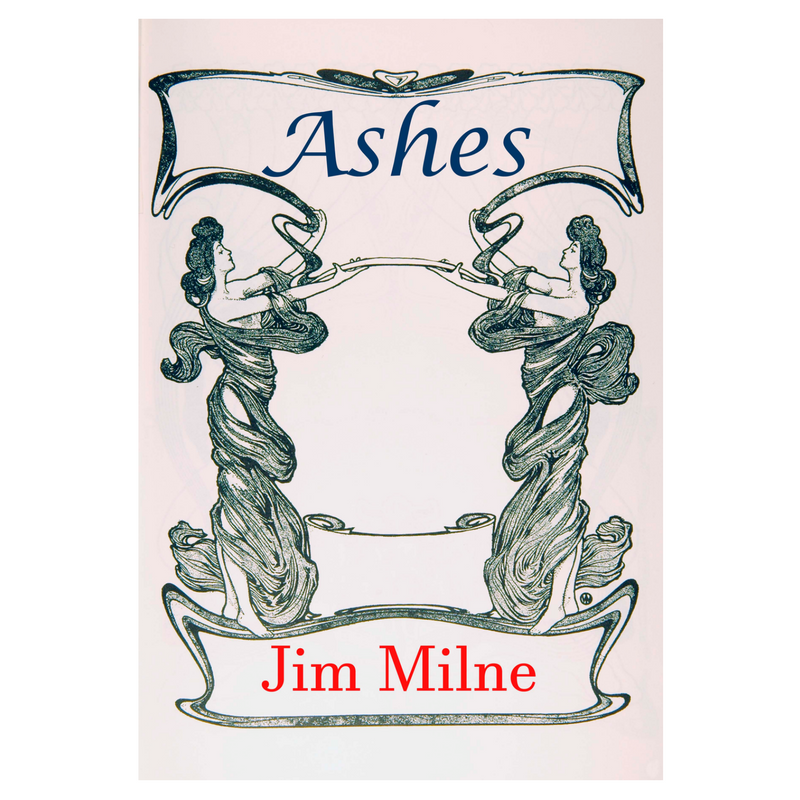
First place: “Ashes” by Jim Milne Second place: “Trickster” by Dianna MacLeod Third place: “The Things We No Longer Hear” by Paul Goldfinger
Ashes
By Jim Milne
I picked up Mom’s ashes at the funeral parlor and took them home. My brother Donny was there. We’d have our little ceremony before we scattered her ashes.
Mom was Irish, a real lady, but she liked her Guinness.
Donny lit a couple of candles; I got out two bottles of Guinness and glasses. We set the urn in the center of the table and prepared to drink a toast to Mom. I had a thought.
“Shall I pour a little in there for Mom?” I nodded at the urn.
“Better not, or we’ll never get her out of there.”
Trickster
By Dianna MacLeod
My parents shunned Halloween, that debauched holiday. For ten years they dimmed the lights, lowered the shades, sent me to bed early, prayed to protect me from pagan powers.
Eleven—my year to trick. Costume from a pillowcase. Escape through a window. Wandering the witching hour. Freedom! Thrills! Treats!
Then—rain slicking the pavement, eyeholes askew, sack heavy—I fell. On hands and knees, in darkness, I fumbled for each heavenly morsel.
Sack upended on my bed, I flashlight-lit my damply, shiny pile.
Moving? Writhing? Alive!?
Worms! Slimy wigglers clung to every piece!
God, the greatest trickster of all.
Things We No Longer Hear
By Paul Goldfinger
I hadn’t talked to my family in years. But I had no choice. I was dead broke and had no one else to turn to.
After panhandling just enough change, I found a pay phone and dialed home.
Mom answered: “Hello.”
“Hi Mom, it’s Paul.”
“Oh, Paul. It’s so good to hear your voice. How are you?”
“Physically, I’m fine. But I’m broke. That’s why I’m calling.”
“I thought you were calling about what happened to Dad.”
“Why? What happened to Dad?”
“Dad had a …“
Just then the Operator cut in saying, “Deposit 25 cents for three more minutes.”
[Not part of the story, but I can hear Lily Tomlin’s “Ernestine” character saying the final words.]
WLM stories and blogs are copyrighted and all rights are reserved. You may link to this story. To request permission to use or reprint content from this site, email info@whidbeylifemagazine.org.
You probably didn’t notice, but I am nearly a month late with this posting. I was last due on Sept. 12 at which time I was out of body, in another part of my mind. It was my birthday and I was completely absorbed in one and only one activity: completing the edit on my novel. I’d been sliding around it all summer but there was a lot to do to clear the way and then single-mindedly approach the book I wrote—oh, something like 20 years ago—with a fresh take and a clear eye.
It should have been easy, after all that time, to do that: look at it anew, after the passage of time. But it’s not easy. No, it is not. It requires a kind of suspension of disbelief that we generally reserve for strangers and things we’ve never read before. It required me to read this book as though I hadn’t written it, and glean how to make it better.
Try to remember September? (photo by Judith Walcutt)
Glean. I love that word. It means so much: “to extract from various sources,” “to collect gradually, bit by bit,” “to gather (left over grain or other produce) after a harvest.” In the land of language, we glean meaning from words and their innuendos. Face to face, we watch each other: the movement of eyebrows, the set of the mouth, a single movement of the hand—and suddenly we know more about each other than words can ever say. Unless, of course, we’re gleaning meaning from a poker face, in which case, the careful observer may note a certain twitching of eyelids and unconscious fingers twittering in the air without a keyboard. From such gestures, we can learn so much, glean so much, we ought to be able to write volumes about it. I know Henry James, Jane Austin, and a few others have gotten a lot of mileage out of interpreting faces and the unspoken words written across them—as have late night comedians, as they “do” the candidates in this unprecedented election season.
As I sit here writing this, catching up, as it were, on the passage of time, gleaning the changes in our understanding of language and its use in public discourse, I have to wonder at the paradigm shift I have seen in my lifetime! Someone ought to be ashamed. But, no, no one is. SO back to fiction, where I can control my characters and make them pay for their transgressions—or not—and just watch them struggle while trying to learn from their repetitious mistakes, but then, suddenly, intervene, divinely, and help them get to a satisfying end. I love fiction, for that very reason. It is so uplifting, in comparison to most of actual reality. People inevitably make mistakes. It is the human thing to do. But the really great thing is that sometimes people in the fictional story are redeemed in their lives, they get it—suddenly, they glean the bigger picture and they change because of it. They become better: they seek and get or give forgiveness. It is amazing how well fictional people can behave, if you just let them!
Author revises fictional reality with cat on board. (photo by David Ossman)
As for life off the page, the real reality we are living right now—all I can tell you is: gleaning meaning is a useful practice. Gleaning makes us go deeper into the circumstances, past the thin crust of things material and into the muddy waters beneath, where we can try to make something out of our experience, try to make a meaning bigger than our single selves can see or sense, when we are just tunneling along in our daily lives. Try looking at where the sky meets the water and the water meets the sky—and you will see the bigger picture for both parts.
Where water meets sky, sky meets water (photo by Kevin Patterson)
Like chutney made from found fruit, gleaned from abandoned fields and the sides of the road, there are so many flavors to consider, seeking the one taste of those many flavors. That’s what I did, when the rain stopped this past weekend. I went out looking for some beautiful fruit hanging from bended boughs, fruit that no one noticed or cared about. Apples—mottled red and yellow and pale green—the colors we are coming to now that summer has had her last late chance. I found a tree and picked a few—just a few—because that’s all you need to make something wonderful out of very little.
Here’s how to do it:
Find a tree with unpicked fruit. Apples or pears, or late ripening plums and wild grapes, if you can find them—it doesn’t matter what kind really, just the kind that needs to be seen, used, preserved, and not wasted. Notice its beauty and the bend of the bough. Pick as many as you can carry in your hands and cradled arms.
Glean this fruit! (photo by Judith Walcutt)
Take them home and admire them in a bowl on your table. Then gather the ingredients you want to taste—just like writing fiction, you are making this up as you go along. It is o.k. to be creative where chutney is concerned. With its various degrees of sweet, sour, hot, or salty—you almost can’t go wrong. Look to see what you have on hand that needs to be used before going bad or perhaps find that fruit in the freezer you haven’t gotten to all summer and throw it in the pot.
Here’s what I had on hand:
4 big, gleaned apples, peeled and chopped (about four cups worth)
1 large sweet onion chopped (about a cup or so)
Several handfuls of wild, sour white grapes (a gift from a friend who had too many, so I captured them in my freezer.) This time, I used one and a half cups, more or less.
Spices. I have lots and lots of them. I collect them. So for a chutney creation like this, I get them all out and let my nose lead the way.
When the tins they live in are opened, the whole house smells like a foreign country.
Fruit, spice, and time make gleaned chutney sublime. (photo by Judith Walcutt)
Here are some favorites and suggested amounts for one batch of Gleaned Fruit Chutney:
1 tsp. peppercorn
1 tsp. curry
1 tsp. ground ginger
1 tbl. fresh ginger grated
1 tsp. garam masala
¼ tsp. each cardamom and cardamom seeds
¼ tsp. Five Spice
1 star anise
A pinch of fennel
8-10 whole cloves (or ¼ tsp. ground)
Make it up with onions and apples. (photo by Judith Walcutt)
Make your spice mixture come alive by heating a tablespoon of canola oil, adding spices and stirring. The smells will awaken and fill the kitchen.
Oil and spice make nice! (photo by Judith Walcutt)
Add the onion first and stir around in the spices until it softens.
Add the apple and stir around again, until the spices are blended into the two. Cover and let it cook on low for a bit until the fruit settles down, then add the grapes, or the cherries, or the blueberries—whatever you can glean from around you. I threw in some dried sour cherries which I found fading in my pantry.
The four stages of chutnifying (photos by Judith Walcutt)
After the fruit has softened and begins to give off juices, add—stirring in gradually, with love and prayers for peace on earth and goodwill towards all sentient beings:
1 cup brown sugar
1 cup regular sugar (I use organic, raw sugar because it tastes better and is better)
Stir sugar until it dissolves and turns the fruit shiny and magical looking. (You’ll know it when you see it)
Add 1/3 cup apple cider vinegar. Stir, stir, stir.
Cover the pot and keep on low, but still stirring occasionally to keep the stuff from sticking, burning, or otherwise ruining itself like a badly behaved politician.
Pray or chant and stare hopefully into the heavens as you stir, to imbue the fruit you’ve gleaned from the truth you’ve gleaned, from the world you can’t believe is the one you are living in now.
Imagine that this chutney is medicine for what ails us. Let it cook on low for quite a while. Remove the lid and stir some more. Let the hot, sputtering juices evaporate, bit by bit, so that the fruit thickens, deepens, becomes more and more profound. Practice patience. Again and again, practice patience.
When this chutney created by you alone is done, you will know it. It is thick and smells of the past, the present, and the future. One taste. Many flavors. Enjoy.
And now, back to reality where I will go only as a tourist.
One taste, many flavors: gleaned chutney (photo by Judith Walcutt)
Judith Walcutt is a writer living on Whidbey Island who makes jams, chutneys, and variously invented preserves for the sake of sanity and spiritual uplift. Her old- novel-made-new-again, “Memoirs of a Modern She-Noodle,” will soon see the light of day from NeoPoiesis Press.
WLM stories and blogs are copyrighted and all rights are reserved. Linking is permitted. To request permission to use or reprint content from this site, email info@whidbeylifemagazine.org.
So I have some exciting news to share. My second book in my “Rejected Writers’ Book Club” series has just been acquired by Lake Union Publishing. For a bunch of ladies who have been rejected on the page, they’re sure getting a lot of attention from a real publisher.
Lake Union is one of Amazon’s own imprint companies so this news warranted a trip down into Seattle to meet with the publishing team and venture into the Willy Wonka of buildings—the infamous Amazon Towers, corporate headquarters of the company.
So off I trundled with my agent, Andrea Hurst, and her associate agent, Sean Fletcher, for a day in the big city—clad in my OICs (Off Island Clothes).
Amazon Tower in Seattle (photo by Anthony Bobnie for Business Journal)
I should say, at this point, I only possess three sets of OICs—you know, the ones you wear with underwear, and they don’t include clogs or boots in the ensemble. Because of limited OICs and the fact that this was the second meeting with Lake Union, it dawned on me (with only one more appropriate set of togs), that I may have to stop writing books they like or find another publisher.
Anyway, we left at the crack of dawn for a noon lunch meeting and, believe it or not, we actually arrived at 11.45. I could have flown in from San Diego quicker. But you know how it goes, there was a line for the ferry, then we crawled through traffic on the way down. Then with coffee and bathroom breaks, we finally entered Seattle at around 11 a.m.—only to have us overshoot our exit.
With the sights and sounds of the big city turning my menopausal brain into mush, I finally got my iPad navigation working, only to be informed by Siri that the exit we needed was half a mile behind us. This resulted in us crawling, in the boiling heat, through Game Traffic till we eventually looped back around.
The three biospheres in front of the Amazon headquarters will bring the outdoors indoors with over 300 species of plants from 30 countries. (photo by Suzanne Kelman)
We finally arrived to attend our lunchtime meeting in a new Italian restaurant in the shadow of the Amazon Tower. We had an excellent meeting with food so exquisite I wasn’t sure whether to eat it, plant it or mount it in a frame above my fireplace.
Once lunch was over it was off to the tower to have an editorial meeting and also enjoy a grand Amazon tour. I made it through security—yes, I had to go through security; I guess they were worried I might be sneaking in a Penguin publisher in my off-island pants. The first thing I realized, on entering, is that this is no ordinary building; with such impressive facilities, it felt more like a European airport than the place I order my toilet paper from.
It was, in fact, like entering a different universe. The 37-story building has a five-story meeting room center, featuring an amphitheater and stage with stadium-style seating for 2,000. There are also shops and restaurants, including a Starbucks, Skillet Street Food, Marination, Mamoon, Anar, Potbelly Sandwich Shop, and two restaurants from local chef Josh Henderson. That is a lot for a country mouse in her second set of OICs to absorb in one building.
My first port of call was Starbucks for a meeting with my new editor, who had flown in from New York for the week. We had a very successful business meeting discussing future projects and the plans for the Rejected Ladies. This included outlining the six months of work my newest manuscript will go through to make it into the beautiful package it’s sure to become. We had a great chat in such a comfortable little booth that it was hard to believe this was a work environment at all.
After my meeting, it was time for my tour of the rest of the tower. A trip up the building was an adventure all in itself as there are no buttons inside the elevators. Instead, you tap the desired floor into an electronic keypad mounted in the corridor; it then directs you to the elevator to take. I have to admit it seemed a very effective way to get you from A to B, but it was a little disconcerting, shut inside a metal box zooming skyward without the safety of illuminated buttons to chart my course or as a distraction to stare at as people entered. I kept thinking—as we gained speed, higher and higher—that maybe we would shoot right out of the roof just as in Charlie and the Chocolate Factory. We didn’t, as it happens, but when I got out on the 37th floor, we might as well have; it felt as if I was on the top of the world. What a fantastic view.
Proof that I made it all the way to the top! (photo by Suzanne Kelman)
As I toured the building, making my way down from floor to floor, I was in awe. Some of the highlights for me were the areas dedicated to fun, with an art and craft room and an electronic gaming room for employees to play and blow off steam. Also, a food court and an outside barbecue deck.
But my favorite by far was the dog floor. There is a unique outdoor deck, with a wall covered in tennis balls, so employees can bring their pooches to work. It’s complete with grass, fire hydrants, stacks of towels and dog toys. What a smart and innovative company.
Ever seen this many tennis balls at one time? On a wall? (photo by Suzanne Kelman)Dogs on top of the world (photo by Suzanne Kelman)
I was told by Gaby, my author-liaison lady, that not only do Amazon allow their employees to bring them new ideas to make this working environment the best that it can be, but they also encourage it.
I loved my trip to the big city and it was fun to meet everyone at Lake Union and see firsthand where all the magic happens. But I was so glad to shelve my OICs for another year and get back into my yoga pants (that have never been to yoga) and my clogs. It was a very successful trip and the good news is that my crazy ladies will be back in a second book to entertain everyone. It’s scheduled to be released in the summer of 2017.
Image at top: Suzanne Kelman, photo by Kim Tinuviel
Suzanne Kelman is a multi-award winning screenwriter, playwright, and an Academy of Motion Pictures Nicholl Finalist. Her debut novel The Rejected Writers’ Book Club was released in 2016 and quickly became an Amazon international bestseller within its first week. Her second book in the same series is due to be released by Lake Union Publishing in Summer 2017.
WLM stories and blogs are copyrighted and all rights are reserved. Linking is permitted. To request permission to use or reprint content from this site, email info@whidbeylifemagazine.org.
Today we talk about theft. Stealing. Purloined ideas and stories.
Elvis Costello has said, “every artist is a magpie and a thief.” I believe that statement, and there have been several well-known court cases about copyright infringement. Back in the ’70s, George Harrison was the first be nicked for this crime; it seems “My Sweet Lord” sounded a little too much like the Motown classic “He’s So Fine.”
In a bizarre case in the early ’90s, John Fogerty was sued because his new song, “Old Man Down The Road,” sounded too much like his ’60s Creedence hit “Run Through The Jungle,” for which he no longer held the copyright. Sued for stealing from yourself. Hmmm. (Excellent background on this can be found here.)
So, if the courts (and my 12th grade English class) are any indication, stealing of words and ideas happen all the time. The difference is, I believe, that artists steal from real life. And, they fictionalize and improve on what they have stolen.
After the short story master Raymond Carver died, Tobias Wolfe (known for his local novel and film entitled “This Boy’s Life”) gave a moving tribute in Esquire magazine. He recalled that Carver was ruthless in taking ideas and anecdotes from anybody. Someone at a party had mentioned watching an eagle taking a salmon and dropping it out of the sky. Sure enough, within weeks, a Raymond Carver short story had an eagle accidentally dropping a salmon on the hood of the narrator’s car. Lest we paint brother Raymond as someone who just took other’s good ideas, remember that he changed them, honed them, and remade them according to his own vision. As Carver said in an interview with Paris Review, “a little autobiography and a lot of imagination are best.”
Gordon Sumner, better known as Sting, has said this mindset can actually be a little dangerous. This power, this using real life as material, is not the healthiest thing. As Bill Flanagan recorded in his book, “Written In My Soul,” Sting told him that the song, “‘Every Breath You Take,’ was written for one specific person. That is the power I have: If you piss me off or jilt me I’ll make you famous.”
Yikes. Sting is writing about real people and real situations.
In a CBS Sunday Morningfeature earlier this year, songwriter Jason Isbell was being interviewed about his childhood, and his mother said, “We have a joke in the family: watch what you say around him—it’ll end up in a song.”
In one of his better-known songs, “Decoration Day,” he weaves an amazing story of a blood feud between two southern families. He has said it came from his own family’s history, which he was not supposed to disclose—a true story of a grudge that was big news in the south in 1984. But, again, it was injected with a healthy dose of fiction thrown in:
It’s Decoration Day
And I’ve got a family in Mobile Bay
And they’ve never seen my Daddy’s grave.
But that don’t bother me, it ain’t marked anyway.
Cause I got dead brothers in Lauderdale south
And I got dead brothers in east Tennessee.
My Daddy got shot right in front of his house
He had no one to fall on but me
Spoiler alert: Isbell was writing in character, from the opposite side of his family’s viewpoint. His dad is alive and well.
Another well-known American writer, Edgar Allan Poe, lifted perhaps his most famous short story, “The Cask of Amontillado,” from a true tale that was being hushed up at an Army base in the 1800s. Seems an unpopular officer was kidnapped and bricked up inside one of the fortress walls. Poe asked questions about the rumor, and was told by superiors to quit talking about it.
He promised never to talk about it, but then changed the setting to European Carnival season and wrote it down! A vengeful enemy tricks his rival to follow him down to the catacombs, traps him, and bricks him in behind the wall to die. Brilliant. A very creepy and unsettling story, perhaps because it just might be true….
The final say in this matter must go to writer/artist Austin Kleon. His amazing illustrated book, “Steal Like An Artist,” and the two follow-ups (Just buy them all, right now. Trust me) are inspiring, liberating works. In his opinion, stealing done properly doesn’t pass off someone else’s work as your own; rather, it enhances it, honors its influences, and makes something entirely new. For his newspaper blackout poems, blog posts, artistic endeavors, and more fun than one guy should have, go to www.austinkleon.com.
Erik Christensen teaches English at Oak Harbor High School, writes songs and poetry, and often repeats the Ken Kesey adage: “It’s a true story, whether or not it really happened.”
Erik Christensen Band plays at the Fleet Reserve in Oak Harbor on Sept. 23, the Bayview Farmer’s Market on Oct. 1, the Island Arts Council Poetry Slam on Oct. 29 at the Freeland Cafe and Blooms Winery in Bayview on Oct. 30.
WLM stories and blogs are copyrighted and all rights are reserved. Linking is permitted. To request permission to use or reprint content from this site, email info@whidbeylifemagazine.org.
Congratulations to Dianna MacLeod, our “Whidbey Writes” featured writer for August. We’re pleased to be able to share her short story, “Gloves,” with you.
The purpose of “Whidbey Writes” is to encourage writers with a Whidbey connection to submit short fiction and poetry for publication in Whidbey Life Magazine, thereby giving our readers an opportunity to enjoy these creative writings. Throughout 2015 and 2016, Whidbey Writes has published monthly selections of short fiction and poetry online. The most popular of these entries were also published in the Fall/Winter 2015 and Spring/Summer 2016 print editions of Whidbey Life Magazine.
We publish the original work of selected winners at the beginning of each month as part of Whidbey Writes. Thanks to volunteer editors Heather Anderson, Mureall Hebert and Chris Spencer, who review submissions throughout the year and pass on the work they enjoy most to Whidbey Life Magazine for publication online and in print.
To see previously selected writings, visit the Whidbey Writes page here.
___________________________
Gloves By Dianna MacLeod
1919 October 12; morning The train that carried me clear across my native land—this country of plains and rivers, silver sagebrush and purple peaks—has deposited me here, at the ends of the earth. I imagined there would be a cliff. A sharp drop off. Rocks below on which, if I took a running leap and threw myself over, I would be dashed. But the ends of the earth are nothing like that…at least that I can discern. Because the ends of the earth are shrouded in fog.
This place, MukilTEo—not Mucky-Leeto or Mah-Kilt-I-Oh—is a place of fog. And wood. Nothing like the stolid brick-encased drawing rooms of Boston, where I was, until so recently, forced to pour and pass cups of tea from a seemingly bottomless pot as mother, father, and their fusty friends exchanged views about me and my destiny—when will I marry? Who will I marry? Is hope of my marrying as dim as a lantern whose wick is burnt down to a stub? I poured, I passed, I pretended not to hear, all the while aware of my hands inside lace-trimmed white gloves meant to hide them. And my dangling sleeves, extra long—special request to my dressmaker—hiding the nicks, scrapes, and notches on my skin, the result of clumsy use of my tools in the half darkness while sculpting small pieces of stone worked quietly, beneath the cellar stairs, before dawn, while the house sleeps, an old shawl thrown over my nightdress.
I’ve learned that Mukilteo means “good camping ground” in the language spoken by the Tu-LALL-ip—not “TOO-la-lip”—native people. And for me, it is but a temporary camp on my way to Whidbey Island. The name of the place seems straightforward, but there may be some mystery in its pronunciation I’ve not yet discovered. WHY-Dee-Bay. Or Wa-HID-Be-Why.
As I wait for the steamboat, I observe this wooden world in which I find myself. Everything here is made of lumber, from sidewalks to storefronts to the lighthouse sounding its horn into the fog. From the little I can see inland, beyond the borders of the town, trees blanket the land in every direction, jostling for space in which to spread their branches. I can see nothing of my island destination, or, indeed, nothing at all in the seaward direction. When the steamboat arrives, it will require of me considerable faith to board it and allow it to carry me away into that dense fog toward the strangers I long and fear to meet. I find myself clenching my hands inside their traveling gloves. My other pair of gloves—white, trimmed with lace—are packed inside my trunk, should occasion demand I once again hide my hands from polite society.
1919 October 12; afternoon “You look half starved.”
Those were the first words of Margaret Camfferman when I arrived on the doorstep of the Brackenwood Artists’ Colony.
She is correct about one thing: starved, I surely am, but not for food. Starved for the time, place, and privacy to tell my stories in stone. To sculpt. A most unsuitable pastime for a young lady of a certain social standing. For, perhaps, any female of any standing.
Over luncheon of an orange-fleshed fish caught in these waters, Peter Camfferman tells me I am not the only artist in residence, and mine is not the only studio here at Brackenwood; several others are occupied, at the moment by members of the Women Painters of Washington. Will their hands be stained with indigo and smell of turpentine? Are the chipped nails and nicked flesh concealed beneath my dangling sleeves about to become a badge of belonging? Oh, that it may be so!
The Camffermans consider themselves abstract painters—and I confess I don’t yet know what that means. I do know it is modern, and, if modern means that women are allowed—even encouraged!—to paint and sculpt and attempt all manner of artistic endeavor, then modern is fine by me.
Did the Camffermans find it strange I kept my traveling gloves on during luncheon? I wanted to remove them, but much to my dismay found that my habit of hiding my hands prevailed…just as if I were pouring tea under father’s watchful eye. Physical distance is not emotional distance, it seems.
1919 October 12; late afternoon. This island is populated by rampant ferns and dark wedges of conifers…at least, the little I could see of it in the dissipating fog as Peter Camfferman led me along a trail to my very own studio. Formerly a horse stable, he told me. I expected the studio to be made from wood, but to my great surprise it is not. It may be the only stone building west of the Cascade mountain range.
The roof is not a roof in the conventional sense, but I suppose I am not a woman in the conventional sense. Strips of scalloped tin are fitted round immense plates of thick glass resting on beams. The studio was built to withstand the metallic temper of horses. Wood darkened by animal piss and sweat…bleached and whitewashed for me.
The wood-paneled, arched double doors of the studio open onto a lane and permit delivery of large pieces of stone. (I am to go to a quarry and choose one tomorrow!) Through those same accommodating doors, I’m meant to send my finished pieces out into the world. I can’t quite imagine, as all my sculptures before this were conceived and executed so as to be small enough to smuggle upstairs in the pocket of a dress.
On one wall, a smock and apron hang from pegs. No more sculpting in a nightgown! A pair of thick leather gloves rest on a pedestal. Clearly, these are intended to protect my hands against the possible injuries inflicted by working large pieces of stone. These gloves are padded and triple stitched, yet supple. Gloves made for a singular purpose. Gloves that know their reason for being. Will they fit me, I wonder.
Shelves attached to the wall hold rows of brown and blue glass bottles filled with potions that pock and pit rock…baptismal water and breast milk for stone. In the weak sunlight now filtering through the transparent roof, the bottles shine like watery jewels.
Against the chalk-white purity of this room, tools are scattered about like dark weapons. Saws rest horizontal on tables; mallets and chisels and hammers stand upright in tin cans. Each implement is prepared to split the air with directed force and bring itself up against rock that dares me to make it more beautiful than it already is.
1919 October 13; midnight
Too excited to sleep, I have just returned from a walk to the high bluff behind the studio. The fog had disappeared entirely, blown away by a brisk wind. The stars whirled and spun for their own pleasure, carving out their place in the sky. Even in the darkness, I saw I am indeed on an island, a world of its own, and I looked out on another island, most likely with a name I’ll be unable to immediately pronounce. But I will learn this new language.
Why venture out so late into this unknown territory…where I could, indeed, step off the edge and perish on the rocks below? Why leave what safety and security I have managed to find? Because something of mine firmly demanded it. Strictly commanded it.
A pair of white, lace-trimmed gloves.
Standing on the bluff, looking into the expansive darkness, I held up one glove, and then the other, filling them like balloons with the salt air rushing past. I flung wide my arms and let go. Turning and curvetting in the air, blown this and that way over the water, the gloves waved in frantic flutter. “How will you hide yourself?” “What will become of you?” “Who will you marry?”
I raised both of my naked and imperfect hands. Not to implore. Not to retrieve. Not to recite the old familiar prayers. I raised both hands—the nicked and roughened hands of an artist—in glad farewell to a pair of lace-trimmed white gloves disappearing into the night.
_______________________________
Dianna MacLeod earned her journalism degree at the University of Michigan. She discovered Whidbey Island in 1989 during a residency at Hedgebrook and moved to the island in 2011. A former grant and speech writer, Dianna now concentrates on fiction and plays.
__________________
CLICK HERE to read more WLM stories and blogs. Have a great story idea? Let us know at info@whidbeylifemagazine.org.
WLM stories and blogs are copyrighted and all rights are reserved. Linking is permitted. To request permission to use or reprint content from this site, email info@whidbeylifemagazine.org.
Oh, the good old summertime. The bees are buzzing, the birds are chirping and the cotton is high. Apparently—I definitely have a stack of washing, that’s for sure.
But it is also the ideal time for planning for the fall writing challenge “NaNoWriMo” (more about that later). This is because sitting in a deck chair and dreaming is a fabulous time to let your imagination run wild, like a group of von Trapp children wearing the bedroom curtains.
As you sit there dreaming, you’ll probably fit loosely into one of two camps as a writer. You identify either as an Outliner or an Outlawer. And whichever you are, now is a great time for planning.
Outliners like to prepare; they like to be ready. They have journals and graphs, extended character bios, stimulating scents and special writing music. And Outlawers–well, they don’t. Outlawers let ideas stew, sometimes for months—and the summer is a fabulous time to get out the stew pot.
“Outlawers” is a made-up name, in case you thought for a second I was smarter than you are; it’s a name I have for all of us “out of the boxers.” Oh, that sounds naughty—but I guess you catch my drift, or my draught if you’re out of your underwear.
I am a hand-on-heart, confessed Outlawer or, as some people call us, pantsers. There is only one way I can write the first words of a new project, and that is by running with my hands in the air, screaming, towards the amusement park of my imagination. I arrive at my keyboard on day one with a hundred different half-blown cobbled-together ideas, scenes and sketchy characters all brimming inside me like a stovetop full of pressure cookers ready to blow.
Then, once I start writing, there is no real rhyme or reason to my first draft. My process goes something like this: Okay, first the Rollercoaster…no, no, the Carousel, then the Ferris Wheel…then I have to tackle those high swings and, OMG, is that the Haunted House?
Don’t get me wrong; I don’t think my way is better. I actually have Outliner envy; how I wish I had all my scenes neatly typed up on a clipboard and knew everyone’s name, eye color and weight before I start. How much easier would my job be?
I did try to plot once; it was for a screenplay. It was beautiful, a fabulous shiny new storyline all ready to go, all 110 pages written out on little index cards. But the ink was barely dry on the words “Fade in” before the protagonist turned to me and told me to shut up and listen… and that was that. I have been chasing characters around ever since, writing everything they say like a frenzied reporter in a black and white film noir. I have very little to do with it. I just get out of the way and let them lead. I have more characters called ‘Jane Doe” in my first draft then a New York City morgue.
Alas, this is the creative brain I was given and, like a yarn factory broken into by a gang of mischievous cats, you know it’s all in there—you just have to unravel the whole thing.
Usually, what dictates the first tentative lines of my latest masterpiece is what shouts the loudest in the vaudevillian theater of my imagination. I can often start right in the middle of a story—some odd, unimportant scene that has been haunting me for weeks. It comes to me complete with a gang of derelict characters that I haven’t even met yet who have been following me around like a bad smell, hollering “me, me, pick me, write me!”
Now, I know some of you are nodding and smiling, and some of you have no idea what the heck I’m talking about, as you’d no sooner arrive at a first draft unprepared than at church naked.
Which is why NaNoWriMo and I are a perfect fit—like cheese and biscuits, coffee and cream, chocolate and anything. And for all you outlawers (and especially you outliners), the Summer is a great time to start stewing and plotting.
Na-no-what-mo? (you may be saying…) Well, there may be one last writer who hasn’t heard of National Novel Writing Month. And for that one person who’s just left the convent after ten years of seclusion, here’s a breakdown of what it is.
Every year on Nov. 1, crazed, wild-eyed, coffee-drinking writers bolt out of the gate like black Friday shoppers and race as fast as their pens can carry them to 50,000 words by the end of November. The idea is no editing, just writing; no over-thinking, just writing; no “bum leaving seat,” just writing.
Having run the Nano gauntlet three previous times, I’ve gotten used to the highs and lows of the month-long process, and having lots of ideas to draw from is an excellent way to get through the dreaded mid-November NaNo blues.
So, for all you “Outlawers” and maybe a few of you sneaky “Outliners” who are intrigued by running naked, just this once, pull up a deck chair and start dreaming up the next great American novel.
Suzanne Kelman is the author of “The Rejected Writers’ Book Club” and an award-winning screenwriter and playwright. Her accolades include The Academy of Motion Pictures Arts and Sciences – Nicholl Fellowship Finalist, Best Comedy Feature Script -L.A. International Film Festival and Gold Award Winner – California Film Awards.
(Suzanne Kelman’s photo, at top, was taken by Kim Tinuviel)
WLM stories and blogs are copyrighted and all rights are reserved. Linking is permitted. To request permission to use or reprint content from this site, email info@whidbeylifemagazine.org.


 I picked up Mom’s ashes at the funeral parlor and took them home. My brother Donny was there. We’d have our little ceremony before we scattered her ashes.
 My parents shunned Halloween, that debauched holiday. For ten years they dimmed the lights, lowered the shades, sent me to bed early, prayed to protect me from pagan powers.
 I hadn’t talked to my family in years. But I had no choice. I was dead broke and had no one else to turn to.


 In a bizarre case in the early ’90s, John Fogerty was sued because his new song, “Old Man Down The Road,” sounded too much like his ’60s Creedence hit “Run Through The Jungle,” for which he no longer held the copyright. Sued for stealing from yourself. Hmmm. (Excellent background on this can be found
  Gordon Sumner, better known as Sting, has said this mindset can actually be a little dangerous. This power, this using real life as material, is not the healthiest thing. As Bill Flanagan recorded in his book, “Written In My Soul,” Sting told him that the song, “‘Every Breath You Take,’ was written for one specific person. That is the power I have: If you piss me off or jilt me I’ll make you famous.”
 In one of his better-known songs, “Decoration Day,” he weaves an amazing story of a blood feud between two southern families. He has said it came from his own family’s history, which he was not supposed to disclose—a true story of a grudge that was big news in the south in 1984. But, again, it was injected with a healthy dose of fiction thrown in:
 He promised never to talk about it, but then changed the setting to European Carnival season and wrote it down! A vengeful enemy tricks his rival to follow him down to the catacombs, traps him, and bricks him in behind the wall to die. Brilliant. A very creepy and unsettling story, perhaps because it just might be true….
 As you sit there dreaming, you’ll probably fit loosely into one of two camps as a writer. You identify either as an Outliner or an Outlawer. And whichever you are, now is a great time for planning.
 Then, once I start writing, there is no real rhyme or reason to my first draft. My process goes something like this: Okay, first the Rollercoaster…no, no, the Carousel, then the Ferris Wheel…then I have to tackle those high swings and, OMG, is that the Haunted House?
 Which is why NaNoWriMo and I are a perfect fit—like cheese and biscuits, coffee and cream, chocolate and anything. And for all you outlawers (and especially you outliners), the Summer is a great time to start stewing and plotting.