Tag: Whidbey Working Artists

  • Diane Divelbess Is Throwing a Party to Celebrate 80—Artfully

    Diane Divelbess Is Throwing a Party to Celebrate 80—Artfully

    DianeDivelbessAdFLATBY MARTHA McCARTNEY
    Whidbey Life Magazine contributor
    June 17, 2015

    I had a conversation with Diane Divelbess that wound up being about trajectory, intersecting lines, surrealism and how one person’s belief system can come into conflict with another person’s. Our conversation was meant to be about art and, I suppose—at its essence—it was.

    Diane Divelbess is an artist who has truly made her life art. She’s surrounded herself with artwork collected from her travels around the globe. And while, at first glance, this collection may appear disparate there is, at its core, a common element—a curiosity about the way different cultures see the world and the shared spirituality of people and story.

    Diane DivelbessAT80
    Divelbess standing in front of NIGHT SERIES XVIII, her 10-foot-long graphite drawing on rag paper, which hangs in the stairwell of the home she shares with spouse Grethe Cammermeyer. (photo by Martha McCartney)

    Divelbess was born in Phoenix, Arizona and attended college in California, where she earned a BA Fine Arts degree from Scripps College and a Masters of Fine Arts from Claremont Graduate University. She studied printmaking and silkscreen privately with Nick Dematties and Jack Duganne. She is Professor of Art Emerita with California State University, Pomona, where she taught for 27 years. She has exhibited on the West Coast from California to Washington. Divelbess and her spouse, Grethe Cammermeyer, now live on a beautiful property with a stunning view of Saratoga Passage near Langley, on Whidbey Island.

    Microsoft Word - Document8
    FORMAL THOUGHT REVISITED – IV graphite and ink on paper, 9” x 11 ½” (Image courtesy of the artist)

    On the surface of things, much of Divelbess’ work is deceptively simple. And then there is the closer inspection. From landscape paintings to pencil drawings, one begins to see the mind of the artist exploring the spatiality of surfaces, the intersection of planes and the perspective of distances, which brings the viewer to question where they are in time and how, and if, they are grounded. Some of the current work, which—as ever—is rooted in precision, transcends the pencil marks and leaves the viewer twisting in space like a mobile that shifts in the wind—puzzling out what is foreground and what is background. The relationship and tension between shapes makes the bond seem unbreakable.

    EFFUSIVE
    EFFUSIVE crayon on paper, 6-1/4” x 6-7/8” (Image courtesy of the artist)

    The couple’s house, which is now essentially a gallery, is filled with work that intrigues her in a similar way as her own artwork, and even the arrangement of art on the walls is significant. The space between works takes on new importance—the relationship between paintings seems to hold the wall together. This collection of art is, in many ways, a testament to precision, but then there is a surprise element that reveals an irreverent sense of humor.

    enamelMug,closedHangle
    ENAMEL MUG WITH CLOSED HANDLE acrylic on rag paper, 12” x 9” (Image courtesy of the artist)

    The “gallery” contains massive collections of what Divelbess calls the “kitschiest” stuff—from Pez witches to Frida on a rubber eraser and the Black Madonna in a walnut shell. Divelbess is a great collector of folk and tribal art and has masks adorning the walls in juxtaposition to her serene renditions of a teacup. It’s not a random collection nor is it chaotic; it’s highly organized and linear.

    Microsoft Word - Document6
    ANDEE’S FRIENDS acrylic on canvas, 30” x 24” (Image courtesy of the artist)

    Divelbess paints, draws with pencil and crayon and utilizes various printmaking techniques, and—in true “teacherly” fashion—she patiently explained all the methods of each system. Her daily practice lines shelves in her studio—sketchbooks neatly arranged, holding a drawing from most every day going back decades. “Art begets art,” she said. Her philosophy is evident in her surroundings and in her dedication to her vision.

    africa+on+our+kitchen+table
    AFRICA ON OUR KITCHEN TABLE acrylic on canvas, 36” x 12” (Image courtesy of the artist)-

    In celebration of Diane Divelbess’ 80th birthday and to showcase her art from this last decade, Divelbess and Cammermeyer are opening their home for an exhibition of current and past work, with all pieces for sale. They invite the public to attend a reception from 5 to 8 p.m. on Saturday, June 20 at their home on 4632 Tompkins Road in Langley. The exhibit will be open for public viewing from 1 to 5 p.m. every day—Wednesday, June 24 to Saturday June 27—with a closing reception from 1 to 5 p.m. on Sunday, June 28.

    For more information about the art of Diane Divelbess and her work, click here or call 360-221-6141 for more information about the exhibition.

    Martha is a poet, photographer, mixed-media artist, persistent gardener, candle-maker and semi-retired knife sharpener. She currently lives in historic Coupeville with her dog, the ever-fabulous Lillie Savage.

    __________________

    CLICK HERE to read more WLM stories and blogs. Have a great story idea? Let us know at info@whidbeylifemagazine.org.

    WLM stories and blogs are copyrighted and all rights are reserved. Linking is permitted. To request permission to use or reprint content from this site, email info@whidbeylifemagazine.org.

  • Walkin’ in a Thrift Store Wonderland

    Walkin’ in a Thrift Store Wonderland

    BY MERI McCORMICK
    December 10, 2014

    I love design. Any kind of design—and when I heard about Langley’s “Deck the Doors” holiday contest, I thought it might be fun to challenge my design skills and maybe even win.

    The contest is a brilliant way for the city of Langley to decorate its entire town for the holidays. Artists and store owners are matched and the artist is given the opportunity to create a holiday decor for a business storefront.

    I was the artist matched with Langley Antiques, which is housed in an old bank building with exquisite woodwork, vintage windows and a beautiful glass inset front door. In order to preserve the surrounding moldings and trim, I was asked to use just two nails in the entire design—hidden in the outside molding above the front door.

    Okay. There are always design constraints; this is common. But this one really made me think.

    Langley Antiques, decorated by Meri McCormick for "Deck the Doors 2014"  (photo by Meri McCormick)
    Langley Antiques, decorated by Meri McCormick for “Deck the Doors 2014” (photo by Lorinda Kay)

    I managed to map out an overall look using just the two nails, with dowels to hang ornaments, and tiebacks to secure the rest. I received approval from owners Laurel and Jackie and I was on my way. The bank building had a lot of detail to consider—the front door, side panels, three windows, the planter, the old bench and the antique scale perched in front. The theme for my design was old fashioned holiday motif, but buying all the materials for the design seemed likely to cost a fortune. How could I pull this off?

    I happened to be driving in Oak Harbor later that week and passed Island Thrift Store. Stopping in, I quickly located a wall of holiday possibilities—bin after bin of garland, bows, ribbons, wreaths, stockings and ornaments. I started filling my cart. After paying just $15 for all of my finds, I was hooked.

    Suddenly Thrift stores on Whidbey Island became my passion. I visited Good Cheer in Clinton and found a huge handmade Santa stocking and a massive white beard, which I glued onto the Santa face.

    Santa grins with a special beard from Good Cheer in Clinton!  (photo by Meri McCormick)
    Santa grins with a special beard from Good Cheer in Clinton! (photo by Meri McCormick)

    My search then brought me to Community Thrift in Freeland; I nearly passed out when I found a dozen 24-inch candy canes made out of PVC pipe for only 25 cents each. They were ideal for the planter and for the front door garland.

    At the WAIF Thrift Store in Freeland I found a fantastic french horn for my garland focal point. But I wasn’t stopping there. At Good Cheer Thrift in Langley I bought $1 teddy bears to stuff my stockings and white, red and green beads for 50 cents that I strung together, plus more balls and ornaments.

    As the days passed, I noticed that the thrift stores kept bringing out more amazing holiday decorations. So I returned, again, again and again. I combed the island from Clinton to Freeland, Coupeville and Oak Harbor. I wanted more, but I finally had to curb my festive frenzy as my living room quickly became a mass of glitter, ribbons, angels, balls, Santas and glue. I had turned into a thrift store addict and my only hope was to tie myself to my house and get to work.

    A french horn from WAIF Thrift Store in Freeland gets the star treatment in Langley Antiques' holiday decorations.  (photo by Meri McCormick)
    A french horn from WAIF Thrift Store in Freeland gets the star treatment in Langley Antiques’ holiday decorations. (photo by Meri McCormick)


    Thanks to all my thrift store finds, my design is now finished and displayed at Langley Antiques along with all the other beautifully decorated doors in downtown Langley. Stop in and take a look. Then, get to your nearest Whidbey Island thrift store and go crazy. You can decorate your home—and even a whole town—for pennies.

    For more photos of “Deck the Doors,” see this photo essay from Lorinda Kay.

    Meri has remodeled and staged hundreds of homes and offices. A resident of Freeland, she is a lover of all things design.

    ________________

    CLICK HERE to read more entertaining and informative WLM stories and blogs.

    WLM stories and blogs are copyrighted and all rights are reserved. Linking is permitted. To request permission to use or reprint content from this site, email info@whidbeylifemagazine.org.

  • From Leprechauns to Soap Bubbles: ‘I Reckon a Fella Could Do That’

    From Leprechauns to Soap Bubbles: ‘I Reckon a Fella Could Do That’

    BY MARTHA McCARTNEY
    PHOTO ESSAY BY DAVID WELTON
    VIDEOS BY ROBBIE CRIBBS
    *See addendum for a sunrise bubble-making session information
    Whidbey Life Magazine Contributors
    September 3, 2014

    When Tom Lindsay was six years old he remembers making a leprechaun out of roof tar. Now he makes bubbles. Once you know his story you’ll see a definite design trajectory.

    Lindsay was born in the hot flatland of west Texas into an extremely supportive and encouraging family. His maternal grandfather, “Papaw,” had a tremendous impact on the way Lindsay solves problems.

    Tom Lindsay, age 10, at work in his grandfather's workshop  (photo courtesy of Tom Lindsay)
    Tom Lindsay, age 10, at work in the family workshop (photo courtesy of Tom Lindsay)

    “Papaw and I would go into our family shop—it was small and narrow, a converted chicken coop—where we tinkered with all sorts of things and he taught me how to use tools. There was a buckboard-seat bench where he would sit and watch me. I remember one day it was so hot that his glasses were steamed up and I told him he didn’t need to stay, he could go into the house. He shook his head and said ‘You are a boy after my own heart.’”

    “Papaw always bought Craftsman tools—‘has to be Craftsman’—he’d say. One day we were at the hardware store and saw a drill press. I can still recall the smell of it. I asked Papaw if we could make one and he answered ‘I reckon a fella could do that.’ That was his answer to a lot of my questions. We did build one, but instead of the drill lowering as usual, we rigged up a hydraulic car jack to raise the piece to be drilled.” From that time forward, Lindsay explained, he was able to see things from a different point of view.

    An opalescent sphere rests on the water's surface  (photo by Martha McCartney)
    An opalescent sphere rests on the water’s surface (photo by Martha McCartney)

    The Lindsays moved from Texas to California when he was seven. He continued school and graduated from Stanford. For a time he worked in the solar industry and then in electronics. He invented and patented an electromagnetic shielding gasket that was sold to manufacturers of computers and telecommunication equipment. Later, he became Director of Exhibits at the Children’s Discovery Museum in San Jose.

    One of the largest tasks during that time was the complete demolition of the existing water exhibit, which, Lindsay explained, needed a new look and updating regarding methods for keeping the water free from bacteria. Lindsay, with a team of highly skilled designers, successfully installed the current interactive exhibit called “Water Ways,” one of the most imaginative in the country. Throughout his working life, he seems to have utilized an “I-reckon-a-fella-could-do-that” ingenuity.

    Even though a bubble room was included as part of the exhibit at the Museum, Lindsay recalled an earlier experience with bubbles that he thinks may have started his fascination. On a camping trip to the Sierras he wore a huge backpack while pushing a jogging stroller loaded with his son, an inflatable raft and a bubble-making kit. “I took the raft originally because it was the only way I could get [my son] settled down to go to sleep,” Lindsay said, “but then I also knew there was a lake. It was a place I had been before.”

    He described what happened out on the lake as surreal. The large iridescent bubbles floated out over the still water and then—instead of bursting as he expected—they ricocheted lightly, drifted back up into the breeze and then finally settled, resting for moments before bursting. The raft was surrounded by mystical opalescent gazing balls reflecting the sky. He and his son were enchanted.

    As things tend to do—life moving in circular paths—Lindsay is now a grandfather. Remembering how the bubbles had entranced his son at the lake, he wanted to share this with his young granddaughter and so he set out on a quest to make bubbles.

    Lindsay is the kind of guy who is compelled to rework systems and processes. He wanted to make big bubbles—really big bubbles—and lots of them.

    Lindsay has learned to make bubbles and he paints the wind  (photo by Martha McCartney)
    Lindsay has learned to make bubbles and he paints the wind in Coupeville (photo by Martha McCartney)

    The most widely used method for making large bubbles involves dipping the strings—“wicking”—into soap solution. Bubbles and bubble tubes can be made for only a few seconds, until the solution dries. Some bubblers are experimenting with a “no dip” method that pumps the soap to the wicks but, Lindsay said, it didn’t work as well as he wanted.

    After hours of research and experimentation he built a bubble system with a pressurized pouch housed in a backpack that feeds into manually controllable hollow wands to soak the wicking in a continuous stream. The bubble solution is made of bio-degradable dish soap and a mixture of food-grade products. He has dubbed this method “bubble streaming.”

    Lindsay weaves his bubble wands  (photo by David Welton)
    Lindsay weaves his bubble wands (photo by David Welton)

    Not only can the soap be continuously fed to the wicking, the operator is completely mobile. This system provides the ability to move around while creating streams of bubbles. Freedom of movement has made it possible to influence the shapes and sizes of the bubbles coming from the wands. It is possible that bubble making may now evolve into an art form incorporating dance, music, photography—there are many potentialities.

    Lindsay in the Langley Harbor at sunrise  (photo by David Welton)
    Lindsay in the Langley Harbor at sunrise (photo by David Welton)

    Watching the process is mesmerizing. The shapes and swirling colors are stunning. The wind currents pull and elevate the bubbles into an ethereal ballet of sensuous movement. So much is dependent upon the landscape, which takes on the role of backdrop and changes the reflections on each surface.

    All of this to say: wow–this is amazingly beautiful and fun to watch.

    Lindsay captures the Langley Harbor shoreline  (photo by David Welton)
    Lindsay tries to capture the Langley Harbor shoreline (photo by David Welton)

    Tom Lindsay Designs (tomelindsay@gmail.com) is located in Freeland at the Freeland Art Studios, and from his workshop—now better equipped and larger than a chicken coop—he designs and builds water installations for children’s museums located throughout the country. Providence Children’s Museum in Rhode Island just recently received water features from Lindsay.

    Lindsay at work on a water installation for a children’s museum    (photo by David Welton)
    Lindsay at work on a water installation for a children’s museum in his studio (photo by David Welton)

    Tom Lindsay will be painting the wind with bubbles in Langley during the first annual “Arts Alive” event from 11 a.m. to 3 p.m. on Saturday Sept. 13. “Arts Alive” is a showcase of artists who will provide demonstrations throughout the town of Langley.

    You really do not want to miss this.

    *Tom Lindsay will do a special “sunrise” session making bubbles as an introduction to ‘Arts Alive’ on Sept. 13 at 6:30 a.m. at the Langley Harbor. Throughout the day he’ll be making more bubbles, weather permitting, at Seawall Park.

    Langley Harbor at sunrise  framed by a Tom Lindsay bubble stream (photo by David Welton)
    Langley Harbor at sunrise framed by a Tom Lindsay bubble stream (photo by David Welton)

    The bubble-creating experience with Tom was captured in two videos by local artist and videographer Robbie Cribbs of Sound Trap Studios.

    Interview with Tom Lindsay video link:  http://youtu.be/3JEgGymPLUY

    Streaming Soap Bubbles tn

    This second video is short film, “The Sacred Life of Bubbles” of the bubbles at sunrise at the Langley Harbor:

    “Sacred Life” video link: http://youtu.be/AfM6-9WXJiU

    S 2 Thumnail

    Both videos were shot, edited, and produced by Robbie Cribbs.

    Image at top: Tom Lindsay waves his arms and magic happens.  (photo by Martha McCartney)

    Martha is a poet, photographer, mixed-media artist, persistent gardener and candle-maker. She has never really gotten over not being photographed for a Richard Brautigan book cover. Currently she is learning to navigate by using her inner compass, which she keeps pointed towards her own true north.

    ________________

    CLICK HERE to read more entertaining and informative WLM stories and blogs.

    WLM stories and blogs are copyrighted and all rights are reserved. Linking is permitted. To request permission to use or reprint content from this site, email info@whidbeylifemagazine.org.

  • Anne Smidt, Encaustic Painter, in Summer Art Tour

    Anne Smidt, Encaustic Painter, in Summer Art Tour

    BY LISA KOIS
    Whidbey Life Magazine Contributor
    August 27, 2014

    Encaustic artist Anne Smidt describes herself as a tech nerd. She came to art after a career in the tech industry. It was her encounter with encaustic painter Michel Tsouris during the 2005 Whidbey Studio Tour that helped steer Smidt down a different path. She was immediately taken with Tsouris’s work and told her she’d be interested in taking a class if Tsouris ever offered one.

    Smidt took the class and, by 2006, she was painting. The experience, she said, was transformative—helping her move out of a reclusive year grieving the loss of her stepfather in 2004, followed by the death of her mother in 2005.

    “Defying Gravity” by Anne Smidt (photo by Michael Stadler, Stadler Studio)
    “Defying Gravity” by Anne Smidt (photo by Michael Stadler, Stadler Studio)

    During that year, Smidt spent much of her time in the small woodshed-turned-cottage where Smidt’s mother lived during her final months. She rarely left the house. The 2005 Fall Studio Tour changed that, drawing Smidt out. Now, eight years later, Smidt is one of the artists on the Tour and that cottage is her recently renovated art studio.

    Anne Smidt at work in her studio (photo by Lori Tate)
    Anne Smidt at work in her studio (photo by Lori Tate)

    The earliest known encaustic painting dates back to Egyptian mummy portraits from the 1st Century BC. Encaustic—or hot wax painting—employs hot wax mixed with colored pigments that are applied to a surface, typically wood. The wax is then layered, painted upon, collaged, shaped and molded. The results are diverse—from transfers of simple timeless images, to original paintings and collage, to three-dimensional sculptures and installations. Encaustic painting made a resurgence in the 1950s when technology caught up with the form, making tools of the art more accessible. Smidt’s favorite tools are spoons and nails.

    “I’m known as the bee lady,” said Smidt, about her successful series of paintings using antique images of queen bees.

    She laughed and added, “I’m deathly allergic to honey bees.”

    “Bumblebee, Bombus Terrestris,” by Anne Smidt (photo by Michael Stadler, Stadler Studio)
    “Bumblebee, Bombus Terrestris,” by Anne Smidt (photo by Michael Stadler, Stadler Studio)

    Although known for her bee and botanical transfers, Smidt’s real love is three-dimensional installations. “I think my best work is 3-D. It’s more expressive,” she said, and admitted that she is eager to move on to bigger paintings and more 3-D installations.

    Smidt and fellow encaustic artists Shirley Ashenbrenner, Kathleen Otley, Patty Picco, Kim Tinuviel, Ellen Vlasak and Ron Ward, richly represent the ancient art form of encaustic painting in the Whidbey Working Artists Summer Art Tour. The number of encaustic artists in the Tour speaks to the popularity and diversity of the form. Smidt’s work and the work of the others can be seen Friday through Sunday, Aug. 29, 30 and 31.

    “Poppies,” by Anne Smidt (photo by Michael Stadler, Stadler Studio)
    “Poppies,” by Anne Smidt (photo by Michael Stadler, Stadler Studio)

    The Whidbey Working Artists Summer Tour is on two consecutive weekends: Aug. 23 and 24 and Aug. 29, 30 and 31, from 10 a.m. to 5 p.m. This self-guided tour features 27 artists at 18 locations from Oak Harbor to Freeland. The participating artists invite the public to see how and where they create their art. Art mediums include pottery wheels, looms, liquid glass, wet paint, wood and clay. For more information visit www.whidbeyworkingartists.com and a brochure can be downloaded here

    Photo at the top: Anne concentrating on her work in her studio (photo by Lori Tate)

    After 13 years in South Asia working as a human rights lawyer, writer and documentary filmmaker, Lisa Kois returned to Whidbey Island with her daughter and founded Calyx Community Arts School, the 347-acre classroom at South Whidbey State Park. She believes passionately in the transformative powers of nature and the arts.

    ________________

    CLICK HERE to read more entertaining and informative WLM stories and blogs.

    WLM stories and blogs are copyrighted and all rights are reserved. Linking is permitted. To request permission to use or reprint content from this site, email info@whidbeylifemagazine.org.

  • Uncommon Communication in the Summer Art Tour

    Uncommon Communication in the Summer Art Tour

    BY LISA KOIS
    Whidbey Life Magazine Contributor
    August 27, 2014

    Glassmaking is not a solitary art. Glass artist Katrina Hude compares it to partner dancing. “It’s nonverbal. You’ve got to follow the music,” says Hude, a Whidbey Island glass artist featured in the Whidbey Working Artists Summer Art Tour.

    Hude uses Canework and Murrine in her glass art—complicated 16th century Venetian techniques in which fine threads of vibrant color dance intricately around one another. These threads are stretched and suspended in clear glass rods, which are then cut into shorter rods or cross-sections, fused together, shaped and blown to form glasses, bowls, vases and other works of glass art.

    “Pod & Thistle” provides an example of Katrina Hude’s murrine blown glass art. (photo by Katrina Hude)
    “Pod & Thistle” provides an example of Katrina Hude’s murrine blown glass art. (photo by Katrina Hude)

    The colors of the cane suspended in motion capture the intricate dance of the glassblowing studio. It is a collaborative process that requires many hands, careful choreography and what Hude describes as “uncommon communication.”

    Glass art studios are filled with fiery furnaces and molten glass. It’s hot, sweaty work with the temperatures of the glass being shaped hovering over 1000° Fahrenheit and the temperature of furnaces at least 2000° Fahrenheit.

    Artists are in tank tops and shorts, often with bare skin close to extreme temperatures.

    Trust and communication are paramount.

    Katrina Hude and her assistant shaping a canework vase. (Photo by David Welton)
    Katrina Hude and her assistant shaping a canework vase. (photo by David Welton)

    Last Sunday during the Tour, Hude worked with an assistant and two others who supported her work to transform 20 or so cut rods of dancing blues and purples into a flattened glass vase. Each member of the team stepped in and out of the process seamlessly, often without a word being exchanged, supporting Hude as she worked.

    Glass making can get demanding quickly.

    Flames leap from the glass as Hude flattens the vase. (Photo by David Welton)
    Flames leap from the glass as Hude flattens the vase. (photo by David Welton)

    A practice in presence and mindfulness, glass-making requires absolute, undivided attention. Hude appreciates the collaborative process that, she says, “causes you to reflect on yourself, and how you react when something goes wrong. It exposes you.”

    Hude’s approach to art making—thoughtful, intelligent, connected and aware—seems to reflect her approach to the world. This is evident in her newest series, “Watering Cans.” With her watering can sculptures, Hude hopes to engage others in dialogue about nature and the preservation of natural resources.

    (PHOTO 5 – “Official Tender” is the name of this blown glass sculpture from the Watering Can series. Photo by Katrina Hude)
    “Official Tender” is the name of this blown glass sculpture from the Watering Can series. (photo by Katrina Hude)

    Hude has been thinking a lot about water. Concern creases her face as she describes the way that water has become a commodity controlled by large corporations. In Hude’s art, her concern manifests through symbol, color, shape and texture. “I am a symbol maker,” explains Hude. “Visual objects are my chosen language.”

    Whether in her studio or through her art, Hude has a knack for uncommon communication. The soft, delicate lines and warm colors of the glass Watering Cans belie the fire that created them.

    The Whidbey Working Artists Summer Tour continues this weekend Aug. 29, 30 and 31,  from 10 a.m. to 5 p.m. This self-guided tour features 27 artists at 18 locations from Oak Harbor to Freeland. The participating artists invite the public to see how and where they create their art. Art mediums include pottery wheels, looms, liquid glass, wet paint, wood and clay. For more information visit www.whidbeyworkingartists.com.

    “Quench” by Katrina Hude. (Photo by Katrina Hude)
    “Quench” by Katrina Hude. (photo by Katrina Hude)
    Peering in the Glory Hole. (Photo by David Welton)
    Peering in the Glory Hole. (photo by David Welton)
    The temperature of glass is over 1000° F while it is being shaped. (Photo by David Welton)
    The temperature of glass is over 1000° F while it is being shaped. (photo by David Welton)


    Image at top: Katrina Hude and her assistant at work.  (photo by David Welton)

    After 13 years in South Asia working as a human rights lawyer, writer and documentary filmmaker, Lisa Kois returned to Whidbey Island with her daughter and founded Calyx Community Arts School, the 347-acre classroom at South Whidbey State Park. She believes passionately in the transformative powers of nature and the arts.

    ________________

    CLICK HERE to read more entertaining and informative WLM stories and blogs.

    WLM stories and blogs are copyrighted and all rights are reserved. Linking is permitted. To request permission to use or reprint content from this site, email info@whidbeylifemagazine.org.


  • Whidbey Working Artists Tour Shines Light on Artists Up-Island, Friday through Sunday, March 7, 8 and 9

    Whidbey Working Artists Tour Shines Light on Artists Up-Island, Friday through Sunday, March 7, 8 and 9


    Linnane Armstrong
    Linnane Armstrong

    BY PENNY WEBB
    Whidbey Life Magazine contributor
    March 4, 2014

    The 12th annual spring edition of Whidbey Working Artists Studio Tour lets tour-goers spend time this weekend with artists in their studios, seeing firsthand what goes into making their art.

    Coinciding with Musselfest in Coupeville, the Tour highlights 25 artists in 17 different venues.

    The free tour was established 12 years ago by a group of artists who felt the central and north end of the island was being under-represented in the arts community. Over the years, the tour has grown and there are now two tours each year—one in spring—to coincide with Musselfest—and the other in summer, on the same weekend as the Oak Harbor Music Festival.

    Christine Crowell
    Christine Crowell

    “About half of the folks who come to the art tour are from off-island,” said, Kay Parsons, this year’s tour coordinator. “And, of those, a surprising number are from Canada!”

    Planning the tour to coincide with two of the upper island’s big events creates a real weekend getaway opportunity. “It just made good sense for us to buddy up with Musselfest and the Music Fest and promote our events together,” Parsons said.

    Gary Leake
     Gary Leake

    A group of about seven artists make up the core group behind the Tour. “We are a club that supports and appreciates each other’s work,” Parsons said. “This year we have a couple of new artists that we’re really excited about.”

    One of the new additions is Janet C. Lewis, a luthier, who creates beautiful, one of a kind wooden instruments with inlays inspired from nature. Kim Tinuviel, who works with both encaustic paper and hand-hewn metal to create gorgeous working lamps, will be showing her work at Lewis’ studio also.

    Two other artists, who use encaustic techniques, are Kathleen Otley and Anne Smidt. Both incorporate subjects from nature in their compositions. Otley also creates large woven willow sculptures.

    Janet Lewis
    Janet Lewis

    Jim Short calls himself a rescuer of wood. He finds interesting pieces of wood headed for the landfill or the fireplace and turns them into beautiful works of art. Another artist working with wood, Rob Hetler, makes fine wood furniture and exquisite treasure boxes. Gary A. Leake specializes in one-of-a-kind wooden furniture, custom orders, and restorations.

    The Pacific Northwest Art School, in downtown Coupeville, serves as a central hub for the tour and is showcasing five artists. On display will be Patty Picco, who works in mixed media; Carol Ann Bauer, pottery; Kay Parsons, watercolors and the mother/daughter team of Mary Ellen O’Connor, who works primarily in silver and etched glass and Linnane Armstrong, woodcut prints.

    Katrina Hude
    Katrina Hude

    Stretching from Freeland (Island Art Glass) to Oak Harbor (Dan Ishler, hand thrown pottery), the tour winds through scenic Whidbey Island landscapes that inspire so many artists. Luckily, the tour lasts three days, giving everyone an opportunity to visit with artists at all 17 locations.

    Tour hours are 10-5 Friday through Sunday. Brochures, with a map, are available at Ishler Studio, 30678 State Route 20 (just south of Oak Harbor) or at Pacific Northwest Art School, 15 NW Birch Street, in Coupeville. For a downloadable version visit WhidbeyWorkingArtists.

    While you’re out visiting studios, stop in at the Penn Cove Musselfest, happening in Coupeville this weekend. For more information on the event and the famous Penn Cove Mussels see this WLM photo essay “Muscle you way into Coupeville for some fine Penn Cove Shellfish Mussels.”

    Robbie Lobell
    Robbie Lobell

    Penny Webb is a writer, musician, gardener and mom. She is currently writing feverishly on her memoir and loving two hormonal teenagers.

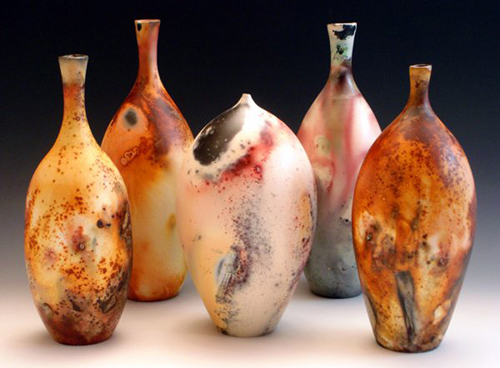
    (Photo at the top: Pottery by Dan Ishler, this photo and others are courtesy of Whidbey Working Artists)


     CLICK HERE to read more entertaining and informative WLM stories and blogs.

    WLM stories and blogs are copyrighted and all rights are reserved. Linking is permitted. To request permission to use or reprint content from this site, email info@whidbeylifemagazine.org.