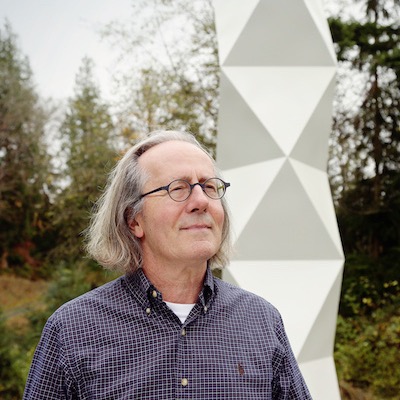
Tag: Matthew Swett

  • A Place to Call Home: The Imagination and Influence of Whidbey Island Architects

    A Place to Call Home: The Imagination and Influence of Whidbey Island Architects

    This article is from the Spring/Summer print issue of Whidbey Life Magazine. You can find out where to get a copy of your own at the end of the article.

    BY TOM TRIMBATH
    Whidbey Life Magazine Contributor
    August 30, 2017

    From grand manors to one-room cabins, all kinds of houses exist on Whidbey Island. Although several things influence the size and appearance of our built structures, the budgets and tastes of the owners are primary among them. And to some extent, the diversity of island houses reflects the diversity of those who design them—our local architects.

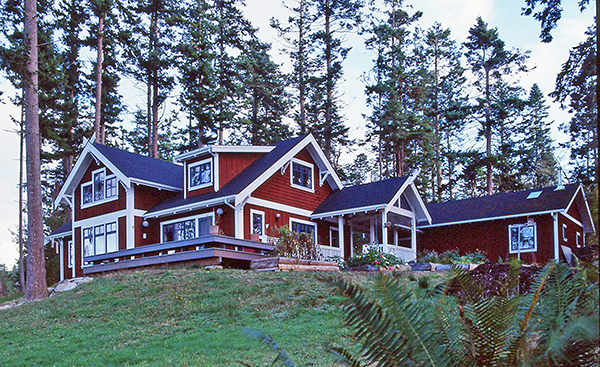
    Mira Steinbrecher’s modern interpretation of a Scandinavian farmhouse commands full views of the shipping lanes. (Photo by David Duncan Livingston)

    Is there a style or type of house that represents the quintessential Whidbey Island home? Does the influence of place exert a unifying effect? Or any effect at all?

    Four island architects reflect on how the spirit of place shapes their aesthetic and finds its way into some of our island dwellings.

    Stig Carlson (Photo by Jay Cordary Photography)

    Stig Carlson of Stig Carlson Architecture is best known among islanders for his design of the Coupeville Library and its generously proportioned reading room, which includes a wall of windows, several comfortable chairs, and a fireplace. Capturing the view—whatever it may be—is one thing Carlson aims to do in the buildings he designs.

    Although tourist magazines and local realtors seem to focus on property that overlooks water, Carlson knows that, no matter where we live, we all like to see what surrounds us. Waterfront is expansive, and frequently expensive, but each house achieves its own particular chemistry with the Salish Sea. A high-bluff house has a different relationship with the water than a quaint beach cottage. Both enjoy the water, but in different ways—a broad view versus immediacy.

    On Whidbey, views that mimic water abound: wide prairies that softly roll across the land, the edge of a prairie forming an entrance to a forest where the views are vertical instead of horizontal. Whidbey offers towns for those inclined toward higher-density settlements, historic buildings available to those seeking to restore and steward, and more than enough settings where a contemporary-style building would look like it belonged there

    The interior of a farmhouse-style residence designed by Matthew Swett includes recycled glass tiles at the fireplace, reclaimed fir floors, salvaged doors, and an entry bench built by the homeowner. (Photo by Michael Stadler)

    The relationship between view and site is evident in Cathedral Bluff House, designed by Carlson and completed in 2015. This Northwest Modern home overlooks Admiralty Inlet and offers views of water, mountains, and whatever flies or sails by. A remodel of the house gave Carlson the chance to integrate it fully into the site. He lifted the house to better pull in the view and included walls of windows designed to move aside to invite the outdoors in. Wood visually warms the house via tongue-and-groove ceilings, exposed beams, and paneling. An open floor plan reflects the openness of the water and allows access to views from several areas of the house. The building treads lightly and sits comfortably on the land.

    To Carlson, it makes sense to use materials—wood and stone—that echo the land and pair them with other materials—glass, steel, concrete—that don’t call attention to themselves.

    Matthew Swett (Photo by Reuben Prensky)

    Visitors reaching the island via the Clinton ferry drive past a creation by Matthew Swett of Taproot Architects. The picnic shelter at the small and lovely Clinton Beach Park exhibits several features typical of Swett’s philosophy of “design with deep ecological roots.” The shelter is capped by a living roof; plants substitute for shingles in order to slow storm waters and absorb, rather than reflect, sunshine. Recycled glass tiles add style and divert waste from the landfill. Beautiful artworks acknowledge the island’s art community.

    That same sentiment is expressed in Swett’s residential designs. Natural materials figure prominently, especially if recycled or reused. Deconstructing rather than demolishing a building creates a supply of wood, tile, concrete, and glass that serves a house well, but also adds patina and heritage. Swett thinks of it as an accumulation of stories built into the walls, floors, and ceilings.

    Designing for ecological concerns extends to the less visible parts of a house, according to Swett. A living roof catches rainwater. Filters and cisterns clean and store water for gardening and emergency supplies. Staggered stud walls may not look much different from the outside, but on the inside, they prevent heat loss—and the extra depth allows greater insulation. Less heat loss means less energy required to power the home, reducing global warming one house at a time.

    This Northwest Modern home, the “Cathedral Bluff House,” was designed by Stig Carlson and features a wall of glass and an open floor plan to maximize views. (Photo by Red Crow Photography)

    Swett seeks to understand the values that drive his clients and to design accordingly. He also finds joy in creative solutions that make the best use of space; for example, combining a covered porch and a dog kennel into one area for a family of dog lovers who wanted their pets physically and emotionally close.

    Swett sees a trend on Whidbey toward designing for multiple generations. Heirloom houses, built from long-lasting materials, are meant to outlast and appeal to more than one person, one family, or even one era. The concept agrees with Swett’s own emphasis on sustainability. Recycle, reuse, reinvent

    Mira Steinbrecher (Photo by Heléne L. Chandler)

    Mira Steinbrecher is known for houses that belong to nature: they don’t stand out, and they are built with materials from nature. Her clients appreciate their homes, but in their hearts and minds, the natural world comes first.

    Hundreds of decisions and choices are made as a new home, or even a remodeled one, comes together,” she said. “Starting with ‘good bones’ early in the process, and getting the siting right, is the secret sauce that makes a house a home.”

    Light is central to Steinbrecher’s design considerations. She anticipates how sunlight will travel through a house, placing bedrooms in the east in order to catch the sunrise. She places working and living spaces to capture mid-day sunshine; good lighting helps people get things done. West-facing areas, with their waning light, are conducive to relaxing at the end of the day, to drawing in and drawing close.

    Throughout the day, covered decks and porches provide living rooms that don’t have to be heated or kept pristine. These spaces host projects, pets, and transitional activities (like pulling off boots and shoes in wet weather).

    Carlson’s greatroom features a 20-foot-wide NanaWall system and floor-to-ceiling windows capturing southwestern views of Admiralty Inlet and the Olympic Mountains. (Photo by Red Crow Photography)

    Designing for weather isn’t simply a matter of using the right materials. Gardeners and sailors are keenly aware of Whidbey Island’s microclimates. Depending on topography and vegetation, two sites a half mile apart may have different temperatures and winds. A properly designed home takes into account prevailing winds that may shift with the season and quality of light (shaded, filtered, or direct). At our northern latitude, a room that receives ample light in the summer may be shaded in the winter. Solar tubes, skylights, and light fixtures can give a boost to a sun that barely skims the horizon. Shades are a simple, but frequently overlooked, solution for keeping cool in August.

    Steinbrecher has found that those who hire her seem to share certain qualities: an eye toward pragmatism, a fondness for recreation, and a regard for good design.

    The walk-in shower wall in Mira Steinbrecher’s design becomes the backup for this custom-made vanity. (Photo by JK Lawrence Photography)

    Islanders tend to be pragmatic people. Maybe it’s the climate. Maybe it’s the culture. Whatever it is, function trumps form. While the appearance of a house is important, it is simply the jacket draped over the proper bones. Kitchens must work. Spaces should be efficient. Mudrooms and slate floors make sense. Islanders are also active. Some people need more room for their toys: skis, kayaks, climbing gear, fishing gear.

    Steinbrecher’s greatest joy is in observing how her clients relate to their home, and she has a checklist of questions that help her assess their level of satisfaction. “Do they feel comfortable, at ease, happy? Do they smile when they arrive? Do the homes accommodate their everyday needs? Do they feel ‘at home’? And are their houses ‘at home’ in the world around them?”

    Ross Chapin (Photo by Deborah Koff-Chapin)

    Langley is the home of Ross Chapin Architects. Several local businesses occupy buildings that Chapin designed; a walk through town can be a tour of his work. (Chapin is also the genius behind Thomas Berry Hall, a cathedral-like space at Clinton’s Whidbey Institute.]) Chapin’s concept of Pocket Neighborhoods has become known internationally as a new way to live in community while retaining individuality, and Langley’s Third Street Cottages are an intriguing example.

    The fundamental principle behind Pocket Neighborhoods is the recognition that human beings are social creatures. For decades, most housing has distanced people from each other. Large lots provided privacy, but they separated neighbors. Oversized houses separated family members.

    Chapin studied the way families grow and communities function in search of ways to balance sociability and privacy, conceptualizing houses and neighborhoods in terms of layers. He designed central common areas that are hubs of activity and distributed private places throughout the home for quiet concentration and reflection. Laundries, workshops, and play areas are used by several families, reducing the cost of appliances and buildings and creating shared experiences—and a lot less lawn mowing. Covered porches overlook the sidewalk, encouraging interaction among neighbors.

    Porches look onto shared garden areas to encourage interaction among neighbors at Ross Chapin’s Third Street Cottages. (Photo by Ross Chapin)

    Carlson, Swett, Steinbrecher, and Chapin are quick to express their respect for Whidbey’s skilled local builders. They also tip their hats to local artists and artisans able to supply everything needed to fulfill the architect’s vision: live-edge wood, elegant steel structures, fine sculptures, and paintings. They find local government more likely than most to listen to and work with innovations in building techniques and zoning codes.

    The people who make it all possible, however, are the islanders who seek a house congruent with its setting, environment, and community. No matter the style, size, or price tag of their dwellings, most islanders seem to appreciate the value of thoughtful innovation and artistic creation.

    And maybe that’s what defines a Whidbey Island home.

    TOM TRIMBATH is an author, nature photographer, and a project consultant. He has written and self-published six non-fiction titles, and produced five photo books of Whidbey Island. He also has managed several social media campaigns for authors, artists, and non-profits.

    Read the other stories published this week

    __________________

    To enjoy more articles from the print issue of Whidbey Life Magazine, purchase a copy at local and off-island retailers or receive it in the mail via subscription.

    WLM stories and blogs are copyrighted and all rights are reserved. You may link to this story. To request permission to use or reprint content from this site, please contact us.
  • Hear Ye, Hear Ye! The Latest Print Edition Is off the Press

    Hear Ye, Hear Ye! The Latest Print Edition Is off the Press

    WHIDBEY LIFE MAGAZINE STAFF
    May 10, 2017

    Do you know who Whidbey’s king and queen of trash are? Have you ever wondered how to get a horse out of a bathtub? Do you know who designed the home on the hill that you’ve always dreamed of living in? And what’s the secret to the amazing scones at that shop in Coupeville on the corner of Coveland and Alexander?

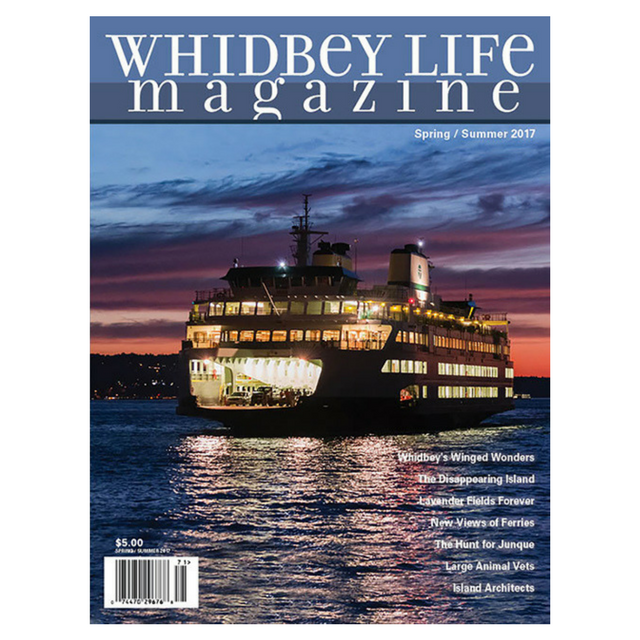
    You’ll find the answers to these and other questions in the Spring/Summer 2017 print edition of Whidbey Life Magazine, which was delivered to the island today. To get your copy by mail, subscribe online,  or pick up a copy at these on-island retailers this weekend.

    For a sneak peek at this issue’s contents, scroll on.

    After waiting in a ferry line for hours, photographer Holly Davison finally made it to the ferry lot, grabbed her camera,  jumped out of her vehicle, and captured this photo of the ferry coming into the dock.

    A Lavender Wind Wafts Over Whidbey

    Lavender Wind Farm is located on Ebey’s Reserve, and its adjunct garden shop is located in historic Coupeville. Owner Sarah Richards created five acres of “lavender fields forever” to share her passion for this winsome but rugged plant. Writer Shawn Berit reveals one of the shop’s best-kept secrets. (Hint: it’s of the edible kind.)

    Owner Sarah Richards in the Lavender Wind Farm shop. The display case holds lavender soaps, shampoos, and other personal care products. (Photo by Marsha Morgan)

    A Place to Call Home: The Imagination and Influence of Whidbey Island Architects

    Is there a style or type of house that represents the quintessential Whidbey Island home? Does the influence of place exert a unifying effect? Or any effect at all? Writer Tom Trimbath interviews four island architects — Stig Carlson, Ross Chapin, Mira Steinbrecher, and Matthew Swett — about their notions of residential design and how the spirit of place shapes their aesthetic.

    Mira Steinbrecher’s modern interpretation of a Scandinavian farmhouse commands full views of the shipping lanes. (Photo by David Duncan Livingston)

    Crossing the Waters

    As we travel from one shore to another on our ferries, it’s easy to take for granted the sights along the way and lapse into the habit of not seeing what’s all around us. We’re especially grateful to our island photographers — their heightened sensitivity to details, angles, perspective, and light — who help us refresh our vision and boost our appreciation. In a photo essay about crossing the water, they present our familiar and beloved ferries in a way you may never have seen before.

    The Washington State Ferry system serves 10 routes, 20 terminals, and 23 million passengers annually. (Photo by David Welton)

    The Art of Upcycling: A Hunt for Beautiful Junque

    When artists apply their creative minds and skillful hands to what the rest of us might consider trash, the results can amaze. Join writer Kate Poss and photographer David Welton as they follow six artists on a scavenger hunt at Island Recycling, an emporium of castoffs. Along the way, meet the reigning couple of recycling; their perspective on “junque” is sure to amuse you.

    Blacksmith Brendan McHugh makes art out of scrap metal that he finds at Island Recycling as well as castoffs from a Harley Davidson factory. (Photo by David Welton)

    These Doctors Make Horse Calls

    The agricultural history of Whidbey, combined with our affinity for animals, has produced a flourishing population of horses, cows, sheep, goats, llamas, and other “four-footeds.” Writer Harry Anderson and photographer Marcia Wesley introduce you to the folks who care for our working animals, livestock, and barn-resident pets. The stories from our large-animal veterinarians will have you laughing and perhaps nodding your head in recognition.

    Say ahhhhhhhhhh: Dr. Ken Leisher practices horse dentistry. (Photo by Marcia Wesley)

    The Products of Whidbey’s Wee Winged Wonders

    Most everyone appreciates bees for the honey they produce, but they also produce wax, propolis, “bee bread,” and royal jelly. Meet some Whidbey Island artists who use beeswax for lanterns and encaustic painting, an artisan who uses it for making candles, and another who uses honey for making soap.

    Candlemaker Kim Hodges holds one of her finished products. (Photo by David Welton)

    An Island’s Island

    An eight-foot high acre of land floating in the mouth of a harbor might not sound like much of a destination, but Tom Trimbath’s exploration of Baby Island will have you longing to walk its clamshell-strewn beaches. This small bit of land has a long and storied history in which rum-running, poker, and impossible schemes play a part. Even if you never manage to set foot on Baby Island, our spectacular scenic photographs and historical snapshots will bring it to your doorstep.

    Those who can read a tide table can reach Baby Island on foot by walking along a peninsula that’s exposed when the tides are low. (Photo by Linda Schwarz)

    Whidbey Life Magazine online congratulates the print team for a job well done: managing editor Dianna MacLeod, graphic designer Claire Moore, photo editor and photographer Marsha Morgan, photographers David Welton and Marcia Wesley, and writers Harry Anderson, Shawn Berit, Kate Poss, and Tom Trimbath.

    __________________

    WLM stories and blogs are copyrighted and all rights are reserved. You may link to this story. To request permission to use or reprint content from this site, please contact us.

  • An Infinite Tower Connecting Heaven and Earth

    An Infinite Tower Connecting Heaven and Earth

    BY KATE POSS
    Whidbey Life Magazine Contributor
    November 17, 2016

    Last week’s election news gave rise to emotional swirls and storms that left some of us searching for solid ground amid the chaos of opposing perspectives. Perhaps one way to make sense of the shadow and light within our country is by visiting the Infinite Tower, unveiled at the Earth Sanctuary late last month.

    6-tower-stadler-1500-px
    Chuck Pettis says his infinite tower symbolizes the link between heaven and earth (Photo by Michael Stadler stadlerstudio.com)

    The newest addition to the 72-acre Buddhist-inspired nature reserve and sculpture garden is a modern sculpture similar in shape to an obelisk, only one containing triangle-shaped facets.

    “I conceived the idea of the Infinite Tower less than a year ago, when I printed polyhedra and started stacking them,” says Chuck Pettis, an innovative entrepreneur and author of “Secrets of Sacred Space.” The tower was unveiled to guests on Oct. 29, just after the sun came out on an otherwise rainy day. “I brought together some smart and talented people, and there you go. You can’t do great things without great people.”

    Pettis worked with Matthew Swett of Taproot Architects to create a blueprint detailing a 24-foot column of interlocking equilateral triangles that create a deceptively fluid visual effect. Metal artist Tim Leonard of Heavy Metal Works fabricated and built the tower, which includes an interior mast for strength.

    “What struck me was how fun it was to work with everyone on this,” says Leonard. “They (Pettis and Swett) came to me with a plastic model and asked me to make it in metal. It was a big project, one of the largest I’ve done. I bought a tent to hold it all. I’ve never said no to a project.”

    Pettis said the symbolism within the design includes: creating a connection between earth and sky; white as the color of clarity and purity (which reflects shadows and shapes on the sculpture); honoring the nearby trees and snags, which join the earth and sky; and incorporating the number eight (eight triangles in each octahedron) and the number seven (seven stacked octahedrons), which, in numerology, symbolizes harmony and spirituality.

    tower-being-installed-1500-px-from-taproot-architects
    Leonard and crew install the sculpture at the Earth Sanctuary (Photo by Sarah Birger)

    Picasso took apart the universe and reconstructed it in geometric art forms. Pettis looks at the world in terms of basic shapes and how they influence us, says Claudia Pettis, Chuck’s wife. “Working with triangles connects him to the cosmos,” she says. “We can know the power of the infinite column; it connects earth to sky.”

    Influenced, in part, by the works of Constantin Brancusi, considered one of the most important sculptors of the 20th Century, Pettis found inspiration in the sculptor’s “Endless Column,“ which was built in 1918. Pettis’ ingenuity in creating the tower was further sparked by a visit to the Storm King Art Center, located in the lower Hudson Valley of New York State. Some have described the 500 acres filled with art as being “heaven for sculpture.”

    “I like what they did at Storm King and thought, ‘What could I do on a small scale?’” says Pettis.

    On a September afternoon, when a towering crane lowered the 25-foot tower into place, Pettis, Swett, Leonard, and the crew grinned like boys having their ultimate adventure.

    Freeland novelist and artist Fred Bixby, who is a legally blind, visited the tower that same afternoon. Swett’s wife, Sarah Birger, who was there for the tower’s installation, guided him to the sculpture where he could touch it with his hands.

    “Maybe because of my lousy vision, every panel looked slightly different in color, even though I know it’s all white,” said Bixby. “I love the total smoothness of the metal. I really tried to find where Tim, the artist, joined the sections, where there were cracks and seams. I never found any. I will try again, though. Next time you’re there, go up close and listen hard.”

    Chuck Pettis’ intention for the Earth Sanctuary is that it inspire a sense of well-being and spiritual uplift for years to come. To this end, he has created a 500-year trust that ensures the sustainability of the property. To date, more than 3,000 trees and 15,000 kinds of vegetation have been planted that are expected to last through our earth’s climate change into the year 2500. He imagines the sculptures will last at least that long, too.

    5-earth-sanctuary-team-1500-px
    It takes a village to build a tower. From left, Chuck Pettis, Tim Leonard, Duran Laframboise, Brendan McHugh, Matthew Swett, Jacob Rose, and Ryan Wright (Photo by Sarah Birger)

    Kate Poss worked as a library assistant at the Langley Library until last June. She was thrilled to work for three summers as a chef aboard a small Alaskan tour boat from 2008 to 2010. She was a newspaper reporter in Los Angeles for many years before moving to Whidbey Island where she likes “talking story,’” hiking, hosting salons, and writing her novel.

    __________________

    To read more WLM stories and blogs, CLICK HERE. Have a great story idea? Let us know at info@whidbeylifemagazine.org.

    WLM stories and blogs are copyrighted and all rights are reserved. You may link to this story. To request permission to use or reprint content from this site, email info@whidbeylifemagazine.org.