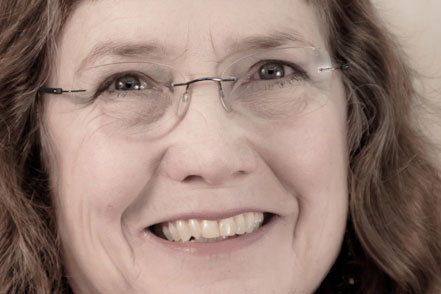
Author: ziagipson

  • One more library-love blog from the Free-Range Reader

    One more library-love blog from the Free-Range Reader

    BY ZIA GIPSON, Oct. 11, 2013

    “Revelations of a Searcher”

    Our lives are full of searches… for our car keys, for the pair of reading glasses we swear we left on the bedside table, for that bill we need to pay or the cord needed to run this or that device. More pleasurably we’re in pursuit of the perfect melon at the farmer’s market, or the dahlia just bursting into bloom for our favorite vase. As if these searches weren’t enough, our lives are cluttered with electronic hunt and seek. We spend out days on the lookout for the message, photo or a document we were perusing before we got distracted.

    Library users are hunter-gatherers by nature. We peruse the stacks and tap away on the electronic keyboard to access the databases. I started accessing library collections electronically more years ago than I can remember. In those early days one used a modem (remember those?) to log into library collections to reserve materials. Looking back, it’s amazing to me that someone like me, who is decidedly NOT an early adopter, was able to accomplish this.  Now of course, there’s a robust catalogue system to access the library’s holdings. But for the convenience of potentially seeing “everything”, we’ve lost the time worn wooden file cabinets holding the library card catalogue.  The cards held the accumulated wisdom of many librarians and we are poorer having lost the carefully annotated library cards.

    I’m no pro at using the database, called Polaris, that operates Sno-Isle Libraries’ system, but I’ve recently been sleuthing the database using ‘publisher’ as my search field term. In a previous blog I mentioned my admiration for the publisher Thames and Hudson and my interest in almost any volume they’ve published.  Their well-designed and beautifully illustrated books cover many art-related topics from Native American to subcontinent Indian and all the cultures and artistic periods in between.

    GUEST BLOG GIPSON 7 alley-bordered-by-trees-1884(1) (305x500)

    One book by T&H I found this way is “Vincent’s Trees: Paintings and Drawings by Van Gogh” by Ralph Skea.  I learned that Van Gogh, as I have always known him, preferred to be known as Vincent. He signed his paintings with his first name and used that name rather than the patronymic Van Gogh. Skea’s survey of Vincent’s paintings and drawings about trees covers the short decade of Vincent’s life when he considered himself a “full time” artist. During that 10-year period he made over 900 paintings and 1100 drawings. Wow!

    Another group of Thames and Hudson books might be of interest if you are planning a vacation in Europe. I recommend any of their ‘most beautiful villages in…” series. You will have to choose between Provence, Tuscany, and Greece to name three. I am sure they are working on the most beautiful villages on Whidbey Island, but it’s not in the catalogue yet.

    Using the same search term, “publisher,” I’ve perused the listings for some other fine book producers.  Interweave Press is a solid bet for high quality artistic how-to books. Our Sno-Isle system shows a 185 records searching Interweave. “Quilting Modern: Techniques and Projects for Improvisational Quilts” from Interweave is on my table as I write this. “Steampunk Sourcebook” published by Dover, of the clip art family, is one of 284 listings.  “Steampunk Sourcebook” and several other books include CDs of vector or jpeg images, which you can copy to your computer and manipulate to your heart’s content.

    Lark Books is a publisher of delicious artistic eye candy.  You may have encountered the volume “500 Teapots” and 35 other books in the series (art quilts, beaded objects, bracelets, cabinets) with the same photography-dominant approach. Need some inspiration?  One of these “500’ series books is a good place to start.

    GUEST BLOG GISPON 7 TEAPOTS (500x500)

    Museums are publishers, too. Sno-Isle has 67 titles published by New York’s Museum of Modern Art. “The Steins Collect: Matisse, Picasso, and the Parisian Avant-Garde” is an example of a MOMA book available at Sno-Isle. This catalogue is worth checking out if only to see the series of photographs of the Gertrude and Alice’s living rooms on which hung the modernist masterpieces of their collection. Each living-room image is captioned diagrammatically so one can see which pictures were hung exactly where over time. I also liked looking at the series of paintings of Gertrude’s and Alice’s white poodles all named Basket.

    Missed an exhibit at the Seattle Art Museum? You might find the catalogue among the 19 books published by SAM in the collection. For example, “Ancestral Modern: Australian Aboriginal Art” is the catalogue from last year’s knock-out art exhibition. North Light Books is a publisher of how-to-make-art books, as well as the manuals to help us creative types figure out what to do with our artistic product.

    Sno-Isle also has both “2014 Photographer’s Market” and “2014 Graphic Designer’s Market” to prepare you for the marketplace.

    Next time you’re in front of the computer, search Sno-Isle by publisher. I bet you’ll come across a new treasure with which to while away the hours.

    My “Catch of the Day” is Robert Crais’ “Suspect,” about a detective and his German Shepherd police dog, Maggie. I hope Crais writes more of these featuring this duo.

    In the meantime, don’t forget to put libraries and librarians in your bedtime prayers. I love my library!

    Zia Gipson is a mixed-media artist who is dreaming up something to submit to Northwest Designer Craftsmen’s exhibition “Tangible Evidence,” which will be at Schack Art Center in Everett next year.

    Editor’s Note: Thanks to Zia Gipson for this series on the luscious life of the library lover, and all things bookish! Zia is signing off of Whidbey Life Magazine’s Blogs, but we’ve heartily enjoyed her informative contemplations on her latest book finds. Look for Gipson’s work as a prolific mixed-media artist on the island and wherever exquisite art is showing. Thank you, Zia!


  • The Free Range Reader travels with fiction

    BY ZIA GIPSON, June 7, 2013

    When I think, “curl up with a good book,” it’s a book of fiction I have in mind. I love a good story and deeply etched characters. I appreciate a well-made plot and social commentary. A good book of fiction should offer all of the above and more.TBIF Gipson

    When I travel I do a great deal of reading. Besides the hours involved in coming and going, there are the long nights in the hotel bathroom with the flash light reading and wondering, “Will my body ever get on this time zone?” On the road, books keep me company and help me while away afternoon hours, when shops are closed or my feet have given out.

    I love the sensation of being deeply engaged in a book that is set in say, India, only to step outside and find oneself in Italy. This frisson of time and place happens to me at the movies, too. I like the pleasant jolt of dislocation from the usual reality, as I quickly readjust to figuring out where I’ve left the car, or if I still have my umbrella.

    I’m sure I’m not alone in feeling I have “grown up” with set of characters who’ve appeared in books I have read over a decade or longer. Do I sound misogynistic if I say some of my favorite people live in the novels of Donna Leon and Elizabeth George to name two? Leon’s Brunetti family is born and bred Venetian. They have deep roots in this watery, tourist-swamped Italian city. In the course of Leon’s novels, I’ve learned about Italian politics, pollution, industrial meat production, and opera, just to name a few subjects.

    TBIF GIPSON GEORGE

    Thanks to Whidbey’s own Elizabeth George, I’ve become fond of London-based detectives Thomas Lynley and Barbara Havers, both of whom make bad choices and therefore good reading. I find myself nonplussed when a book is set for a movie or TV and the actor playing a lead character doesn’t correspond to the characters as one first encountered them. Some characters are so familiar I’ve developed an attachment to them and look forward to seeing them in the next novel.

    Also in the suspense and mystery novel category, I’ve recently read more of British author Robert Wilson’s novels. One of his series’ detectives is Javier Falcon. Falcon is more than the usual brooding, crime-solving policeman. He’s approaches his cases with intense physical and emotional fervor. The novels take on personal, social, national and international issues and the writing can be beautifully poetic.

    Recently I picked up Charles Cumming’s “A Foreign Country.” It has less texture and psychological depth, but is still a pleasurable read with just enough of a plot twist to keep me engaged.

    Isn’t it wonderful that in books, as in life, we can greet old friends and make new ones?

    My “Catch of the Day” is “The Accidental Masterpiece, On the Art of Life and Vice Versa” by Michael Kimmelman.

    Next time, I’ll cover books of fiction and the Whidbey Reads program.

    Look for weekend island book sales at your local Sno-Isle Library. In the meantime, don’t forget to put libraries and librarians in your bedtime prayers. I love my library!

    Zia Gipson is a mixed-media artist who is working on a series of collages that incorporate printmaking, stamping, drawing, painting, and other forms of mark-making. She’s active in the artists’ groups, Whidbey Island Surface Design and Northwest Designer Craftsmen.


  • The Free Range Reader delves into the story behind color

    BY ZIA GIPSON, April 5, 2013

    You can’t avoid it. For humans, color is everywhere and it’s a blessing! If you’re a dog reading this column, well, I just learned via the Internet that your color perception is more limited than mine. That pink collar your human companions just bought you is really their indulgence. But if you’re an artistically inclined human, color is a fundamental, compositional element even if you consciously avoid jewel tones for the more subtle worlds between black and white.

    The Free Range Reader explores Regina Le Blaszczyk’s “The Color Revolution.”
    The Free Range Reader explores Regina Le Blaszczyk’s “The Color Revolution.”

    Today’s column looks at two books about color from historical and anthropological perspectives. Regina Le Blaszczyk’s “The Color Revolution” is about the history of color. This handsomely-designed book includes the story of William Henry Perkin’s 1856 invention of aniline dyes — organic compounds extracted from coal tar. Perkins had been trying to synthesize quinine, an anti-malarial drug needed in Britain’s topical colonies and stumbled on a previously unimaginable mauve/magenta instead.

    Blaszcyk spends the bulk of her nearly 300 pages on the history of the use of color for the post-industrial world of consumer product manufacturing. The book is very well researched and comprehensive; scholarly even, but not dull.

    If you ever wondered how the ‘in’ colors are chosen and promulgated so that clothing manufacturers the world over come to produce products with the same color palette, then this book will open your eyes. Those who have worked in design fields might find the history of the Pantone Matching System, created in 1963, interesting. (For more interesting details on Pantone, you may wish to consult the New York Times Magazine’s Feb. 23 story, “Who Made the Pantone Chip?”  I learned that the red in the American flag is always Pantone 193 and computer giant, Apple, uses Pantone 453 for its beige.)

    “The Color Revolution” is a great browse covering the use of color in product design and costume, fashion and ordinary clothing. The invention and use of camouflage is covered in detail, as is how we came to have colored automobiles and brightly-hued kitchen appliances.  Tired of our gray skies? Pick up this terrific read.

    The other color book I’ve had in hand recently is “Colors: What They Mean and How to Make Them” by archeologist and ethnologist Anne Varichon, translated from the French by Toluca Ballas. This book takes on the world of color one hue at a time. It covers color anthropologically beginning with not-really-so-plain white. We learn that white, rather than black, is a mourning color in some cultures because it’s associated with rites of passage. In the white section of the book, Varichon provides a recipe for whitewash and for eggshell paint.

    Varichon addresses the meaning of colors in different religious contexts and traditional cultures. She provides color recipes from materials as diverse as cochineal insects (for red) to henna from the plant Lawsonia inermis, a native of India (for reddish brown). A lengthy bibliography is available for those who wish to go back to original sources, though many are in French. This cultural encyclopedia of color is printed on high-quality paper, making it a pleasure to hold in your hands.

    My “Catch of the Day” is “The Accidental Masterpiece, On the Art of Life and Vice Versa” by Michael Kimmelman.

    Next time, I’ll cover books of fiction. In the meantime, don’t forget to put libraries and librarians in your bedtime prayers. I love my library!

    Coming up:

    • Freeland Library Book Sale: 10 a.m. to 2 p.m. Saturday, April 6.
    • Coupeville Library Book Sale: 10 a.m. to 2 p.m. Saturday, April 6.
    • Murder In The Stacks: Meet Agatha Award finalist Mary Daheim, author of two mystery series, “Emma Lord” and “Bed & Breakfast,” at 1 p.m. Monday, April 8  at Coupeville Library.


    Zia Gipson is a mixed-media artist who is working on a series of collages that incorporate printmaking, stamping, drawing, painting, and other forms of mark-making. She’s active in the artists’ groups, Whidbey Island Surface Design and Northwest Designer Craftsmen.


  • The Free Range Reader delves into the Japanese custom of ‘furoshiki’

    ZIA GIPSON, Feb. 22, 2013

    Forty-four years ago I spent the summer in Japan. I vividly remember shopping in tiny stationery stores along crowded Yokohama streets, where the stores wrapped my purchases of delicate paper and envelopes in colored, patterned paper—different in every shop—and tied them with colored string to take home. At each stop I placed my packages into a furoshiki, or wrapping cloth, and tied the top into handles to make a portable bundle. Returning home at the end of the day, I untied the furoshiki to find a pile of elegantly attired packages, each one an artwork in itself. I noticed that each store had its own unique wrapping paper, much the way our shopping bags today carry a company logo. 

    Zia Gipson's personal Furoshiki used for wrapping packages to carry home. (Photo courtesy of Zia Gipson)
    Zia Gipson’s personal Furoshiki used for wrapping packages to carry home. (Photo courtesy of Zia Gipson)

    Later that summer, my family spent a few nights in a Japanese inn, or ryokan. Upon arrival, we changed into yakata, the cool summer cotton kimonos provided by the inn. As we walked through town, it seemed that everyone wore a different, lightweight kimono patterned in indigo blue and white. Had we lost our way, a resident would have been able to tell us where we were staying by the design we wore! This summer feast of design-in-use was the beginning of my lifelong fascination with color and pattern, a minor obsession that has found expression in much of my artistic work.
    Today’s blog covers two books about the furoshiki wrapping cloths from Japan that I learned to appreciate so long ago. Still in use, furoshiki are a beautiful and practical alternative to the environmentally disastrous plastic bag. While Americans in some parts of the U.S. have gone back to reusable bags, the Japanese seem to be going back to an older tradition—if indeed they ever left it.
    A typical furoshiki is around 17 inches square. The two I have, each 20-inch squares, are printed with depictions of kimono-wearing women. My two cloths have images of old Japan, but many furoshiki I’ve seen on the Web recently are elaborately patterned with images of the natural world, images from domestic life, or abstract patterns.
    Sno-Isle Libraries has two very different books on the subject. The first, “Furoshiki Fabric Wraps” by Pixeladies (Deb Cashatt and Kris Sazaki, 2012) tells us that these wrapping cloths were first used to wrap the clothes of nobility. Later, when public baths became popular, the fabric squares were used to carry clothing to and from the baths. “Furoshiki Fabric Wraps” contains how-to-wrap diagrams much like those in origami (paper-folding) manuals. The illustrations take us through basic knots and twists and the various shapes that can be folded or tied for different purposes. For example, there is the hand-carry wrap (a two-handled shape), the watermelon wrap (for long, oval shapes), and several varieties tied especially for carrying books. The authors provide instruction for some surface design techniques for those who wish to make custom wrapping cloths. I especially liked the inclusion of five pages of pull-out how-to-fold cards.
    An entirely different type of book on the same topic, Furoshiki “The Art of Japanese Wrapping Fabric” by Kanako Hamasaki (2011) was produced in Japan. Its white-clad cover with minimalist black lettering sets the tone for 244 pages of photographs of the traditional carrying cloths. The photography by Hiroshi Yoda and design by Kazuya Takaoka make the book a visual feast. Limited Japanese and English text appears opposite each image of the cloths, reading something like a koan or haiku. For example, the text for the cloth titled “Fukusa” on page 218 reads:

    A crane and a tortoise at the lakeshore.
    At the beginning of each seasonal ceremony
    the emperor views the sun and the moon.
    Court music is played
    and danced  to for entertainment.
    A cup of sake celebrates longevity.

    Books like this one always prompt me to wonder whatever possessed the acquisitions staff to purchase such a lovely book. It’s certainly not a predictable addition, making it all the more precious when the reader stumbles across it. That’s the magic of libraries: They bring you gifts you didn’t even know existed and allow you to fall in love with something beautiful and rare.

    My “Catches of the Day” are “100 Diagrams that Changed the World: From the Earliest Cave Paintings to the Innovation of the iPod” by Scott Christianson and “My Cool Caravan: An Inspirational Guide to Retro-Style Caravans” by Jane Field-Lewis.

    Next time I’ll take a look at two books about color, but in an  historical and anthropological context. 

    Coming up:
    Clinton Library Book Sale from 10 a.m. to 2 p.m. Saturday, March 2 at Clinton Community Hall.

    In the meantime, don’t forget to put libraries and librarians in your bedtime prayers. I love my library!

    Zia Gipson is a mixed-media artist who is working on a series of collages that incorporate printmaking, stamping, drawing, painting, and other forms of mark-making. She’s active in the artists’ groups, Whidbey Island Surface Design and Northwest Designer Craftsmen.

  • Free-Range Reader recommends opening that Pandora’s Box of photos and using them

    ZIA GIPSON, Jan. 25, 2013

    “Using Your Photos Creatively”

    In this day of Iphoneology and Instagram many of us end up with thousands of images. Instead of relegating them to permanent storage, books on image and photo transfer give us ways to use images for personal expression or in making one-of-a-kind gifts. Today’s Free-Range Reader looks at library resources that help the image-overloaded move images from one surface (usually paper or a transparency) to another. If you can’t get that piece of cloth, thick paper, or piece of wood into your printer, photo transfers might be just the thing.

    TBIF GIPSON IMAGE TRANSFERS

    Start with some exotic paper and add one or more layers of photographic imagery. Start with a piece of wood you’ve sanded smooth and add photos of trees. Start with a beautiful handmade book and transfer photos of your kids, or use an image from the Internet’s Wikimedia Commons, with it’s a database of 15,266, 845 freely usable media files. (Be sure to read the rules for using these mostly free pictures.) Image transfer makes for a fun art-as-science-with-technology process to pass a rainy day.

    Sno-Isle Libraries has a number of good references (search “photo transfer” or “image transfer”).  Two books I’ve used that are in the library system are “Image Transfer Workshop-Mixed Media Techniques for Successful Transfers” by Darlene Olivia McElroy and Sandra Duran Wilson 2009 and “Image Transfer-Creating Art with Your Photography” by Ellen Horovitz  2011.

    Horovitz’ book has one significant advantage over the earlier volume: her informational grid, “Transfer Summary for Papers and Solvents,” which organizes the complex options for method name, paper type, printer type, and process into an easy-to-use chart that helps you compare your options and avoid flipping back and forth in the book.

    I’ve had the most success getting recognizable deep black images by printing my pictures onto transparencies and transferring them to moistened paper using hand sanitizer. The active ingredient in the sanitizer is alcohol, and the alcohol gel releases a film coating from the plastic transfer sheet. Pressure with a burnishing tool moves the gooey film image to the receiving surface of the paper. (Of course, this method works only if you can get your printer to load and print a transparency. I suggest making an offering to Ganeesh the Hindu god, who removes impediments. Light some incense. Throw some salt over your left shoulder. Or throw the incense and torch the salt. Whatever works.) If all else fails, check the Internet for tips on how to print on transparencies without endangering your printer.

    Horovitz is somewhat cavalier in her advice about using the concentrated house-cleaning product Citrasolv as a release agent when using transparencies. While she cautions the reader to use acetone in a well-ventilated area, her observation that super-concentrated CitraSolve has “a lovely orange scent” implies that it is exempt from safety precautions. Yikes! Just because it doesn’t smell bad doesn’t mean it should be inhaled. Be good to your body. Use good ventilation, a respirator, and eye protection, especially if you plan on spraying liquids.

    Sno-Isle has several other photo and transfer books.  “Mixed Emulsions: Altered Art Techniques for Photographic Imagery” by actress Angela Cartwright (Brigitta in the film “The Sound of Music”) and Karen Michel’s “The Complete Guide to Altered Imagery: Mixed Media Techniques for Collage, Altered Books, Artists Journals, and More” are two more resources.

    I urge you to choose a book and experiment until you end up with something you find interesting. Start small and don’t worry about what you’re going to do with the results.

    Time’s a’wastin’!  Let’s get to the studio, basement, dining room table, or garage and get all those pictures out of the phone and into the light of day!

    Catches of the Day at Sno-Isle Libraries: “Proust and the Squid: The Story and Science of the Reading Brain” by Maryanne Wolf; “Eyewitness Handbooks: Butterflies and Moths” by David Carter; and “Shapeshifting: Transformations in Native American Art” by Karen Kramer Russell.

    Next Up: A trip to Japan via furoshiki, the art of wrapping with fabric.

    In the meantime, don’t forget to put libraries and librarians in your bedtime prayers. I love my library!

    Coming up:

    Freeland Library Book Sale: 10 a.m. to 3 p.m., Saturday, Feb. 2 at the library.
    Clinton Library Book Sale: 10 a.m. to 3 p.m., Saturday, Feb. 16, at Clinton Progressive Hall.

    Zia Gipson is a mixed-media artist working on a series of 108 collages that incorporate printmaking, stamping, drawing, painting, and other forms of mark-making. She’s active in the artists’ groups Whidbey Island Surface Design and Northwest Designer Craftsmen.


  • New ‘Free-Range Reader’ blogger talks about library love and great book finds

    ZIA GIPSON, Dec. 28, 2012

    More than ten years ago, when my husband Richard Davis and I began thinking about where we might move later in life, we quickly agreed we’d need a good public library system. For all the years we’d lived in Seattle, we’d been spoiled by our close proximity to three libraries in West Seattle, as well as the Burien and White Center libraries in King County’s system. Now we’re fortunate to be on Whidbey, where there is a great library system, and to have three branches within “errands” distance.

    GUEST GIPSON #1 FuroshikiCover

    Libraries have always been at the center of my free-range reading universe. I’m invariably on the lookout for something new-to-me to read. I’ve spent many hours prowling libraries wherever I happen to be and exploring new and used bookstores worldwide. At parties, I’ve been known to peruse other people’s bookshelves when I should be engaged in cocktail chatter. I love the search. Give me a library or a garage sale, and the literary hunter-gatherer in me takes over.

    For a time in the late 90s and early aughts, Richard was a book scout. We’d scour West Seattle, collecting quality books just to be able to turn them into book-buying cash at Portland’s deservedly famous Powell’s City of Books.

    I’m an avid and adventurous reader. I’ll take on just about anything that catches my eye, reading in bed late at night or listening to books in the car and in the studio while I work.

    Books: that’s what this blog will be about – finding treasure in local libraries or new and used-book emporiums. I’ll be paying special attention to books about art and culture, whether a tome about technique or a biography of a poet or painter.

    the_leftovers_jacket

    Being a free-range reader, I will also write about fiction, because I can honestly say fiction saved my life. I’ll have more on that in a later post. I plan to monitor assiduously the “Just Added” section of the Sno-Isle website to see what’s new on the shelves and bring some of these to your attention. Whatever the nature of the book, I hope to present some volumes for your delectation and to send you careening to the stacks or your keyboard to place a hold.

    In case you’re curious, my “Catches of the Day” from the Clinton library yesterday were “Furoshiki Fabric Wrap” by Pixeladies, “Metal Embossing Workshop” by Magdalena S. Muldoon, and Tom Perrotta’s novel, “The Leftovers.”

    Next month I’ll take a look at several art technique books that take on image-transfer technique—that is, taking photocopied or computer-printed images and moving them from the sheet to paper, metal, wood, ceramics, or fabric. As time allows, I’ll try out some of these techniques and post them on my Whidbey Life Magazine profile for your consideration.

    In the meantime, don’t forget to put libraries and librarians in your bedtime prayers. I love my library!

    Zia Gipson is a mixed media artist working on a series of collages that incorporate printmaking, stamping, drawing, painting and other forms of mark-making. She’s active in the artists groups Whidbey Island Surface Design and Northwest Designer Craftsmen.


    Coming up:
    Freeland Library Book Sale 10 a.m. to 2 p.m., Tuesday, Jan. 5.
    Clinton Library Sale 10 a.m. to 3 p.m., Saturday, Jan. 19,at Clinton Community Hall.