Author: Whidbey Writes

  • Robin Reynolds Barre || Whidbey Writes, October 2015

    Robin Reynolds Barre || Whidbey Writes, October 2015

    Oct. 7, 2015

    Congratulations to Robin Reynolds Barre, our Whidbey Writes featured writer for October. We’re pleased to be able to share her poem with you.

    Whidbey Writes is a collaboration between the Northwest Institute of Literary Arts (NILA) and Whidbey Life Magazine (WLM). Its purpose is to give WLM readers an opportunity to enjoy short fiction and poetry by writers who have a connection to Whidbey Island.

    We look forward to publishing the original work of selected winners at the beginning of each month as part of Whidbey Writes. NILA and WLM congratulate Robin and thank volunteer editors Heather Anderson, Mureall Hebert and Chris Spencer who review submissions on solstices and equinoxes and pass on the work they enjoy most to Whidbey Life Magazine for publication online and in print.

    To find out more about Whidbey Writes and the submission criteria, visit the NILA website. To make a submission, use this page.

    _____________________

    The Leash 
    By Robin Reynolds Barre

    The dog and you
    walk out the front door
    of the green chambered house
    onto the road, down and up, here to this place, and now to that place.
    To the dog, the world is all scent, fragrance, and exhalation,
    redolence of dog piss,
    perfume of deer musk.
    The dog’s world is four feet squared on the earth.
    He sees the years’ springs, summers, autumns, and old winters
    through the leafy tang of humus.

    You watch the dog, hold the leash, taut
    from the tension of up and down, here and there.
    You wait for him to know the history of this fescue,
    to take a reading on where the dew came from
    and what night carried it here.
    You wait. And you hold the tension.

    You wait and you know the world spirals out from this place.
    It winds out from your stance
    like the ferns’ unfurlings; from dog to grass to road to creek
    to crow to flight to bay to island to mountain
    to horizon.

    And if you stand still long enough, wait long enough
    for the dog to untangle the mysteries he can never reveal,
    you will feel the world
    spiral back in, pulled as if on a leash,
    until it is there before you,
    bramble, dog, nose, earth.

    Robin has worn many hats over the years—teacher, psychotherapist, wife, mother. But her first and foundational identity is that of Writer.

    Double Bluff beach
    Double Bluff beach   (photos courtesy of Robin Reynolds Barre)

    _______________________

    CLICK HERE to read more WLM stories and blogs. Have a great story idea? Let us know at info@whidbeylifemagazine.org.

    WLM stories and blogs are copyrighted and all rights are reserved. Linking is permitted. To request permission to use or reprint content from this site, email info@whidbeylifemagazine.org.

  • Cameron Castle || Whidbey Writes Sept. 2015

    Cameron Castle || Whidbey Writes Sept. 2015

    Sept. 2, 2015

    Congratulations to Cameron Castle, our Whidbey Writes featured writer for September. We’re pleased to be able to share his short story with you. Whidbey Writes is a collaboration between the Northwest Institute of Literary Arts (NILA) and Whidbey Life Magazine (WLM). Its purpose is to give WLM readers an opportunity to enjoy short fiction and poetry by writers who have a connection to Whidbey Island.

    We look forward to publishing the original work of selected winners at the beginning of each month as part of Whidbey Writes. NILA and WLM congratulates Cameron and thanks volunteer editors Heather Anderson, Mureall Hebert and Chris Spencer who review submissions on solstices and equinoxes and pass on the work they enjoy most to Whidbey Life Magazine for publication online and in print.

    To find out more about Whidbey Writes and the submission criteria, visit the NILA website. To make a submission, use this page.

    ____________________________

    I Learned How to Spit
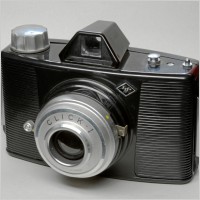
    photo 16
    By Cameron Castle

    The other day I was mad, just pissed off for some reason I don’t remember. Some inanimate object failed to cooperate, so I was mad. I don’t usually get mad at people or anything with free will. It’s a table leg, or a drawer, or a tape dispenser that acts in a disobedient way that fuels my anger. Probably the pitchfork I was holding was the culprit, but it doesn’t matter because what followed next is what is important.

    I slammed the tines of my pitchfork into the edge of my compost pile, turned my head, and spit. I launched a projectile out of my mouth in a beautiful arcing motion that sailed gracefully at least ten feet, landing on the freshly mowed lawn. I gurgled and tried it again. It flew like bird.

    I had never been able to spit. Coincidentally, I also never before in my life needed, used, or owned a pitchfork. I believe those two are intertwined in this mystery.

    Spitting first became an issue in junior high. It was an early marker of virility. On the playground boys would spit. Most could expel some sort of something a reasonable distance. Anything past one’s shoes was acceptable.

    Two boys, Steve and Mike, were head and shoulders above the rest. Elite. They would stand side by side, and with a crowd forming, put on a show. Each could attain distances beyond ten feet. They had different styles. Steve was the head tossing, low volume, high arching style. Mike was just the blaster. Artillery. Sturdy and leaning forward he would fire a cannonball. The competition was fierce. They would jockey back and forth as champion.

    What about me?

    I never cleared my chin.

    Humiliating.

    I could have had a live bug in my mouth, and I would rather swallow it than risk a girl seeing me try to spit and have the result being the thing flapping or wiggling from my chin.

    My father couldn’t spit worth a damn either. He didn’t mind though. He spit often because he smoked unfiltered Lucky Strike cigarettes and constantly would have to spit out the bits of tobacco. Same every time. Spit. Wipe.

    So, what happened?

    I moved to an island, Whidbey Island, north of Seattle, and live on five acres. The last house I lived in had a patch of grass in the front yard the size of the felt on a pool table. I could mow the front and back yards in nine minutes. If my wife, Laura, ever asked, “We need to leave in ten minutes. Are you ready?” I could answer, “Yes.” Then go mow the lawn. Now it takes me five hours on a good day to mow. I love it. I have a tractor mower and, as mentioned, a pitchfork.

    The previous owners left the tractor. Perhaps because the yard at their new house in Phoenix didn’t require it. But what a gift. They left an owner’s manual, which was necessary because I had never started or used a riding lawn mower. But, possibly as a joke, the instructions they left were in Spanish.

    The first time I climbed on board, I looked at the key, jiggled the gear shift, touched the two knobs and one lever, and . . . pulled out my cell phone. On the dashboard there were two notations. One was a very simple drawing of a man flying off a tilted tractor with his arms and legs splayed out with a circle and a line through it. Next to that, a toll-free number. I called it.

    “Sears customer service. How may I help you?”

    “I am sitting on the tractor lawn mower the previous owner left me. And, ah . . . how do you start it?”

    “You’re not the original owner, so you have no warranty protection. I cannot help you. You can go online and download a manual. Anything else I can help you with?”

    With sarcastic comments swirling in my head, I downloaded the manual. It said to pull out the choke, press down on the brake, and turn the key. There was a picture of the dashboard. I went to the mower. Same model, same dashboard, only no choke. Just smooth red metal where the choke was supposed to be. I called back. Same story. I fought my way to a supervisor, and under the fear of losing his job over helping me, told me how to start the thing.

    It worked great until late one afternoon. As it started to get dark, I noticed the thing had headlights! I flicked on the lights, mowed ten more feet, and then the whole thing stopped. Lights, engine. Poof. Stalled in the middle of the yard. Getting dark, with rain in the forecast, I fiddled around until I figured out I’d blow a fuse. I searched, but I couldn’t find it anywhere. So I called the toll-free number again.

    “Warranty? Yup.” I answered, then used the last name of the previous owner.

    The agent, looking through his data base, said, “Let’s see, Sanford . . . ah, Michael?” Since I had no idea what the guy’s first name was, I said, “Yes.”

    “Okay, Michael, what can I do for you?”

    “I need you to tell me where the fuse is located.”

    “No problem. Okay, here it is. It’s under the hood.”

    “Really? That’s a great help. So I can stop looking in the refrigerator, or in those bushes. Under the hood? Seeing as I never would have thought to look there, and you have already been such a huge help, could I ask you to go even a step farther and let me know where under the hood I should look?”

    “Nope. That’s all it says.”

    “It must say it somewhere. I have been looking for an hour. Can you ask somebody?”

    “Nope.”

    I gave up for the night and tackled it again in the morning. Tucked up at the top, next to the steering column, behind a tangle of wires and hoses was a tiny opaque yellow fuse. I pulled it out and went to the hardware store. They had it. In a five pack. At the counter I said, “I am over fifty years old and this is the first time I have ever needed a riding lawnmower fuse. You are selling me a 250 year supply of these things. My great-great grandchildren will have to pass them down in their will.”

    You’re starting to get the picture. City kid, salesman moves to the country. “Green Acres is the place for me . . .” I have never been the least bit macho. I sold china and linen to restaurants.

    The previous house we owned, in the sub-division with the pool table lawn, was eight feet from my neighbor’s house. He owned a Harley Davidson repair shop. One day he was in his driveway working on a big motorcycle. I was in my garage with the door up, sorting cotton napkins to show to a restaurant. Laura came out to the driveway, and I asked her the following question. Holding up a teal napkin, I wanted to know if I looked okay in the suit and tie I had picked out. I asked, while holding a cotton damask napkin in the air, “Does this tie go with my outfit?” At which point my neighbor cringed so dramatically he crunched his knuckles on some gear or bolt and let out a painful yelp.

    Shortly after moving to the island I went to the hardware store to buy some batteries. The guy in front of me clunked on the counter, most of about twelve feet of thick metal chain. I had two packs of AAA batteries, a pair of reading glasses, and some gum. After he left, I said to the nice girl ringing me up, “I never in my life have needed twelve feet of thick metal chain. I can’t even dream up a scenario where I would be standing somewhere and say, ‘Man, if I only had about twelve feet of thick metal chain right now I’d be okay.’”

    Back to the pitchfork. I bought one and I use it. Just the ticket for turning the compost pile. My mower now runs like a top. I shovel, and plant, and prune. And I now do another thing. I spit. Like a champ. I don’t know why I can do it now. I don’t know how changing my surroundings, daily routine, and lifestyle could produce physical changes, but it did.

    Next time I am out working on the property and I get a bit of grass in my mouth, I am going to spit. I am going to launch that sucker into the air in a glorious long-distance arc that would make Steve or Mike proud.

    Then I might just head to the hardware store and pick myself up a big ole length of heavy metal chain.

    And some gum.

    ______________________

    Cameron Castle is an author and a stay-at-home dad. His recently published memoir is entitled, “My Mother Is Crazier than Your Mother.” He lives on Whidbey Island. 

    Photos are courtesy of the writer.

    _______________________

    CLICK HERE to read more WLM stories and blogs. Have a great story idea? Let us know at info@whidbeylifemagazine.org.

    WLM stories and blogs are copyrighted and all rights are reserved. Linking is permitted. To request permission to use or reprint content from this site, email info@whidbeylifemagazine.org.

  • Jeremiah O’Hagan || Whidbey Writes August 2015

    Jeremiah O’Hagan || Whidbey Writes August 2015

    August 5, 2015

    Congratulations to Jeremiah O’Hagan, our Whidbey Writes featured writer for August. We’re pleased to be able to share his work of poetry with you. Whidbey Writes is a collaboration between the Northwest Institute of Literary Arts (NILA) and Whidbey Life Magazine (WLM). Its purpose is to give WLM readers an opportunity to enjoy short fiction and poetry by writers who have a connection to Whidbey Island.

    We look forward to publishing the original work of selected winners at the beginning of each month as part of Whidbey Writes. NILA and WLM congratulates Jeremiah and thank volunteer editors Heather Anderson, Mureall Hebert and Chris Spencer who review submissions on solstices and equinoxes and pass on the work they enjoy most to Whidbey Life Magazine for publication online and in print.

    To find out more about Whidbey Writes and the submission criteria, visit the NILA website. To make a submission, use this page.

    ____________________________

    To My Fellow MFA‐ers at a Tiny School Along the Ragged Coast of the Salish Sea, But Mostly to Erika

    By Jeremiah O’Hagan

    Did you ever get the distinct sense that we
    would change the world? Or, if not the world,
    at least the part of it built with words? We
    would lean it back on its axis, slowly, late
    at night, draped across our beds, or propped
    in coffee houses, or diving into bars, finger‐tipping
    across keyboards, fearless in round‐about ways,
    wielding words against the unsayable, against
    death, against life. Or, if not the part of the world
    built with words, we’d at least rattle some small
    Indie presses. If not those, we’d rattle each other,
    or at the sliced‐to‐the‐marrow least, we ourselves
    would never be the same. But, we are.

    Sure, we shifted in small ways — we’re haunted
    by ghosting smells, the returning taste of whiskey
    and stout and flabby red wine in tiny mugs,
    the spray and sigh of the sea and the flutter
    of certain songs and poems, and we believe
    in the justice of an exceptionally broken line —
    but basically we are the same, only older, which
    is not the same as being timeless. It means merely
    that we’re muddling toward death at the same
    fantastic rate, accomplishing what feels like
    nothing along the way. Only we’re mostly alone
    again, and this depresses us, still, these years
    later, so we keep writing for the same reason
    we started, a reason we prove impotent
    with each keystroke. But, oh hell.

    __________________

    Jeremiah O’Hagan has worked at a wood mill, a small-town newspaper, and as an English teacher.
    His second-favorite book is The Great Gatsby. He takes his coffee black, and his Springsteen on vinyl. He lives in the slippery part of the Pacific Northwest. 

    Photo is courtesy of the writer.

    _______________________

    CLICK HERE to read more WLM stories and blogs. Have a great story idea? Let us know at info@whidbeylifemagazine.org.

    WLM stories and blogs are copyrighted and all rights are reserved. Linking is permitted. To request permission to use or reprint content from this site, email info@whidbeylifemagazine.org.

  • Chris Spencer || ‘Whidbey Writes’ July 2015

    Chris Spencer || ‘Whidbey Writes’ July 2015

    July 15, 2015

    Each month we’ve published a Whidbey Writes writer. After six months we interrupted “Whidbey Writes” to bring you the winners of the Celebrate Writing Contest, featuring young writers (not just those who are young-at-heart). Throughout the rest of the year we will continue to publish more Whidbey Writes selections and take the opportunity to recognize the volunteer editors of Whidbey Writes by publishing an entry from each of the editors starting with Chris Spencer and his selection “Bare Naked Betty.”

    Whidbey Writes is a collaboration between the Northwest Institute of Literary Arts (NILA) and Whidbey Life Magazine (WLM). Its purpose is to give WLM readers an opportunity to enjoy short fiction and poetry by writers who have a connection to Whidbey Island.

    We look forward to reading more fiction and poetry in Whidbey Writes, including works from the other volunteer editors Heather Anderson and Mureall Hebert.

    To find out more about Whidbey Writes and the submission criteria, visit the NILA website. To make a submission, use this page.

    _________________________________

    Bare Naked Betty

    By Chris Spencer

    Betty was completely naked in her broom closet. She’d squeezed into the narrow cabinet next to the refrigerator moments before a pack of males came unexpectedly into her kitchen. Cramming herself in with brooms, mops and dusters, she pulled the door shut and stopped breathing as her terror swelled. It was Saturday, 1:13 pm.

    How Betty came into this predicament deserves some explanation.

    Around 12:15 pm that same day, Betty went to work in her backyard garden. As she dug bulbs, it started raining. She tried to ignore the downpour and quit only after slipping into wet mulch. Retreating to the house through a kitchen door, she removed her shoes, wet sox, muddy pants and shirt and put them in the washer which is in a utility room off the kitchen. In the dryer were damp bathroom towels and her bathrobe she’d washed earlier. Starting both machines, she headed through the kitchen on her way upstairs. Halfway across, Betty realized she was only in her panties and bra. She’d been too preoccupied with load sorting and dryer temperatures to be aware of her attire. Betty halted and listened. The house was quiet. No one else was home. Remembering that Elmer, her husband, had said he’d be at church all afternoon with Father O’Reilly helping the boy scouts, she headed through the living room and upstairs to shower off the gardening mud. That was about 1 pm.

    Down at the church, Elmer and the scouts were working on their merit badge requirements in the parish basement. At 1 pm, a funeral began upstairs with the assistant priest presiding . Since it’s nearly impossible to keep a bunch of boys quiet anywhere, Elmer suggested they all go to his house where they could work their projects: emergency preparedness, cooking, dog care, leatherwork, insect study, fingerprinting, fly-fishing, plumbing, bugling, Indian lore and digital photography. The scouts gathered their first-aid kits, fry pans, a dog named Butch, leather tools, butterflies, inks, lures, monkey wrenches, horns, tomahawks and cameras and trooped off with Father O’Reilly and Elmer for the 10 minute walk just as Betty, feeling slightly vulnerable and a little daring, headed through the empty house in her underwear.

    Betty turned on the bathroom radio and took a six minute shower singing along to Barry Manilow. Stepping onto the bathmat she remembered that all the towels were in the dryer along with her bathrobe. She bit her lip and frowned. For the record, Betty is a 50+ year-old woman with respectable Victorian sensibilities. Married to the same man for 30 years, she is still a little reticent about undressing in front of him. All her no-nonsense undergarments are utilitarian and modest. Her one-piece bathing suits have full skirts. Victoria Secret catalogues make her flush.

    Dripping wet, she stood at the top of the stairs and listened. It was silent below. Where propriety would normally have reigned, Betty suddenly made a reckless decision. Perhaps it was the mild thrill of coming through the living room earlier in her underwear, maybe it was the naughty part of a romance novel she’d read several times before lunch, maybe the cool wetness of her skin made her tingle, but knowing the house to be empty, Betty, always prim and proper Betty, scampered down the stairs au natural.

    Betty Pearson goose-bumped at the exhilaration of her indecent foray as she dashed into the kitchen at 1:09 pm. A noise from the living room froze her on the linoleum floor.

    “Hi, honey. We’re home.”

    She heard Elmer call out followed by the sound of many feet treading towards the kitchen. Panic gripped her as she recognized her parish priest’s voice call out, “Hello Betty.” Then boy’s voices filled the house and there wasn’t a second to lose. The utility room had no door. The backyard was out of the question. She had perhaps three seconds to squeeze into the boom closet and pull the door shut. In her fright she hadn’t time to grab her bathrobe from the dryer.

    The closet was about six feet tall, two feet deep and a foot wide. It had the normal objects you’d find in such a space, plus one recent addition. On Friday, Bosco, the family cat, had spent hours staring at the broom closet and swishing his tail, leading Betty to surmise that a mouse resided therein. She put on full-length rubber gloves, a hair-net and surgical mask and set a sticky-glue mouse trap on the closet floor. Then she took a bath.

    Elmer came into the kitchen. “Can I offer you something to drink while the boys set up?” he said to the priest. “I’ve got cold duck or warm Pabst.

    “As much as I’d love some, Elmer, I better not make a bad impression on the scouts.”

    “You’re right. How ‘bout I open a couple of Sarsaparillas?”

    “That’s fine. Where’s your charming wife?”

    “I don’t know. I thought she’d be here. Maybe she’s upstairs napping.”

    Betty barely fit in the closet. Crushed up against the boxed sides, parts of her were getting numb. The mop smelled musty and a squeegee was inappropriately touching her. She was getting claustrophobic and dreaded that her leg would start twitching and rattle the cabinet or she’d sneeze. Then she heard a crash and the sound of breaking glass.

    It took a moment for her to process what would likely happen next and her worst fears compounded in a swirl of dread. She could feel the blush of embarrassment heat her whole body.

    Father O’Reilly’s voice filled the kitchen. “Elmer, where do you keep your broom?”

    Every hair on Betty’s neck stood up.

    “In the tall closet,” called Elmer from the living room. “Beside the refrigerator.”

    With no inside handle to hold the door shut, Betty tried to hide behind a mop handle. Her terror mounted exponentially as her brain reeled. Squeezing farther in to the recess, she scooted her foot backwards, stepping into the sticky-glue trap. It squeaked. The instant (1:22 pm) Betty realized she’d stepped on a live mouse, stuck in the trap’s glue, the latch clicked.

    The worse of two horrors dictated her split second decision. The cabinet door exploded open, knocking over the priest who landed on his back. Without introduction or ceremony, Betty launched off the cleric’s chest and bolted across the kitchen floor faster than she had ever moved in her life. Bosco, who was in the kitchen to avoid the interloping dog, saw the mouse flying by, stuck in the trap under Betty’s foot, and took a swipe at it. His paw cemented to the sticky trap and Betty, the glued mouse and attached Bosco, vaulted into the living room. With both hands covering random bits of her womanhood, she hopped through the scout-filled room on one foot, while trying to shake off the rodent/feline entanglements from the other foot. The wide-eyed scouts parted like the Red Sea for Moses and Betty barreled through and up the stairs bumping a protesting cat up each leapt step. The dog, Butch, seeing a cat in a compromised state, tore after the unusual cluster in full barking pursuit.

    Downstairs, no one said anything for at least a minute and remained fixed to their spots. Upstairs, doors slammed, Bosco yowled and Butch barked. When the commotion ceased, the boys began to whisper.

    “Did you see that?”

    “Like that was a totally naked lady.”

    “Was that Mrs. Pearson? Wow, that was way cool.”

    Father O’Reilly looked at a stunned Elmer and asked, “Maybe there’s a logical explanation. But I must say that was quite enlightening. Your wife is, well . . . well, never mind.”

    Peering up the stairs, Elmer said nothing.

    Father O’Reilly took over. “I’ll round up the boys and take them back to church. You stay here find out what that was all about.”

    The boys giggled as they gathered up their equipment and headed to the door.

    Hilbert Fluglestad, a first-class scout who prided himself on being prepared, closed up his laptop and unplugged his video camera.

    “Like, awesome, Mr. Pearson, thanks for letting us use your living room.” He held up a video camera he’d been using for his photography merit badge. “Do you think Mrs. Pearson would do that again for us? I only got the one take.

    I just posted it on YouTube.


    Chris Spencer is a volunteer editor for Whidbey Writes and the founder of the Short Story Smash, the 100 word story competition that takes place each year at WICA. You can read more about that here and here

    Featured photo: Chris Spencer and his dog Fred (original photo by Michael Stadler, modified by Chris Spencer)

    _______________________

    CLICK HERE to read more WLM stories and blogs. Have a great story idea? Let us know at info@whidbeylifemagazine.org.

    WLM stories and blogs are copyrighted and all rights are reserved. Linking is permitted. To request permission to use or reprint content from this site, email info@whidbeylifemagazine.org.

  • Morgana Morgaine|| Whidbey Writes May 2015

    Morgana Morgaine|| Whidbey Writes May 2015

    May 6, 2015

    Congratulations to Morgana Morgaine, our Whidbey Writes featured writer for May. We’re pleased to be able to share her work of poetry with you. Whidbey Writes is a collaboration between the Northwest Institute of Literary Arts (NILA) and Whidbey Life Magazine (WLM). Its purpose is to give WLM readers an opportunity to enjoy short fiction and poetry by writers who have a connection to Whidbey Island.

    We look forward to publishing the original work of selected winners at the beginning of each month as part of Whidbey Writes. NILA and WLM congratulates Morgana and thank volunteer editors Heather Anderson, Mureall Hebert and Chris Spencer who review submissions on solstices and equinoxes and pass on the work they enjoy most to Whidbey Life Magazine for publication online and in print.

    The next submission deadline is June 21. To find out more about Whidbey Writes and the submission criteria, visit the NILA website. To make a submission, use this page.

    _________________________________

    There is a Softness in the World that I am Seeking

    By Morgana Morgaine

    There is a softness in the world that I am seeking,
    Being weary of hardened faces and harsh tones, my own and that of others.

    I no longer seek to “earn” anything, trust, friendship, gentleness, a place at the table.
    I no longer seek to explain myself or ask the same of you.
    I am simply seeking a softness in the world, a gentleness of spirit, my own and yours.

    I am weary of stories about how I got to be the way I am or you got to be the way you are; all a fiction anyway.

    What I am eager to experience is soft eyes looking through me and into me;
    Occasional adoration, even, like we most often reserve for young babes and lovers.
    A carefulness not to wound would also sit well with me.

    I am increasingly weary of my intellect and yours.
    I am much more curious about the intelligence of your heart and mine.
    Intelligence of the heart comes in a variety of costumes, I find.

    A Sufi engages an audience of strangers with an offer to listen.
    “Tell me of your sadness,” he says—and then pauses.
    Tears well up; a great hunger ripples through the group.

    The Grail King languishes in a barren land in a barren castle.
    Dry, brittle, hardened by inertia.
    Parsifal, Knight of the Round, arrives.
    Approaching the king, he leans in, whispering in his ear:
    “Tell me… what ails thee?”
    The king stirs, comes alive. The lands green. All is restored.

    Priestess costumed as cleric motions to an unhappy child, pats the seat next to her in invitation:
    “Come, sit here, and tell me what hurts. I have all afternoon.”

    There is a softness in the world that I am seeking.
    I can barely breathe sometimes for the want of it.

    ___________________

    Morgana Morgaine, writer, humorist, and eclectic mystic. Author of: “Borderless Broads, New Adventures for the Midlife Woman”. Morgana calls Whidbey Island and Santa Fe, NM home. Poem inspired by encounters with a Sufi, an Activist, and a Mystic. www.MorganaMorgaine.com

    Photo is courtesy of the writer.

    _______________________

    CLICK HERE to read more WLM stories and blogs. Have a great story idea? Let us know at info@whidbeylifemagazine.org.

    WLM stories and blogs are copyrighted and all rights are reserved. Linking is permitted. To request permission to use or reprint content from this site, email info@whidbeylifemagazine.org.

  • ‘For the Place Where the Ancient Tree Now Rests on Ebey’s Bluff Trail’ by Martha McCartney || Whidbey Writes April 2015

    ‘For the Place Where the Ancient Tree Now Rests on Ebey’s Bluff Trail’ by Martha McCartney || Whidbey Writes April 2015

    April 1, 2015

    Congratulations to Martha McCartney, our featured writer for April in Whidbey Writes. We’re pleased to be able to share her work of poetry with you. Whidbey Writes is a collaboration between the Northwest Institute of Literary Arts (NILA) and Whidbey Life Magazine (WLM). Its purpose is to give WLM readers an opportunity to enjoy short fiction and poetry by writers who have a connection to Whidbey Island.

    We look forward to publishing the original work of selected winners at the beginning of each month as part of Whidbey Writes. NILA and WLM congratulates Martha and thank volunteer editors Heather Anderson, Mureall Hebert and Chris Spencer who review submissions on solstices and equinoxes and pass on the work they enjoy most to Whidbey Life Magazine for publication online and in print.

    The next submission deadline is June 21. To find out more about Whidbey Writes and the submission criteria, visit the NILA website. To make a submission, use this page.

    _________________________________

    For the Place Where the Ancient Tree Now Rests on Ebey’s Bluff Trail
    by Martha McCartney

    Stand and look out here
    by this fallen weathered tree
    after you’ve rested from the climb
    and leaned your head upon its limb
    relieved to reach an end of uphill struggle.

    Breathe in soft brine air
    from that low lagoon.
    Look to the tall cedars, there may be eagles nesting.

    Over the water, the Olympics rise
    Over the water, white clouds drift.

    Watch for ships and ferries crossing.
    Listen for a lone crow calling, late bee buzzing,
    distant dog barking, over the sound of the Salish Sea.

    When you are rested and calm–as you will be–
    either continue
    or turn back,
    neither choice is wrong–
    but know–there is still an uphill climb.


    IMG_5372 (800x533)


    1743459_10200766129114967_1896203870_nMartha McCartney is an award-winning poet and photographer. She relocated to Whidbey Island to find a new ground and found boundless beauty and an amazingly supportive arts community. During a time of transition and, always recognizing poetry as a lifeline, she started a company to bring together all her passions on one front porch. Lillie Savage, Creativity Liberated is now a successful venture that Martha hopes will inspire others through rough passages of life. Creating a line of all-soy candles labeled with bits of her own poetry and lines from her favorite poets while continuing to write and do photography has allowed her life to become her art.

    To see more about Martha and Lillie Savage please visit www.Lilliesavage.com and also on facebook at https://www.facebook.com/savage.lillie.

    Photos are courtesy of the writer.

    _______________________

    CLICK HERE to read more WLM stories and blogs. Have a great story idea? Let us know at info@whidbeylifemagazine.org.

    WLM stories and blogs are copyrighted and all rights are reserved. Linking is permitted. To request permission to use or reprint content from this site, email info@whidbeylifemagazine.org.

  • “True to Life” by Patricia Brooks | Whidbey Writes March 2015

    “True to Life” by Patricia Brooks | Whidbey Writes March 2015

    March 4, 2015

    Congratulations to Patricia Brooks, the third writer featured in Whidbey Writes. We’re pleased to be able to share her work of short fiction with you. Whidbey Writes is a collaboration between the Northwest Institute of Literary Arts (NILA) and Whidbey Life Magazine (WLM). Its purpose is to give WLM readers an opportunity to enjoy short fiction and poetry by writers who have a connection to Whidbey Island.

    We look forward to publishing the original work of selected winners at the beginning of each month as part of Whidbey Writes. NILA and WLM congratulates Patricia and thanks volunteer editors Heather Anderson, Mureall Hebert and Chris Spencer, who review submissions on solstices and equinoxes and pass on the work they enjoy most to Whidbey Life Magazine for publication online and in print.

    The next submission deadline is March 20, to find out more about Whidbey Writes and the submission criteria, visit the NILA website. To make a submission use this page.

    _________________________________

    True to Life
    By Patricia Brooks

    In the descending dusk, the tour bus lies broken against a sheer cliff, split into near- perfect halves by a boulder that seemed to drop straight from the sky. Now, some twenty minutes later, the initial tumult has stilled to an unnatural hush, the bodies of passengers strewn along the roadside like the contents of a spilled basket at an interrupted picnic.

    Many lie motionless, their postures and expressions registering a kind of blank surprise. The rest huddle beside their belongings, hunched low as though not to incur more of Fate’s wrath. Some stare back down the road, from which help must surely come soon. No one looks anymore at the other passengers, living or dead.

    “Please?”

    It is a small slumped woman, her blue-white hair in disarray, bent sideways over one of the still forms.

    “Please, anyone? A camera? His is gone. It was in the bag by his feet, and now…” Her hands flutter over the old man’s body like a mother bird hovering above the frail hatchlings in her nest.

    “What the hell you want a camera for?”

    The large black woman is on the shoulder of the road above, leaning against the trunk of a sapling bent by the wind. It doesn’t look strong enough to bear her weight. One of her white sandals is missing, the black sock on that foot crumpled to a raw ankle.

    The old woman trembles as though from cold in the still, overheated air. Her pale blue eyes skim the mounds around her, resting on none. “He would want to see this,” she says. “All our vacations, he always brings his camera, and that bag full of film.”

    She turns to look up at the face of the cliff, above the carcass of the fallen bus. “He would definitely want that,” she says. “He takes everything important. Slides, not prints; he says they’re sharper, more true to life. Then he watches them all by himself. In the family room. With the lights off.”

    She tilts her head back, frowns at the darkening sky. A voice comes out deeper: “We’re losing the light.”

    “Please?” she says again.

    The large woman pushes away from the sapling and descends the slope toward her. The older woman’s head jerks to attention with the anxious expression of a small dog uncertain whether to expect a treat or a slap.

    As she comes, the black woman is hauling from across her chest the strap of a large red leather purse, from which she draws a small pouch.

    Tentatively, the old woman’s hand lifts to accept it from the wide outstretched palm. She unzips the pouch and examines the silver object inside. “This must be one of those digital things. I wonder how…”

    The larger woman reaches for it, but the old one clasps it to her chest. “No, I need it.”

    “Give it here,” the woman says and takes it, presses a button that makes the front grow out like an accordion, then gives it back and wanders off, her gaze unfocused.

    The wide screen is lit now, and everything in it is sharp and clear. But the old woman looks again at the sky. Is it too dark? Has she waited too long?

    “Just do it!” orders the deep bass from her throat.

    She nods and quickly bends and swivels sideways, watching the screen as the ground travels emptily across it. Until the body is right there.

    She jerks backwards, dropping the camera, her hands flown to her mouth. Her lips form a single word, but no sound comes out.

    It is several moments before her fingers slow from shaking to trembling and she again picks up the camera. She leans to gently brush the dust from the man’s old army-tan shirt, straightens it a little on his narrow chest.

    “There,” she whispers, and lifts the camera again to her eye.

    Click on the body. “Okay. Okay now.” Click. Click.

    She rotates her shoulders in a slow circle toward each of the other still forms. “See? See how many?” Click. Click. Click. Click.

    At the broken bus. Click.

    The huge hole above it where the boulder had been. Click. “It’s okay now,” she murmurs. “See?”

    Click.

    Click.

    Click.


    Patricia Brooks lives in Coupeville and is the author of two published novels (Dell) and short fiction and poetry in a variety of literary journals, print and online, including Whirlwind, Narrative Northeast, The Voices Project, New Verse News, and The Great American Literary Magazine.  The last two may still be online with her work, the former the poem To James Baldwin from a Wearying Poet, the latter a satire on violence in our beloved culture titled Tuesdays at the Happy Family Restaurant.  She is now at work 24/7 completing an historical novel in which she has already invested 11 years and counting.  She is now looking for a publisher for this novel.

    Photo at the top is courtesy of the writer.

    _______________________

    CLICK HERE to read more WLM stories and blogs. Have a great story idea? Let us know at info@whidbeylifemagazine.org.

    WLM stories and blogs are copyrighted and all rights are reserved. Linking is permitted. To request permission to use or reprint content from this site, email info@whidbeylifemagazine.org.

  • “Advice for a Newcomer” by Sheryl Clough | Whidbey Writes February 2015

    “Advice for a Newcomer” by Sheryl Clough | Whidbey Writes February 2015

    February 4, 2015

    Whidbey Writes is a collaboration between the Northwest Institute of Literary Arts (NILA) and Whidbey Life Magazine (WLM). Its purpose is to give WLM readers an opportunity to enjoy short fiction and poetry by writers who have a connection to Whidbey Island. Congratulations to Sheryl, she is the second writer featured in Whidbey Writes and we’re pleased to be able to share her poem with you.

    We look forward to publishing the original work of selected winners at the beginning of each month as part of Whidbey Writes. NILA congratulates Sheryl and thanks volunteer editors Heather Anderson, Mureall Hebert and Chris Spencer, who review submissions on solstices and equinoxes and pass on the work they enjoy most to Whidbey Life Magazine for publication online and in print. To find out more about Whidbey Writes and the submission criteria, visit the NILA website.

    Advice for the Newcomer

    — for Betty Freeman

    LucyLnIf you get lost, don’t worry —
    you’re on an island. How far
    can it be to a familiar turn,
    the road beckoning with its
    well-worn sign “Lucy Lane,”
    luminous fireweed to light your way.

    And what if you should stay lost?
    Nothing tragic there — buy an ice cream
    from a roadside stand, walk the waterfront
    past the boy-and-his-dog statue. Browse
    among local books, chat up the locals and
    dance in the street as stars reveal
    what dogs and sailors have always known. Boy&Dog

    You may find that Lost is where
    you’d rather be. Worry will have
    caught a bus by now, riding back
    to the mainland and over-scheduled
    days, while you inhale sweet peas’
    aroma and eat sausage on a stick.

    To critics, you can always claim
    getting lost was part of the plan.

    — Sheryl Clough

    Photos courtesy of the author

    IMG_6128_2

     
    Sheryl Clough is a Whidbey writer, editor and photographer. She founded Write Wing Publishing, which produced the travel poetry anthology “Through A Distant Lens,” available from CreateSpace. Sheryl’s chapbook “Ring of Fire, Sea of Stone” won a prize at the 2013 San Gabriel Valley Literary Festival. You can find out more about Sheryl at: http://scatchetpoet.blogspot.com/

    _______________________

    CLICK HERE to read more entertaining and informative WLM stories and blogs.

    WLM stories and blogs are copyrighted and all rights are reserved. Linking is permitted. To request permission to use or reprint content from this site, email info@whidbeylifemagazine.org.

  • Whidbey Writes • January 2015 | Gina Williams

    Whidbey Writes • January 2015 | Gina Williams

    Jan. 8, 2015

    Congratulations to Gina Williams, the first writer selected for publication in the new Whidbey Writes program, a collaboration between the Northwest Institute of Literary Arts (NILA) and Whidbey Life Magazine (WLM). Its purpose is to give WLM readers an opportunity to enjoy short fiction and poetry by writers who have a connection to Whidbey Island.

    We’re pleased to share these two poems with you and we look forward to publishing the original work of selected winners at the beginning of each month as part of Whidbey Writes. NILA congratulates Gina and thanks volunteer editors Heather Anderson, Mureall Hebert and Chris Spencer, who review submissions on solstices and equinoxes and pass on the work they enjoy most to Whidbey Life Magazine for publication online and in print. To find out more about Whidbey Writes and the submission criteria, visit the NILA website.

    __________________

    Well I sang to myself
    That I want to be free
    But the road I must travel
    Its end I cannot see

    — Tom Morello, The Road I Must Travel (lyrics from the song in the poem)

    The Farthest You Can Go

    My son tells me the first thing he wants to do
    when he graduates from high school
    is get in a car and drive
    all the way across the country.

    As he tells me this, he is cradling his guitar,
    slim fingers picking at the strings,
    as if they are questions. “I’d like to check out Maine.”

    This sounds somewhat ridiculous. Maine? Why Maine?
    An icy wind blows the Chinese chimes on the back porch.
    The cat wants in. Cold air races across my bare toes
    as I open the back door. I tuck a piece of tired, loose hair
    behind my ear and say,

    “I know how good it feels to just get in a car
    and go, go on and on. I’ve done that before,” I say.

    But what I want to say is, “Take me.
    Take me with you. I’ve never been to Maine.”
    He begins playing this song on the guitar,
    and though I know he began leaving me
    the moment he left me, the very moment
    he was born, I still cry for the things that I know,
    too many things I don’t want to be true.

    Finally I say, “Why Maine?”
    He doesn’t answer, strums a few final chords.
    I recognize the song, but can’t remember the lyrics.
    Later, I will look them up. Later, I will not understand
    another part of him.

    “Because it’s the farthest I can go,” he finally answers.
    He puts the guitar in the stand, but my ears still echo the
    sounds of him as he runs his hand through his hair and
    walks over, gives me a little shove, the way boys do.

    — Gina Williams

    Gina Williams
    Gina Williams

    Threads of Understanding
    for Aunt SuSan

    This is what connects —
    a fragile red capillary
    of understanding
    twining as a pea shoot,
    moonward,
    pulsing against a silver tide,
    unspoken cord.

    Heron’s wings,
    silver thimbles,
    sealing wax;

    The poetry of things,
    skipping stones,
    salmon bones;

    Seed pods,
    wooden boats,
    wool scraps.

    These binding things
    connect, comfort—
    soothing as salted wind on waves,
    owl spirits calling,
    careful stitches healing
    wounded cloth.

    — Gina Williams


    Gina3I am a Pacific Northwest native originally from Whidbey Island. My work has been featured or is forthcoming most recently in Carve, The Sun, Fugue, Palooka, Great Weather for Media, Black Box Gallery, theNewerYork, and Gallery 360, among others. Learn more about me and my work at GinaMarieWilliams.com.

     ___________________

    CLICK HERE to read more entertaining and informative WLM stories and blogs.

    WLM stories and blogs are copyrighted and all rights are reserved. Linking is permitted. To request permission to use or reprint content from this site, email info@whidbeylifemagazine.org.