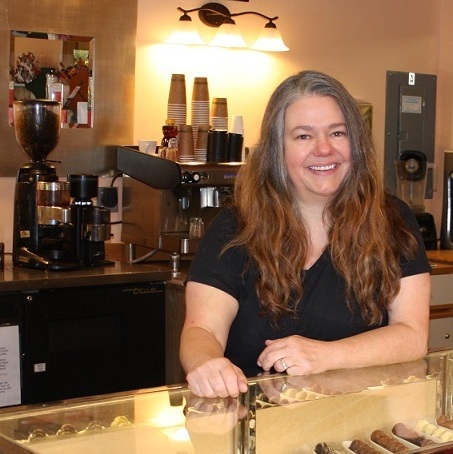
Author: Susan Wenzel

  • Whidbey: An Island of Plenty by Susan Wenzel

    Whidbey: An Island of Plenty by Susan Wenzel

    BY SUSAN WENZEL
    Whidbey Life Magazine Contributor
    Jan. 15, 2015 (republished from Summer WLM print magazine May, 2014) 

    Colonel Isaac Ebey was spot on when he claimed 640 acres of fertile glacial soil in the heart of Whidbey Island. Ebey’s Prairie, as it’s now known, had been providing for its inhabitants centuries before the Colonel sowed his first row of potatoes. Today, the meats, grains, fruits and vegetables grown on the Prairie are increasingly seen on the menus of high-end Seattle restaurants and in markets far beyond the Puget Sound.

    Not too long ago, however, the prairie—the Pacific Northwest’s very own Garden of Eden—was nearly paradise lost.

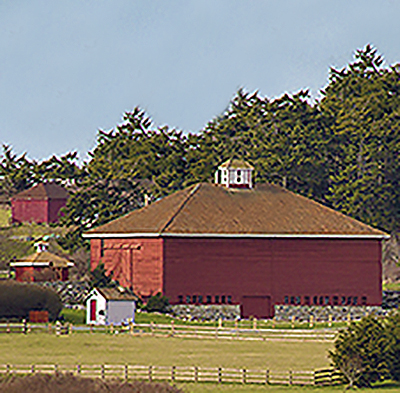
    The Smith barn at Willowood Farm in the heart of the Ebey’s Reserve National Historic Park   (photo by David Welton)
    The Smith barn at Willowood Farm in the heart of the Ebey’s Reserve National Historic Park (photo by David Welton)

    The native people who first populated Whidbey foraged for wild foods such as fish, marine mammals, Indian hyacinth (Camas), Bracken fern fronds, wapato (duck potato), and Nootka rosehips. They were also the first to recognize the advantages of farming the nutrient-rich alluvial plain of the Prairie.

    “The Indians who lived here perfected modern agricultural techniques such as transplanting, seed saving, mulching and selective burning. They planted potatoes and cultivated the wild nettles and Camas that grew naturally in the area,” explained Rick Castellano, director of the Island County Historical Society Museum.

    In the mid-1800’s, Euro-American settlers arrived on the island and also found it burgeoning with possibilities.They raised a variety of crops and livestock on the Prairie, discovering the viability of each through trial and error. While many crops failed, one was a notable success: grains. “In a period during the late 1800’s the prairie produced, on average, 114 bushels of  wheat per acre—the highest yield in the country at the time,” said Castellano.

    Agricultural products were originally grown for use by the island’s residents, but as farming practices and knowledge of the island’s micro-climates improved, the focus turned toward profit. Prunes were one of the first crops to be exported. Plum trees thrived on central Whidbey, and the vitamin-C and fiber-rich fruits were dried and shipped to Alaska during the gold-rush days. “The Windjammer Gallery on Front Street in Coupeville was originally a drying and storage facility for the plums, and later potatoes, prior to shipping,” said Castellano. “If you can imagine, prunes were an important nutritional and digestive aid to miners who were living primarily off of beef jerky.”

    Blockhouse on EbeysPrairie
    Cabbage and barley fields seem to point the way to the historic blockhouse on Ebey’s Prairie. (photo by David Welton)

    In the years that followed, the impact of Prairie farmers continued to spread—ultimately to places around the globe. Whidbey-grown products are highly favored by foodies and chefs throughout the Puget Sound region because of their exceptional quality; the close proximity of farm-to-market ensures maximum freshness and nutrient density. Recently, farmers have been producing cabbage seed, seed peas and grass seed for destinations as far away as Japan and the Netherlands.

    None of this is news to local historians and brothers Roger and Al Sherman, both retired Prairie farmers. “Whidbey Island farmers have long delivered their products to restaurants and grocery stores throughout the state,” said Al.

    WinterSaladGreens
    Winter salad greens inside the Willowood Farm greenhouse (photo by David Welton)

    “We first sent the Hubbard squash to Seattle by steamboat,” added Roger. “Squash has always grown well here. Dale (Sherman of Pioneer Farms) still grows it. He sells it to Eastern Washington for their school-lunch program and has a contract with Whole Foods to ship peeled-and-diced, organic, ready-to-use squash to their stores.”

    “Rockwell beans have been grown on the prairie for generations,” commented Al. “I’ve been growing Rockwells for years, eating some and saving some as seed for replanting.”

    “As the story goes, sailing ships brought the beans here centuries ago,” said Roger. “Some were used for trade while the rest were used for food or seed because they kept well. Rockwells are shelled by hand and labor intensive to harvest, but Georgie Smith (at Willowood Farm) is able to commercially produce them.”

    While some crops have remained constant through time—notably Hubbard squash and Rockwell beans—others have come and gone based on supply and demand, market price, financial viability and culinary trends.

    “Agriculture has phases. Ours was the last dairy farm on the island, then we started growing hay and barley and other grains for livestock feed,” said Wilbur Bishop of the 700-acre Ebey Road Farm he owns with wife Karen Bishop (Sherman) and son Clark, the sixth generation to work the land. “Today some of the grain I raise is certified organic for organic dairies here in Washington. We grow and adapt as times and needs change.”

    CrockettBarn
    The historic Crockett barn, (center) part of one of Whidbey Island’s earliest homesteads dating back to 1851 (photo by David Welton)

    At one time, change almost destroyed this opulent farmland. During the 1970’s, housing developers had their eyes on several hundred acres of the Prairie, seeking to cash in on its views of Admiralty Inlet, Mount Baker, Mount Rainier and the Olympic and Cascade mountain ranges. Citizens of Whidbey banded together to protect their rural life, scenic views, historical sites and agricultural heritage. Through their efforts, this precious agrarian resource—once in danger of extinction—gained permanent designation in 1978 as a National Historical Reserve.

    “I am on the Trust Board of Ebey’s Landing National Historic Reserve,” said Bishop. “And I, personally, will continue to work to preserve the rural culture that is here, to keep this land in farming, to ensure practices stay in line with the intent of those set in the original comprehensive plan for the reserve.”

    For thousands of years Whidbey Island has been a land of plenty, an essential resource for meeting its people’s food needs. Now preserved forever, the farmlands of yesterday will adjust only as required to satiate the hungers of tomorrow, be they a taste for organic Lacinato kale, Purple Glazer garlic, Kamut wheat, or…potatoes.

    For more photos by David Welton from the photo shoots for this story, click here.

    Food writer Susan Wenzel believes in the power of locally-produced food to fortify the health and well-being of both individual and the community as a whole.

    ________________

    CLICK HERE to read more entertaining and informative WLM stories and blogs.

    WLM stories and blogs are copyrighted and all rights are reserved. Linking is permitted. To request permission to use or reprint content from this site, email info@whidbeylifemagazine.org.

  • Come Taste the Freshest from Chef Vincent Nattress

    Come Taste the Freshest from Chef Vincent Nattress

    Sidebar-1.5x2Green-blue-3BY SUSAN WENZEL
    Whidbey Life Magazine Contributor
    September 17, 2014

    What do you get when you combine…
    • an appetite for preparing edible masterpieces
    • featuring premium local goods and
    • a raw hunger for promoting the importance of
    • supporting community food sources with
    • one superior culinary talent?
    You get Chef Vincent Nattress.

    But, what do you get when you combine…
    • the expertise of Chef Vincent Nattress with
    •the bountiful harvests of Whidbey Island?

    You get the Taste of Whidbey annual food feast, celebrating the best food and beverages that this Puget Sound food destination has to offer.

    As the owner of the much-lauded Cultivar Catering, Nattress knows fresh food is the best food. After spending decades honing his skills in fine restaurants throughout Europe and Napa Valley, Nattress returned to his roots on Whidbey Island because—everyone knows—Whidbey fresh is even better than the best.

    Nattress and his wife Tyla exhibit teamwork as they "plate" in preparation for serving.  (photo by David Welton)
    Nattress and his wife Tyla exhibit teamwork as they “plate” in preparation for serving. (photo by David Welton)

    “There is no similarity between fresh and local [versus] something grown in California or Mexico and shipped in. It’s like night and day,” said Nattress. “Ultimately, I am just greedy for the flavor of fresh and I want to share that with everyone.”

    This diet doctrine is largely why he and his family are happy to make their home on a five-acre farm in the Bayview area of Langley.

    “This land was a field of thistles when we bought it,” said Nattress. “But now it is back in agriculture. Preservation is a great reason to eat—to grow—local. Once farmland is lost, you can’t always get it back.”

    Through the labors of Nattress’ partner and chief cultivator, Blake Mennella, the once weedy soil has since been transformed into a thriving, organic farm—the source of much of what he needs to prepare fabulous dishes for his catering events, such as the regularly sold-out winemaker dinners for the likes of Spoiled Dog Winery and Ott & Murphy Wines.

    If he needs an ingredient not grown on his farm, Nattress certainly knows where to find it.

    A skilled staff assists Nattress with careful handling of the fresh ingredients. (photo by David Welton)
    Beeta Mohajeri, a summer intern, assists Nattress with careful handling of the fresh ingredients. (photo by David Welton)

    “I get sheep’s milk cheese from Glendale Shepherd and goat’s milk cheese from Vicky Brown of Little Brown Farm. Georgie Smith at Willowood Farm is where I go for vegetables and, of course, garlic,” said Nattress. “I also use 3 Sisters beef. Shelly Muzzall is always good about having the strange cuts that I need like ox tail; she can always give me what I need when I need it.”

    As the president of Slow Food Whidbey, Nattress is best able to tout the virtues of sourcing food from close to home through events such as the upcoming Taste of Whidbey.

    “There are many motives for loving locally produced food—political, economic, nutritional or even simply to maintain the bucolic atmosphere of the island—but the truth is, you can never get produce as fresh as when you walk into the back yard and pick it,” said Nattress. “Nothing tastes as good as fresh, local food that is minutes out of the garden.”

    Soon Nattress will be able to share his passion for all that is local with bona-fide farm-to-table dining when his latest venture, The Orchard Kitchen, opens on his Bayview farm late in 2014. At The Orchard Kitchen, guests will explore the farm while learning how to grow, prepare and, of course, savor the fruits of Nattress’ labors.

    In addition to the freshest of ingredients, a beautiful table setting makes a meal even more exquisite.  (photo by David Welton)
    In addition to the freshest of ingredients,  beautiful table setting makes a meal even more exquisite. Celina Dill helps prepare the place settings. (photo by David Welton)

    Until then, satiate the crave for Whidbey Island goodness by attending the Taste of Whidbey, to be held at Greenbank Farm on Sunday, Sept. 28 from 1 to 4 p.m. Tickets are $30 per person and include ten tastes from Whidbey Island favorites, including Spoiled Dog Winery, Frasers Gourmet Hideaway, bayleaf, Mukilteo Coffee Roasters, Front Street Grill, Tree-Top Baking, The Glass Alley Café and more.

    Purchase tickets through Brown Paper Tickets or at many fine Whidbey food and wine purveyors including Captain Whidbey Inn, bayleaf, Oystercatcher Restaurant and Front Street Grill in Coupeville as well as Greenbank Farm Wine Shop and Little Brown Farm, Blooms Tasting Room, and Comforts of Whidbey winery on the south end.

    Visit the Cultivar Catering website or call 360-969-4200 to plan a special event or learn more about Chef Vincent Nattress.

    Poster

    Image at top: Chef Vincent Nattress, cooking at a Spoiled Dog Winemaker’s Dinner earlier this year.  (photo by David Welton)

    Susan Wenzel, food writer, believes in the power of locally produced food to fortify the health and well-being of both the individual and the community as a whole.

    ________________

    CLICK HERE to read more entertaining and informative WLM stories and blogs.

    WLM stories and blogs are copyrighted and all rights are reserved. Linking is permitted. To request permission to use or reprint content from this site, email info@whidbeylifemagazine.org.


  • Sweet Dreams Are Made of Chocolate at Sweet Mona’s

    Sweet Dreams Are Made of Chocolate at Sweet Mona’s

    BY SUSAN WENZEL
    Whidbey Life Magazine contributor
    Aug. 20, 2014

    Life on Whidbey Island just got a little bit sweeter, all because Sweet Mona’s Chocolate Boutique just got a whole lot bigger.

    Whidbey Island is rich with exceptional talents skilled at making incredible objets d’art. One of these notables is “Sweet” Mona Newbauer, whose preferred medium is neither clay nor glass, but chocolate…and customer service.

    “I love being behind the counter,” said Newbauer. “I love meeting people, talking to people. I love people. I wish I could be behind the counter every day, but I also need to make the chocolate.”

    Newbauer uses her station behind that goodie-stuffed display case—as well as her position in the candy-making kitchen—to take people on an edible round-the-world exploration of all that is chocolate. There, she is best-known and loved for her handmade fudges, light and dark chocolate seafoam and nut brittles…as well as for her winning personality and uncanny knack for remembering her many patrons’ names and favorite treats.

    To Newbauer—boutique owner and truffle temptress—it was this dream of sharing a passion for cocoa that drove her to open the original Sweet Mona’s location in 2006.

    Be sure to stop by Sweet Mona’s Chocolate Boutique for the Grand Opening on August 23!
    Be sure to stop by Sweet Mona’s Chocolate Boutique for the Grand Opening on August 23!   Photo by Susan Wenzel

    All too soon though, her aspirations outgrew the small leased space, and Newbauer, along with husband Tony, began a quest for a larger building with more room—room for both visiting and community confection lovers to sit and chat over an espresso and award-winning dark chocolate salted caramels, room for the Newbauers’ dreams to continue to grow, room that they could call their own.

    The move that carried Newbauer a few feet across the street was one she feared might never transpire. After an earlier acquisition fell through, she was hesitant to put her hopes on the line again. But true dreamers never completely give up hope for their goals and ambitions.

    “When the building became available, I thought it was too much, that it never could happen, that it wasn’t the right opportunity,” said Newbauer. “But I opened my heart to the seller and shared my vision and the seller believed in me, in my vision…and here I am.”

    To the outside world, Newbauer made the effort look, well, effortless. This, however, was far from the truth, she explained. Nearly overcome with emotion, she spoke with gratitude of a list of forty-some local volunteers, employees who worked on their off-days, people who simply dropped in and said, “give me something to do” and—especially—of Vern Hodgson, a retired contractor who dedicated hours of his own time to build cabinets and countertops, to name a few.

    Sweet Mona’s new space has plenty of room to sit and enjoy an ice cream soda, gelato or cappuccino.
    Sweet Mona’s new space has plenty of room to sit and enjoy an ice cream soda, gelato or cappuccino.  Photo by Susan Wenzel

    “There is no way I could have done this alone. It took the support of this whole community,” she said. “It made me realize that this is not about me. It’s about us, the community—my community.”

    “Sometimes people think something like this happens overnight,” she said. “But, that is far from the truth. It happens over years and involves a lot of blood, sweat and tears. It takes a lot of work. A lot. But, I’m glad that it makes people believe anyone can do it, that they, too, can live their dreams.”

    Newbauer admitted that in the frenzy of the move—if you blinked, you would have missed it, as the shop was closed for only four short days—she hadn’t really taken time to savor the new, nostalgic ice cream parlor-esque shop bedecked with Coca-Cola décor and a classic Space Odyssey pinball machine, courtesy of Tim Leonard of Heavy Metal Works fame.

    “It is nearly perfect,” she said. “I had to sacrifice a few things to get done in time. One of them was the floor, but it will get done eventually.”

    Rest assured, Sweet Mona, that no one will be looking at the floor when they come in, as all eyes will be drawn to the display cases stocked with the finest chocolates, the ice cream case and accompanying milkshake machine and, of course, all the room…all the sweet, sweet room!

    Save the date! From 10 a.m. to 2 p.m. on Saturday, August 23, Sweet Mona’s Chocolate Boutique will celebrate its official Grand Opening in rich and delicious style, with samples, giveaways, special chocolate offers and more.

    Stop by Sweet Mona’s new location located at 221 2nd Street, Suite 16, Langley from 10 a.m. to 5 p.m. Sunday through Thursday and 9 a.m. to 8 p.m. Friday and Saturday for decadent chocolates, a scoop of gelato (be sure to ask about the free float upgrade!) or both.

    Visit Sweet Mona’s website or Facebook page or call 360-221-2728 for more information.

    Mona Newbauer stands ready to welcome her customers to her new, much larger shop.
    Mona Newbauer stands ready to welcome her customers to her new, much larger shop.  Photo by Susan Wenzel 


    Susan Wenzel, food writer, believes in the power of locally produced food to fortify the health and well-being of both the individual and the community as a whole.

    CLICK HERE to read more entertaining and informative WLM stories and blogs.

    WLM stories and blogs are copyrighted and all rights are reserved. Linking is permitted. To request permission to use or reprint content from this site, email info@whidbeylifemagazine.org.

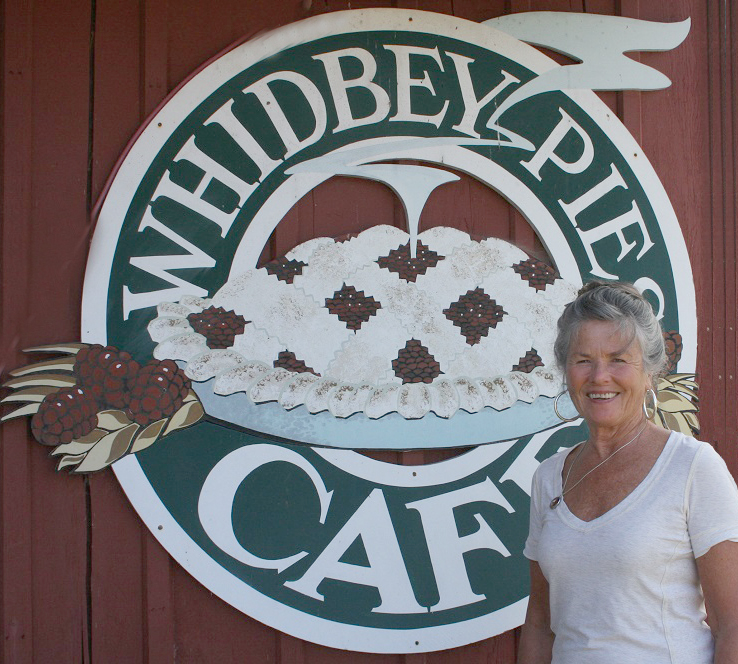
  • A Passion for Pies—and for Greenbank Farm—at Whidbey Pies Café

    A Passion for Pies—and for Greenbank Farm—at Whidbey Pies Café

    BY SUSAN WENZEL
    Whidbey Life Magazine contributor
    June 11, 2014

    It’s common knowledge that one of the best places to have a slice of pie on Whidbey Island is Whidbey Pies Café at Greenbank Farm. It’s also no secret that the reason the loganberry, strawberry-rhubarb, cherry, Granny Smith apple, peach, huckleberry, and marionberry pies are so delicious is because Whidbey Pies Café’s owner and pie maven, Jan Gunn, has a passion for pie perfection.

    What many don’t know, however, is that Gunn is equally dedicated to the continued advancement of her community and of Greenbank Farm, once home to the biggest loganberry farm in the world.

    “The mission of our café is to support the farm. In 2004, we took pies to Olympia every week in search of help for the farm. We lobbied with pies, you could say,” said Gunn with a laugh. “It worked because we received a grant of $1.5 million from the state to build the third barn, remodel the second barn and add a small kitchen to the café.”

    Whidbey Pies Café at Greenbank Farm (photo by Susan Wenzel)
    Whidbey Pies Café at Greenbank Farm (photo by Susan Wenzel)

    The café, with its charming wood floors and cozy seating arrangement, was once a gift store looking for a facelift. It was thought that this small corner of the Greenbank Farm might be an opportune place for an eatery. And, when Gunn saw the space, she couldn’t have agreed more. In her words, it was love at first sight.

    “After I closed Whidbey Fish, a market and restaurant where I sold my pies, I swore I would never do retail again. But looking at this space, the sun streaming through the windows and the view of the pond…I said, ‘sign me up!’”

    The addition of the café kitchen and the larger commercial kitchen inside the second barn (also known as Barn B or the Gary Ando Barn), coupled with an unparalleled reputation for being the queen of fruit-filled tarts, permitted Gunn to make more pies. A lot more pies.

    “We take most of our pies to the Metropolitan Market in Seattle twice a week, so with that, the café and the addition of 3 Sisters selling our pies in their shop, we make over 50,000 pies per year.”

    Strawberry-rhubarb pies ready for delivery to Metropolitan Market in Seattle (photo by Susan Wenzel)
    Strawberry-rhubarb pies ready for delivery to Metropolitan Market in Seattle (photo by Susan Wenzel)

    A staff of 26, under the watchful eye of general manager Tawnya Penny, makes every single one of those pies by hand and from scratch.

    “I’ve been with Jan since the beginning,” said Penny. “For the first three or four years here, we didn’t even have a kitchen and did our baking at her house.”

    But baking delicious pies is just a, well, piece of the pie—so to speak. Gunn’s desire to promote local food producers and bring business to Greenbank Farm begat a daily, seasonal lunch menu that features organic and local food dishes, including soups, salads and sandwiches as well as both savory and sweet pies (of course). The ever-popular First Friday Dinner, too, became part of the Whidbey Island food scene in 2006 with the purpose of adding another facet of enjoyment to Greenbank Farm’s “First Friday” artist reception.

    “Greenbank is moving ‘First Friday’ to the second Sunday of the month starting in June of 2014. But the First Friday dinner has earned quite a following, so we will continue to offer them,” said Gunn. “Although we do plan to eventually have a meal for the Second Sunday events as well—more of a hearty family-style dish.”

    In the commercial kitchen where bakers and pie makers—each of which Gunn greeted by name —were busily crafting hundreds of mouthwatering pies, Gunn explained, “It’s about so much more than the bottom line. It’s about the families who work here and about the farms and the farmers.”

    Stop by Whidbey Pies Café at 765 Wonn Road in Greenbank 11 a.m. to 5 p.m. Monday through Friday and 10 a.m. to 5 p.m. Saturday and Sunday for lunch or pie (by the slice, whole or even frozen—by special order) or both. Visit the website or call 360-678-3474 for more information. Look for Whidbey Pies Café’s debut at the Whidbey Island Area Fair, Thursday, July 31 through Sunday, August 1.

    Susan Wenzel, food writer, believes in the power of locally produced food to fortify the health and well-being of both the individual and the community as a whole.

    Image at top: Owner Jan Gunn calls Whidbey Pies’ loganberry pie her personal favorite   (photo by Susan Wenzel)

    CLICK HERE to read more entertaining and informative WLM stories and blogs.

    WLM stories and blogs are copyrighted and all rights are reserved. Linking is permitted. To request permission to use or reprint content from this site, email info@whidbeylifemagazine.org.


  • Feed the Need with Oak Harbor’s New Food Forest

    Feed the Need with Oak Harbor’s New Food Forest

    BY SUSAN WENZEL
    Whidbey Life Magazine contributor
    June 4, 2014

    John Lennon once asked the people of the world to “imagine no possessions…no need for greed or hunger…”

    Thanks to the creative and motivated minds of project co-chairs Netsah Zylinsky and Christine Pace, an army of volunteers and a generous grant of $3,000 from the Oak Harbor Garden Club, the Imagine Permaculture Forest, located at 526 SE Bayshore Drive, is no longer merely a dream. Yes, this sustainable food forest, designed to nurture the hungry throughout Whidbey Island—particularly those who come to SPIN Café in Oak Harbor for the twice-weekly free meal—is a growing, thriving and permanent reality.

    Permaculture Logo (photo by Susan Wenzel)
    Permaculture Logo (photo by Susan Wenzel)

    Although the food forest is burgeoning with more than fifty fruit trees, gooseberries, blackberries, blueberries, grapes, peas, carrots, cabbages, chard, a variety of herbs and dozens of other vegetables and fruits, it is much more than a simple garden, Pace explained.

    “Permaculture is about creating a self-sustaining ecosystem that continuously feeds people and does not take resources away from the earth but adds back to it. For example, we filled the garden with all kinds of edibles but also included flowers to attract the beneficial insects and pollinators.”

    “Most of what we planted is self-sustaining,” added Zylinsky, who spent decades learning about permaculture and now loves to share her knowledge with others. “In a couple of years, we should be able to walk away and this place will continue to thrive on its own forever.”

    To support such long-term vitality, the garden utilizes thoughtfully calculated sustainable agricultural methods including mulching and composting as well as companion planting—in which mutually beneficial plants are positioned near each other to foster growth. The nutritionally complete “Three Sisters” combination of beans, squash and corn seen in the garden is a prime example of companion planting and is considered by some to be the oldest known form of permaculture. The broad leaves of the squash prevent the establishment of weeds and provide natural compost for the corn and beans as the older leaves are shed. The corn provides structural support for the climbing beans and the beans provide nitrogen needed by both the squash and corn.

    Just as the plants in the food forest support each other, this garden project is destined to provide both food and a picturesque place for the community to relax. The Imagine Permaculture Forest is slated to become a permanent part of Oak Harbor’s landscape thanks to the support of Hank Nydam, Parks Operations Manager for Oak Harbor. “Hank has been a huge source of encouragement and support,” explained Pace. “He helped us secure the land from the city and is further helping our efforts to become a city park.”

    Many other members of the community have likewise rallied behind the project, dropping by the garden to help or providing donations of plants, money or even food to feed the workers. One such contributor has been Karen Mueller, the owner and operator of the independent Wind & Tide Bookshop.

    Project co-chair Netsah Zylinsky plants herbs with volunteer Rohini Ray
    Project co-chair Netsah Zylinsky plants herbs with volunteer Rohini Ray (photo by Susan Wenzel)

    “Karen has been an invaluable help,” Zylinsky said. “She opens up her wonderful store for our planning meetings and is here helping most Saturdays.”

    “I love this,” Zylinsky added as she paused from planting herbs in the centrally located, spiral-shaped mandala to survey the efforts of the busy workers. “We are saving the world one garden at a time.”

    Almost ripe quince on one of the many food forest fruit trees (photo by Susan Wenzel)
    Almost ripe quince on one of the many food forest fruit trees (photo by Susan Wenzel)

    For more information, please visit the Imagine Permaculture Forest website or visit the Wind & Tide Bookshop located at 790 SE Pioneer Way in Oak Harbor. (Be sure to set aside some time to browse the amazing selection of new and used books, including many works by Whidbey Island authors and artists.)

    Working parties are held every Saturday at the garden from 12 noon to 2 p.m. and help is always appreciated. It is suggested that workers bring gloves, gardening tools, eggshells, grass clippings, coffee grounds, etc.

    Susan Wenzel, food writer, believes in the power of locally produced food to fortify the health and well-being of both the individual and the community as a whole.

    CLICK HERE to read more entertaining and informative WLM stories and blogs.

    WLM stories and blogs are copyrighted and all rights are reserved. Linking is permitted. To request permission to use or reprint content from this site, email info@whidbeylifemagazine.org.


  • Kitsch ’N Bitch ‘round the table with Sue Frause

    Kitsch ’N Bitch ‘round the table with Sue Frause

    BY SUSAN WENZEL
    Whidbey Life Magazine contributor
    April 30, 2014

    The key to hosting the perfect dinner party is balance. The right mix of guests is just as important, if not more, than the menu, the music and the wine.

    Award-winning travel and food writer Sue Frause has seemingly found the necessary equilibrium to ensure success in her culinary-themed live show, Kitsch ’N Bitch, held at Whidbey Island Center for the Arts in Langley. Now in its third season, Kitsch ’N Bitch follows a tried and true recipe each show by combining Grade A celebrity foodie personalities with great music, a signature cocktail, round table discussions and cooking demonstrations—all in front of a live audience.

    Although each show incorporates the same basic ingredients, it’s the impromptu premise of each event that gives Kitsch ’N Bitch its famous flavor.

    “That’s the fun part,” said Frause. “Kitsch ’N Bitch is unscripted and really live. I never know what is going to happen or what will be said. Things can go wrong and they sometimes do. There was one time when a chicken almost got out…that was a fun one!”

    “It’s like a talk show,” continued Frause. “The audience comes in while the house band, Deja Blooze, is still warming up. After they are seated, I give a monologue and then introduce my guests who join me at the table to chat.”

    Denise LaRue showed host Sue Frause how to make her favorite Christmas treats during "Home for the Holidays.” (photo courtesy of Sue Frause)
    Denise LaRue showed host Sue Frause how to make her favorite Christmas treats during “Home for the Holidays.” (photo courtesy of Sue Frause)

    Frause shops for chefs, farmers, vintners and others in the food world based upon their fit with the special theme for each Kitsch’ N Bitch event. These dinner guests may be locally sourced from Whidbey Island or even imported from faraway Seattle, but all are sure to bring their own opinions, ideas and styles to the table. The outcome is a not-to-be missed dish featuring friendly banter, sharp wit and a generous measure of laughs peppered with cooking tips and industry secrets, all served piping hot to the hungry audience.

    The next feast—“Meet the Producers”—is scheduled for 7:30 p.m. Saturday, May 3 and is comprised of all Whidbey Life Magazine members: Vincent Nattress, Vicky Brown, Maryon Atwood, Robbie Lobell and Gary and Beth Smith.


    In “Bon Appetit: A Julia Child Tribute,” Frause, Chef Gordon Stewart and cake artist John Auburn honored the iconic American chef’s 100th birthday. (photo courtesy of Sue Frause)
    In “Bon Appetit: A Julia Child Tribute,” Frause, Chef Gordon Stewart and cake artist John Auburn honored the iconic American chef’s 100th birthday. (photo courtesy of Sue Frause)

    Chef Vincent Nattress of Cultivar Catering is a chef, caterer and proponent of the Slow Food movement. He strives to cook with the freshest foods Whidbey Island has to offer and often sources ingredients from his own organic garden.

    Little Brown Farm is as well-known for its delectable 100% fresh goat milk Caprine Cream Chevre spreadable cheese and highly addictive Dulce de Leche as it is for the gregarious personality of its Chief Milkmaid, Vicky Brown.

    Maryon Atwood and Robbie Lobell, creators of Cook on Clay handmade flameware pottery, recently expanded production with the installation of a new, larger kiln and will surely bring some of their stunning and durable cookware to demonstrate and display.

    Gary and Beth Smith, owners and operators of Mukilteo Coffee Roasters, will be the guest bartenders for the evening. They will create the famous Kitsch ’N Bitch signature cocktail—with coffee, of course.

    Tickets are available now for Saturday’s show at www.wicaonline.org/kitsch-n-bitch. If you can’t make it to this last Kitsch ’N Bitch in the 2013-2014 series, never fear—plans are already in the works for a delicious 2014-2015 season.

    Susan Wenzel, food writer, believes in the power of locally produced food to fortify the health and well-being of both the individual and the community as a whole.

    CLICK HERE to read more entertaining and informative WLM stories and blogs.

    WLM stories and blogs are copyrighted and all rights are reserved. Linking is permitted. To request permission to use or reprint content from this site, email info@whidbeylifemagazine.org.
  • Vicki Robin Brings Local Eating Close to Home in Second Book

    Vicki Robin Brings Local Eating Close to Home in Second Book

    BY SUSAN WENZEL
    Whidbey Life Magazine contributor
    April 2, 2014

    In a day and age when strawberries are available in December, milk lasts for months and ingredient lists are as long and convoluted as the U.S. Tax Code, author and activist Vicki Robin began to consider the impacts of our society’s relationship with food…but, first, she took a hard look at her own eating habits.

    “I am a living being, a living system,” said Robin. “I am only as healthy as the soil my food grows in, but I had made my food someone else’s responsibility. I would go to the grocery store and select my pretty packages without really thinking about how they got to the shelves. As far as ‘relational eating’ was concerned, I had become a food shopper.”

    In “Blessing the Hands That Feed Us: What Eating Closer to Home Can Teach Us About Food, Community, and Our Place on Earth,” Robin discusses the philosophy of “relational eating” in which consumers have a more complete “food sense”—specifically in knowing where, how and by whom their food is produced. She writes that in seeking this healthy food, we can ultimately create a more healthy society.

    Vicki Robin's new book: "Blessing the Hands that Feed Us"
    Vicki Robin’s new book: “Blessing the Hands that Feed Us”

    Robin concedes that change will not come easily. People have become comfortable in their habits of buying convenience foods, plus many places lack an adequate source for local food. She noted that only five to ten percent of food eaten on Whidbey Island is produced on the island despite the region’s vast agrarian potential.

    “Right now, we—on Whidbey—couldn’t feed all 65,000 people the 2,000 calories a day that are necessary. It would be impossible. We rely too heavily on what comes to us in trucks across the bridge and ferries.”

    She decided to test her theories close to home and completely “relocalize” her own taste buds first, but wondered if it would be possible to fulfill all of her nutritional needs in doing so? What would she gain if she ate only items sourced close to her home? What would she lose? What would be the long-term effect on her health, her community and, even, her sense of well-being?

    Fortunately she met Tricia Beckner, a local farmer who was asking the same sort of questions.

    “Tricia wanted to see how much of an impact one farmer with one small farm could make,” explained Robin. “She wanted to do a sort of opposite ‘Supersize Me’ experiment. But, instead of eating McDonalds for thirty days, I agreed to eat what Tricia grew and sourced for me.”

    While Robin did monitor her general heath throughout the month-long experience, the so-called 10-Mile Diet grew, in the end, far beyond a singular awareness of how to better nourish and care for her body. Robin said she experienced a profound sense of belonging, the knowledge that she was deeply intertwined with her community as well.

    “I went from being a consumer to becoming part of a community—a living, breathing system of people,” said Robin. “I was able to put down solid roots in my community because I was eating food solely from within my community, food grown by the hands of my friends.”

    She also gained a resurgence of optimism that society is not lost to a culture of factory farms and imported megastore goods. She has faith that change is possible.

    “Hope is in the process,” said Robin. “And my hope is based on the people who want to restore our own capacity to feed us, to restore our own foodshed. The people who will keep pushing and working. The people who will stay awake and keep trying to improve this situation.”

    To learn more about sustainable eating and living, visit Vicki Robin’s webpage or purchase a copy of Blessing the Hands That Feeds Us available at Moonraker Books in Langley or on Amazon.com or Indiebound.org.

    Experience local eating through any one of the CSA opportunities or farmer’s markets on Whidbey Island. Most are beginning their 2014 seasonal runs within the next few weeks. Check out the following links for start dates, directions and more information: Oak Harbor Public Market; Coupeville Farmers Market; Farm and Flea Market at Greenbank Farm; Bayview Farmers Market, Langley Second Street Market and South Whidbey Tilth Market in Langley and the Thursday Market in Clinton.

    Susan Wenzel, food writer, believes in the power of locally-produced food to fortify the health and well-being of both the individual and the community.

    Photos used with permission from vickirobin.com

    CLICK HERE to read more entertaining and informative WLM stories and blogs.

    WLM stories and blogs are copyrighted and all rights are reserved. Linking is permitted. To request permission to use or reprint content from this site, email info@whidbeylifemagazine.org.


  • Muscle your way into Coupeville for some fine Penn Cove Shellfish Mussels

    Muscle your way into Coupeville for some fine Penn Cove Shellfish Mussels

    BY SUSAN WENZEL
    PHOTOGRAPHY BY DAVID WELTON
    Whidbey Life Magazine contributors
    March 5, 2013

    Rain or shine, the 28th annual Penn Cove Musselfest will be held in the heart of Coupeville, this weekend, March 7-9.  Rain or shine, there will be music, food and family fun and, of course, a mussel eating contest, mussel chowder tasting and mussel cooking demonstrations.

    Penn Cove Musselfest poster (courtesy Penn Cove Musselfest)
    Penn Cove Musselfest poster (courtesy Penn Cove Musselfest)

    Good thing the rugged crew at Penn Cove Shellfish works rain or shine to ensure the mussels will be plenty…and plenty fresh.

    Feature_PCS_Tim

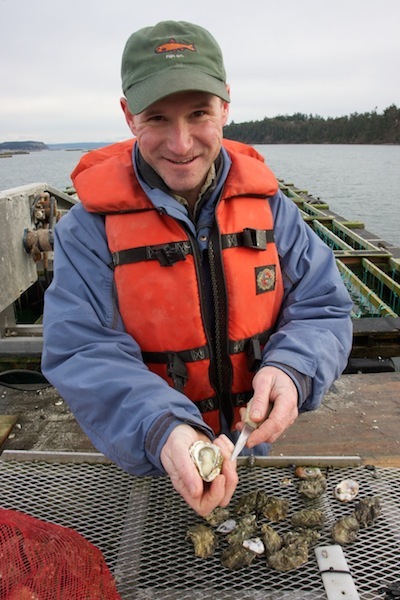
    As far as food goes, fresher is usually better and there are few edibles that go from source to consumer faster than the legendary black bivalves raised in the waters of Penn Cove by Whidbey Island’s own Penn Cove Shellfish, the oldest and largest commercial mussel farm in North America.

    “The mussels harvested today will be on a plate in Seattle tomorrow,” said Penn Cove Shellfish farm manager, Tim Jones.  “We don’t harvest the mussels and store them somewhere.  They stay in the water until we have an order to fill.”

    Feature_PCS_blue

    “Food safety is very, very important to us.  Even on cool days like today we take the utmost care to minimize the amount of time the mussels are out of water,” continued Jones, indicating the insulated totes filled with bags of mussels topped with a slurry of crushed ice and seawater.

    “And we take care of this water.  Clean water means better mussels,” he said.  “We routinely pick up garbage in and around the cove.  You should see the mountains of trash we collect: tires, bottles, tons of plastic…”

    Feature_PCS_Heron

    “Blue,” a once injured Great Blue Heron, is further testament to the careful environmental stewardship sanctioned by the Penn Cove Shellfish company and crew.   The big bird was rescued by the mussel men (and women) and shows his gratitude by patrolling the boat to keep an eye on quality standards and dispose of the occasional interloper shrimp pulled up with the lines of mussels.

    “Blue flies from raft to raft when he sees the boat,” said Jones.  “Sometimes he walks right on and wanders around where people are working.”

    Feature_PCS_Charlie

    Charlie Rogers has a great view of the mussel rafts from his perch high above the workers on the harvest barge, the “Moule Mariner.”  Penn Cove Shellfish boasts approximately 85,000 lines of mussels dangling down from the 42 rafts floating in the nutrient-rich waters of Penn Cove.  And they employ three crews of 25 people for the tedious and demanding work of harvesting those mussels and readying them for countless dinner tables around the country.

    “People either work here for three days or five years,” joked Jones.  “It’s one tough job.”

    Feature_PCS-balance

    It takes a steady hand and even steadier legs to cut the 20’ long lines of mussels – each of which can weigh up to 50 pounds – and drag them to the harvest barge.

    “Penn Cove has the highest natural population of mussels in the Puget Sound,” explained Jones.  “They all spawn at the same time in the spring and the larvae eventually attach to any one of the thousands of collector lines we tie to the rafts.  When they are big enough, we transplant them onto the long lines and thin them to about 150 mussels per foot to avoid overcrowding and allow for uniform growth.”

    Feature_PCS_pullingmussels

    Shane Moody and Brandon Price tie each mussel-laden line together, one after another, and feed them into a stripping machine.  There, the mussels are swept from the lines where they spent the last 12-14 months eating algae and growing to eating size.

    Both the lines and mussel disks used to stabilize the lines and support the weight of the mussels are reused year after year.  This eco-friendly effort greatly reduces the solid waste produced by Penn Cove Shellfish’s mussel growing operations.

    Feature_PCS_stripping

    After they exit the stripping machine, the mussels get a shave and a haircut to remove their beards (actually byssus threads produced by mussels in order for them to attach to lines, pilings and rocks) and any hitchhiking barnacles.  In this second cleaning stage, the mussels are also separated from errant starfish, broken shells, shrimp for Blue and other debris; they then drop into a hopper manned by Brandon Price before moving next to the conveyer belt for sorting.

    Feature_PCS_conveyor

    Nearly faster than the eye can see, the swift hands of the Penn Cove Shellfish crew give the mussels a final onceover before they move on down the line to be weighed and packed in 2, 5, 10 and 25-pound bags.

    After packing, these mussels are shipped off to hungry consumers from New York City to Coupeville, Washington – just in time for Musselfest!

    Feature_Raul

    Raul Jefferds, co-owner of Penn Cove Shellfish, demonstrates a tried and true mussel eating technique.  Penn Cove Shellfish, a sponsor of the annual Musselfest, will be offering tours of their operations on March 8 and 9 from 10 a.m. to 5 p.m. For more information about mussels or the festival, visit Penn Cove Musselfest and Penn Cove Shellfish. 

    You can pair your visit to the Penn Cove Musselfest with the Whidbey Working Artists Studio Tour this weekend. To find out more, read the WLM article “Whidbey Working Artists Tour Shines Light on Artists Up-Island, Friday through Sunday, March 7, 8 and 9.”

    Susan Wenzel, food writer, believes in the power of locally produced food to fortify the health and well-being of both the individual and the community as a whole.  

    David Welton, photographer, enjoys fine photography and capturing the life of the community around him.

    CLICK HERE to read more entertaining and informative WLM stories and blogs.

    WLM stories and blogs are copyrighted and all rights are reserved. Linking is permitted. To request permission to use or reprint content from this site, email info@whidbeylifemagazine.org.

  • Get the Freshest of the Fresh with a Whidbey Island CSA

    Get the Freshest of the Fresh with a Whidbey Island CSA

    BY SUSAN WENZEL
    Whidbey Life Magazine contributor
    February 24, 2014

    If an apple a day keeps the doctor away, a CSA share or “Community Supported Agriculture” share should send that same doctor straight to the poor house.

    What the heck is a CSA anyway?

    Imagine dining on locally grown, vitamin and flavor packed, naturally ripened, uber-fresh, sometimes-still-adorned-with-life-giving-soil, organic or close to it, seasonal produce once a week, spring through fall. Envision having the ability to put this food on the table without toiling for hours in a garden plot or stepping inside a supermarket with its harsh, glaring lights, shelves of cartoon character-adorned, preservative-filled packages and questionable sourcing and food handling practices.

    A CSA includes all of this and more by dividing the projected annual harvest of one small, usually family-owned, local farm (or a couple in a co-op situation) into small portions or “subscriptions” which are offered to the public for a reasonable fee.

    Tell me more about those shares.

    A share is often available in different sizes, as a whole or half share or sometimes a shared share depending on the number of people each weekly bounty is destined to feed, the amount of product desired and the guidelines set forth by the farm.

    The number of shares available per farm is dictated by the projected yield of the acreage planted and the success of prior years.

    The price of the share is based on the calculated costs, quantity and variety of items included, current market prices of seed and produce, the number of weeks, organic or not and, sometimes, competitor pricing.

    garlic
    Garlic scapes from the Willowood Farm (photo by Susan Wenzel)

    So what’s in it for me?

    A CSA share usually consists of an assortment of fruits, vegetables, herbs, dried beans and grains and even fresh-cut flowers. Some might offer a dairy, egg or meat option. And, most have weekly “you pick” items, a “freebee” bin of excess or less than perfect specimens, educational classes and special member events. (In 2013, for example, Prairie Bottom Farm extended invitations to a CSA member potluck picnic, canning classes and a pumpkin patch ripe for the picking just in time for Halloween!)

    Aside from the nutritional advantages, the ancillary benefits of having a veggie membership are these:

    • Local production of foodstuffs benefits the environment by reducing packaging materials and natural resource consumption and pollution attributed to shipping produce great distances.
    • Children big or small will have the opportunity to visit a farm and learn where their food originates (which encourages the pickiest of eaters to try new foods like rutabagas, sunchokes and kale).
    • Adults big or small can still answer burning questions about food safety and sourcing by seeing exactly how and where their produce is grown.
    • The weekly basket pickup times foster a greater sense of community as neighbors and friends meet over bins of collards and potatoes to discuss recipes, the weather and Grandpa’s bursitis.

    How do I join?

    All it takes to partake in this amazing and delicious opportunity is to find the right CSA (consider location, reputation, certified organic or not, types of products offered, length of season and price), pay the annual membership fee, made either in a single lump sum or several easy payments and wait.

    Wait? I have to wait for my cabbages and carrots?

    CSA shares are typically purchased in late winter or early spring before the first seed is even in the ground. In fact, the upfront payment frequently goes toward the purchase of those seeds and related supplies and equipment.

    bushel of carrots
    Fresh carrots (photo by Susan Wenzel)

    A CSA membership is like any other investment; there is inherent risk involved and no guaranteed return. For example, yields may vary and even fall far short of goals, depending on a variety of factors. Crops have, since the beginning of time, been subject to the effects of weather, pests, natural disasters, disease and the whims and wiles of Mother Nature.

    Last year this reporter had a CSA share and, aside from the challenge of wondering what to do with the odds and ends of the week (which I ultimately resolved by making huge pots of vegetable soup in my gorgeous Cook on Clay Flameware casserole), I found the concept of supporting my local farmer in good faith and feeding my family the best of the best of the best to be well worth the gamble…and the wait.

    I’m sold. Where do I sign up?

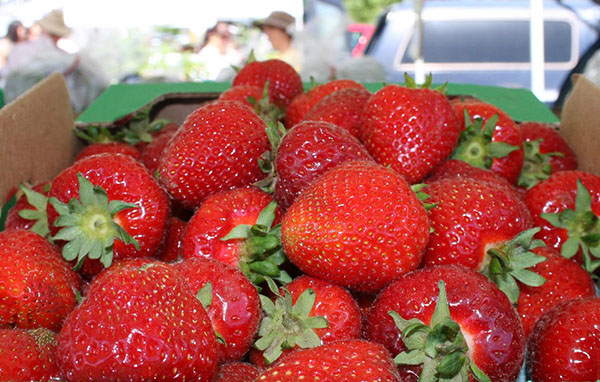
    Image at the top: fresh strawberries (photo by Susan Wenzel)

    Susan Wenzel, food writer, believes in the power of locally produced food to fortify the health and wellbeing of both the individual and the community as a whole.

    CLICK HERE to read more entertaining and informative WLM stories and blogs.

    WLM stories and blogs are copyrighted and all rights are reserved. Linking is permitted. To request permission to use or reprint content from this site, email info@whidbeylifemagazine.org.

  • The Midnight Kitchen Catering Makes Special Events Even More Magical

    The Midnight Kitchen Catering Makes Special Events Even More Magical

    BY SUSAN WENZEL
    Whidbey Life Magazine contributor
    February 19, 2014

    The cozy kitchen, warmed with the enchanting scent of rosemary, offered a welcome respite from the bleak Pacific Northwest day. The sunny greeting offered by Scott and Stephanie Pendell, owners and operators of The Midnight Kitchen, conjured away the last bits of the cold and gray.

    The pair, who started their business in 2007, was hard at work creating hundreds of their bewitching Turner and Bea’s Rosemary Crackers. Each of the savory crisps is rolled to the perfect thickness in a hand-cranked pasta maker—one by one—ensuring no two will ever look exactly the same. However, a dusting of fresh rosemary and a pinch of sea salt guarantee each to be equally as scrumptious whether eaten naked or adorned with any array of tasty toppings.

    “And nothing smells as good as a giant pile of these crackers,” said Scott, of the huge batch cooling on the counter and the nearby bins filled to the brim with the crunchy goodies. “I usually bake in the morning and go in to eat lunch. When I come back, they still smell great.”

    Turner and Bea's rosemary crackers from Midnight Kitchen. (image courtesy of Midnight Kitchen)
    Turner and Bea’s rosemary crackers from Midnight Kitchen. (image courtesy of Midnight Kitchen)

    Once upon a time they were only offered as part of The Midnight Kitchen’s extensive gourmet catering menu. As the story goes, Beth Kuchynka, owner and head gastronome at bayleaf in Coupeville, was the fairy godmother who finally persuaded the Pendells to sell Turner and Bea’s Rosemary Crackers at select Whidbey Island food retailers. Since then, the Pendells have cranked out countless hearty crackers in an effort to match the supply with the ever-growing demand.

    But, why “Turner and Bea’s,” one might wonder.

    “Those are our kids’ names,” said Stephanie. “We liked the sound of it and the name seemed perfect.”

    With the rosemary flavor garnering such rave reviews, it would seem only natural for other types of crackers or goodies to follow suit.

    “Maybe, eventually, we will offer additional items,” said Stephanie. “But for now, catering takes up most of our time.”

    The Pendells schedule between 40 and 50 events every year. They welcome occasions of any kind—weddings, retirement parties, baby showers, birthdays, store and gallery openings and more for parties of typically twenty people and up. They recommend potential clients contact them six months to a year before the event to ensure snaring that perfect date and time.

    “We can cater every type of event,” said Scott. “And we are a full-service caterer. We do it all for our customers. People get nervous when they need to hire a caterer. Our goal is to make it easy for them so they can relax and enjoy the party.”

    “We handle everything from arranging the rentals to hiring the wait staff to designing a custom menu including all of the food and desserts,” he continued.

    FEA_midnight3
    Midnight Kitchen’s “Turner and Bea’s” Rosemary Crackers fresh from the oven. (photo by Susan Wenzel)

    The Pendells, both classically trained chefs, can accommodate any taste or preference. Salmon is the hands-down most popular main course, but there are countless other crowd-pleasing favorites.

    “The crab macaroni and cheese is so delicious,” said Stephanie. “People love that dish. I love that dish!”

    “I like the chicken with leek confit,” said Scott.

    “Except for cleaning the leeks,” he added. “I absolutely hate cleaning leeks.”

    Which dish—salmon, crab or chicken—is best may be a matter of opinion, but the Pendells guarantee all of their food is of exceptional quality. They select only the freshest and finest ingredients available, most sourced from the freshest and finest Whidbey Island growers. Willowood Farms, Three Sisters Family Farms, Little Brown Farm, Penn Cove Shellfish and Blackberry Moon Farm are but a few of their preferred local suppliers.

    Whether you are looking for a bag of rosemary crackers for a midnight snack or a banquet of fairytale proportions for your next enchanted evening, visit The Midnight Kitchen website or call 360-321-2796.

    Turner & Bea’s Rosemary Crackers are available at bayleaf, 101 NW Coveland St., Coupeville, Three Sisters Family Farms and Market at 779 Holbrook Rd., Coupeville and seasonally at Little Brown Farm at 1377 Barr Rd. in Freeland.

    Photo at the top: Scott and Stephanie Pendell in front of their “Midnight Kitchen.” (photo by Susan Wenzel)

    Susan Wenzel, food writer, believes in the power of locally produced food to fortify the health and wellbeing of both the individual and the community as a whole.

    CLICK HERE to read more entertaining and informative WLM stories and blogs.

    WLM stories and blogs are copyrighted and all rights are reserved. Linking is permitted. To request permission to use or reprint content from this site, email info@whidbeylifemagazine.org.