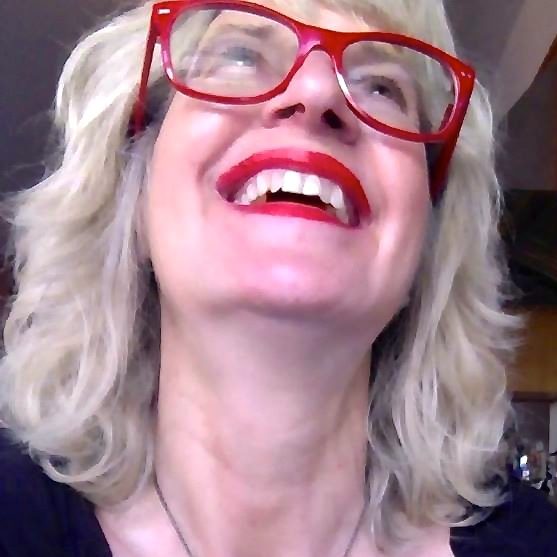
Author: Stephanie Barbé Hammer

  • MAGICALLY REAL  ||  Saturday twice, fresh air and a glass of water

    MAGICALLY REAL || Saturday twice, fresh air and a glass of water

    BY STEPHANIE BARBÉ HAMMER
    November 11, 2015

    Friends – it’s official. I just did some time traveling.

    I’m serious. I went back in time this past Saturday, and lived the same day twice.

    The first time I experienced last Saturday, my husband and I walked through snow flurries in an ancient neighborhood in Beijing. On our last day in China, we gratefully drank the bottled water in our hotel room and then walked down the many uneven steps to the lobby.

    We roamed the slick narrow street, dodging cars and bicycles until we came to one of the few remaining hutongs, a walled compound in this city-within-a-city that has been—at different moments—a private house, a school, a dormitory for actors and a museum. The hutong is an incredible structure; these walled compounds formed the architectural framework of Beijing. Marco Polo saw them, and commented on the splendid organization of the city when he finally made it to China many centuries ago.

    Hammer2
    The courtyard at the hutong museum in Beijing (photo by the author)

    We were grateful for the snow in which we walked, despite our concerns about flying out later that day. Why were we so happy about feeling frozen, and possibly delayed in our departure? Because everything you’ve heard about pollution in urban China is true. We saw people wearing masks to help them breathe and we coughed intermittently when we were outside. I took allergy meds to help me cope with the smog and my husband, Larry, who is tougher than me, noticed that his lungs felt heavy.

    After looking at the hutong’s museum, we took a taxi to the airport, got on the plane and arrived in Vancouver on that same Saturday. In fact we arrived, several hours before we had departed on that same day.

    Larry and I decided to push for home although we were tired. I was so exhausted I actually slept through the Deception Pass Bridge crossing, although this is one of my favorite sights on Whidbey.

    But we didn’t sleep well that night. Living the same day twice exacts its price. Your body doesn’t know what the heck time it is.

    My body got up at around 3:45 a.m. on Sunday and I went to the kitchen for a glass of water. But I didn’t drink it right away.

    In China, the water from faucets is not potable. Everyone needs to boil their water first. I had to remind myself that I could drink the water straight from the tap.

    I looked at the glass and thought about how incredibly important clean drinking water is. Then I drank it. It was delicious.

    Later, I slid open the sliding doors, walked outside and waited for the sun to rise.

    I inhaled deeply.

    Hammer1
    Sunrise from our backyard in Coupeville (photo by the author)

    Here on Whidbey we have made important, good decisions about slow growth development and the protection of our natural resources. I don’t think about this much, until I leave the island and see what kind of shape the rest of the world is in. Yes, on Whidbey we are overrun with deer. But that’s the extent of our over-population problem. Otherwise, most of us Whidbeyites are in pretty good shape, comparatively speaking. We value the beauty of our natural environment, and the rest of the country and our world could learn a thing or two from us, it seems to me.

    But I also want to share that China has a quality that is very much worth emulating. All the people we met, or saw, seemed to have a true understanding of what it means to be hospitable. You see, the Chinese people are the most hospitable people we have ever met. People welcomed us, asked us where we were from, and welcomed us some more. At the hutong museum, two young guys asked us if we liked the West Coast, and ran back into their store in order to present us with two bags of candies and some playing cards with photos of the hutong on them. They said they hoped we’d come back.

    Here on Whidbey, and in America as well, we could learn to be more welcoming of strangers.

    I’m going to work on that one personally.

    But first I’m going to have another glass of water.

    Stephanie Barbé Hammer’s debut novel, “The Puppet Turners of Narrow Interior,” was published by Urban Farmhouse Press this year. She is also a published poet and she authors scholarly studies and creative writing books. A University of California professor emerita, she teaches at writers’ conferences and associations, dividing her time between Coupeville and Los Angeles. Read more about her work at http://www.stephaniebarbehammer.net.

    __________________

    CLICK HERE to read more WLM stories and blogs. Have a great story idea? Let us know at info@whidbeylifemagazine.org.

    WLM stories and blogs are copyrighted and all rights are reserved. Linking is permitted. To request permission to use or reprint content from this site, email info@whidbeylifemagazine.org.

  • Magically Real || What You Learn When the Lights Go Off

    Magically Real || What You Learn When the Lights Go Off

    BY STEPHANIE BARBÉ HAMMER
    Sept 9, 2015

    Friends, I’ve experienced blackouts before. I lived in NYC during the big blackout of 1977. I descended 18 flights of stairs from my parents’ apartment, walked 20 or so blocks to the Plaza Hotel where I was working, then, along with a security guy, inspected the entire hotel to make sure everyone was okay.

    That was a cool experience.

    Urban blackout is very different from rural blackout. When the lights go out and the water goes out and you are alone with your partner and one set of neighbors, that’s a different experience than being in a huge city with jillions of people.

    Some people would argue that being in a NYC blackout would be like something out of a science fiction movie. Escape from New York leaps to mind.

    When the lights went out here on Whidbey on August 29th, at first we weren’t too worried. But when the lights and the water don’t work for 24 hours, then 48 hours, then 72 hours? That becomes a different story. Because you start to feel actively uncomfortable. Actively cut off from the world.

    My one set of neighbors were energized by this experience. I admire that. They were clearing away fallen tree branches by day and popping popcorn by night. They enjoyed the camping out quality of the blackout.

    I have to be honest, readers. I was terrified. There was something deeply frightening about being so isolated in the dark amongst nothing but trees.

    “This is great practice,” someone down the road said to me, as they raked and picked up pine tree bits.

    I smiled at them. But then I went home and sat on the sofa in the dark and shuddered.

    Practice for WHAT exactly?

    I don’t know and I DON’T want to find out.

    That was when J came to the rescue. J and M had moved into a house near us a few months ago, and because they were on a different set of power lines, they retained light and water capability. On day three of the blackout, J got us over to her house—on the pretext that she needed us to keep her and her kids company because M was working in Seattle. Then she basically tricked us into staying for dinner, all the while insisting that we were helping her with her kids. Then—when we went back to our house and saw that once again we were without lights and power—she texted us on our sputtering smartphones to inform us that we HAD to come back and spend the night because she had already put fresh sheets on the bed in the guest room.

    My husband demurred, and said I was a wimp.

    I insisted on sleeping at J’s. That night, I looked out of the guest room window and saw the moon. I felt safe for the first time in three days. I felt safe at our friends’ house.

    Let there be light
    Let there be light

    What’s the point of this story?

    The first point is yes, everyone, it’s official: I AM a wimp.

    And the second point is that kindness shines even more brightly in the dark.

    We woke up the next day and went back to our house.

    “All is well!” shouted our neighbors. They had cleared out the fallen debris from our driveway, and from everyone else’s in our little neighborhood. And they had placed an enormous bottle of water on our doorstep, just in case we had run out.

    We walked in and turned the lights on.

    Maybe the final point is not which friend is kinder than which, but rather that there is more than one way to be kind in a crisis.

    I personally need all the ways that are out there, and I’m going to have to figure out how to develop some crisis-kindness of my own.

    But first I have to run the dishwasher, the washing machine, and restock the refrigerator.

    Stephanie Barbé Hammer‘s debut novel, “The Puppet Turners of Narrow Interior,” was published this spring by Urban Farmhouse Press. She is also a published poet and authors scholarly studies and creative writing books. A University of California professor emerita, she teaches at writers’ conferences and associations, dividing her time between Coupeville and Los Angeles. Read more about her work at www.stephaniebarbehammer.net.

    __________________

    CLICK HERE to read more WLM stories and blogs. Have a great story idea? Let us know at info@whidbeylifemagazine.org.

    WLM stories and blogs are copyrighted and all rights are reserved. Linking is permitted. To request permission to use or reprint content from this site, email info@whidbeylifemagazine.org.

  • Magically Real || Life in the (super-duper) slow lane

    Magically Real || Life in the (super-duper) slow lane

    BY STEPHANIE BARBÉ HAMMER
    July 1, 2015

    Author's slippers, on her feet... (photo by the author)
    Author’s slippers, on her feet… (photo by the author)

    Being a Whidbey writer means that you can work in your pajamas, or in your slippers. Or both.

    Here, in Coupeville, my neighbors are gradually getting used to seeing me in PJs ’til lunchtime, or not seeing me in the morning at all. I make my husband answer the door, generally, up until noon. Mornings are when I write and think. And by morning I don’t mean when the sun rises at 5 a.m. (or earlier). By morning I mean more like 8:30 am.

    I take my cup of coffee, go sit in a chair on our porch and look at Mt. Baker if it’s visible and at the fog if it isn’t. Or at a boat passing if there’s one or at the water and the trees if there isn’t.

    Since it’s June I tend to see deer and deer babies (aka fawns) jumping around in the backyard. But since I’m not a gardener I can just watch them eat the grass. I don’t have any flowers. Which was lazy of me. But also lucky, as it turns out.

    Cup of coffee (photo by the author—in the morning)
    Cup of coffee (photo by the author—in the morning)

    My friend Janet recently moved down the road; she’s a triathlete. So is her husband. I am personally more of an avid non-sportsperson. Still, sometimes you gotta busta move, as the kids say. Or as they said about 20 years ago.

    So I go over to the Nordic Hall on Jacobs Road in Coupeville, and I take a Tai Chi class with some nice people, who are led by Lynne Donnelly. I took Tai Chi years ago in Riverside Calif. with Harvey Kurland (who is originally from the Pacific Northwest) and—while I’ve forgotten just about all the moves in the Yang short form—I can recognize when someone can really do them. Lynne has that soft energy that makes her movements liquid and relaxed.

    She’s a great teacher. I spend most of class trying to learn how to raise my arms, and turn my right foot inward, after shifting weight over to my left foot. Then I do something called a “ward off,” which Lynne explains is what you do when a bunch of 6th graders try to leave the school building at the same time, just as you’re trying to enter it.

    Tai Chi instructors tend to have a wry sense of humor. One time Harvey talked to the yoga instructor who was just finishing the class ahead of us and asked “how much energy do you use in yoga?”

    Proudly, she answered, ‘30%.’”

    “Oh,” he said. “We use about 10.”

    Traffic sign  (photo by the author—NOT in the morning)
    Traffic sign (photo by the author—NOT in the morning)

    After class my husband takes me to bayleaf for lunch outside. We observe that we need to have a business meeting soon, but it’s not going to be now because the sun is shining and our sandwiches taste too good. I go inside to pay. A group of people is ahead of me in line and the guys keep thinking of new things they want to buy.

    “I’m sorry we’re taking such a long time,” says one man.

    I could tell him “no problem—although I DO need to get home to try to figure out if there’s any way to make time travel, magic, Judaism, Christianity, Islam, Shinto, and the commedia dell’arte all work together in one novel about 17th Century France.”

    Instead, I just say, “take your time…”

    Stephanie Barbé Hammer‘s debut novel, “The Puppet Turners of Narrow Interior,” was published this spring by Urban Farmhouse Press. She is also a published poet and authors scholarly studies and creative writing books. A University of California professor emerita, she teaches at writers’ conferences and associations, dividing her time between Coupeville and Los Angeles. Read more about her work at www.stephaniebarbehammer.net.

    __________________

    CLICK HERE to read more WLM stories and blogs. Have a great story idea? Let us know at info@whidbeylifemagazine.org.

    WLM stories and blogs are copyrighted and all rights are reserved. Linking is permitted. To request permission to use or reprint content from this site, email info@whidbeylifemagazine.org.

  • Four Writing Wonders

    Four Writing Wonders

    BY STEPHANIE BARBÉ HAMMER
    Jan. 21, 2015

    Whidbey may be an island, but we draw some of the most brilliant writers in the US to our foggy shores.

    Recently, I’ve spent time with not one but TWO Washington State Poets Laureate. (By the way, it’s not Poet Laureates, but rather Poets Laureate. Like Attorneys General.   Explanation courtesy of current Poet Laureate Elizabeth Austen.)

    Washington State Poet Laureate Elizabeth Austen (photo courtesy of writer)
    Current Washington State Poet Laureate Elizabeth Austen (photo courtesy of writer)

    Two weeks ago at the Whidbey Island Center for the Arts (WICA), Austen taught a poetry workshop to 27 people. Although we could barely fit around the table, the crowded conditions hardly mattered because Austen made that crowded table feel like the kitchen counter at her house. We hung out, read together and chewed on some complex poetic imagery. We thought about trees, mustard, cheese sandwiches, and floods in Florence, allowing those images to help us cook up our own poems. We walked out with heads full of word-recipes for future work.

    Kathleen Flenniken (photo courtesy of the writer)
    Previous Washington State Poet Laureate Kathleen Flenniken (photo courtesy of the writer)

    That evening, several of us dined with Austen and former Poet Laureate Kathleen Flenniken. We sat at the Roaming Radish and talked about how to bring young people into the literature conversation. Flenniken’s eyes shone as she described the reactions of kids in the schools she visited. “How do these words make you feel?” she’d ask. And they’d tell her. We decided that poems can get at emotions in a way that no other word-work can.

    I heard Flenniken again the following week at the Northwest Institute of Literary Arts (NILA) MFA program, which meets twice yearly at the Captain Whidbey Inn. In her class on listening, Flenniken asked us to make a poem using 10 words that she would assign to us. Each word needed to have its own line, and the whole thing had to make sense. But we got only one word at a time, so we didn’t know what was coming. That meant we had to really open up and hear the possibilities each word offered.

    It’s amazing what comes out when you just listen.

    Author Nancy Rawles (photo by Ingrid Pape Sheldon)
    Author Nancy Rawles (photo by Ingrid Pape Sheldon)

    NILA also presented novelist Nancy Rawles, who taught a class on revisiting that great book idea you had once and then abandoned. Should you revisit it? How do you decide? How long will it take you to re-investigate the project? Great questions to consider. Subsequently, Rawles paid a visit to Whidbey Air Radio to discuss her critically-acclaimed novel My Jim, explaining that her book tells the story Huckleberry Finn does not tell: what happens to Jim’s wife and family after he escapes.

    Nancy Rawles reading at Whidbey Air (photo by Stephanie Barbé Hammer)
    Nancy Rawles reading at Whidbey Air Radio (photo by Stephanie Barbé Hammer)

    Rawles’s novel gives us insight into the lives of the majority of African American captive workers who lived and died as slaves.

    Later that week Tananarive Due appeared in our NILA classroom. Due is a civil rights memoirist and best-selling horror/suspense novelist. She gave us pointers and examples of how to craft powerful characters, how to create suspense and what resources to use when doing research for historical fiction. In the class on research, she showed us a photograph of an elegant African American woman wearing a beautiful shirtwaist dress being dragged off by two white policemen. “That’s my mother,” said Due.

    Tananarive Due reading at Whidbey Air Radio (photo by Stephanie Barbé Hammer)
    Tananarive Due reading at Whidbey Air Radio (photo by Stephanie Barbé Hammer)

    In the subsequent talk she described how her family’s struggle for Civil Rights empowered her fictionalized narrative account of the remarkable Madame C.J. Walker, reputedly the first female African American millionaire. “Use your personal history to fire up your writing,” Due urged us.

    I don’t know about you, but I’m fired up to read more by and about these incredible authors, and I’m proud of our island organizations for bringing these wonders to us.

    Find out more about these authors at their websites:
    Elizabeth Austen
    Kathleen Flenniken
    Nancy Rawles
    Tananarive Due

    Stephanie Barbé Hammer lives mostly in Coupeville with occasional treks into the wilds of Los Angeles. Her poetry collection “How Formal?” launched in May 2014 and her brand-spanking new novel “The Puppet Turners of Narrow Interior” (about German Americans, secret Anabaptists, bunraku puppets, ghosts, and hope) comes out later this year. You can follow her on twitter at stephaniebarbeh and read her blog here: www.stephaniebarbehammer.net

    ________________

    CLICK HERE to read more entertaining and informative WLM stories and blogs.

    WLM stories and blogs are copyrighted and all rights are reserved. Linking is permitted. To request permission to use or reprint content from this site, email info@whidbeylifemagazine.org.

  • What to do when the fog rolls in

    What to do when the fog rolls in

    BY STEPHANIE BARBÉ HAMMER
    November 5, 2014

    People like to complain about fog and mist. When I lived in Geneva many years ago, everyone I knew complained about the grey skies, the mist and the damp winds.

    Everyone, that is, except for some people.

    A guy I knew who was a gifted guitarist from Paraguay loved that Geneva weather. “It makes me stay indoors and dream up songs,” he said to me once.

    Spending the first few months of the fall on Whidbey for the first time ever, that’s how I feel too.

    I know what you’re going to say. “But the weather has been amazing this fall!”

    My neighbors Pat and Sue tell me every time I see them. “It’s glorious! Not typical of our weather!”

    Yup. It is. Glorious. But for me, I do an inner dance of joy when the fog rolls in.

    Our fog and trees  (photo by Stephanie Barbé Hammer)
    Our fog and trees (photo by Stephanie Barbé Hammer)

    See—when I get up, and all I see is trees and nothing else, I feel that cocoon of stories and poems weaving itself around me. The outside world has been temporarily veiled so that I can plunge in to my secret world. The magic world that I get to explore now that I make stories as my life-work.

    Yes, I know fog is bad for driving. And boating. And probably marathon running. But the positive in this is that fog means I have to stay put. Or I can stay put and use the fog as an excuse. “I’m so sorry—I can’t come and do that thing with you today, because the fog ….!” Etc.

    That means I can sit on the patio, and drink my coffee, and look into the mist and imagine what’s there behind it. Then I go to my desk and pour all that into words.

    There’s a freedom in fog, is all I’m saying.

    (photo by Stephanie Barbé Hammer)
    Photo by Stephanie Barbé Hammer

    So, friends, the next time the fog rolls in, take a look at that cooking project, that weaving, knitting, or sewing project, that drawing project or—as NaNoWriMo kicks in—that novel or memoir or poetry project.

    But before you do, just sit for a moment and take a look at that fog. Allow the mist to shelter you from doubts, bills, worries, relatives, and yes—partners.

    And then create something.

    Stephanie Barbé Hammer lives mostly in Coupeville with occasional treks into the wilds of Los Angeles. Her poetry collection “How Formal?” launched in May 2014 and her brand-spanking new novel “The Puppet Turners of Narrow Interior” (about German Americans, secret Anabaptists, bunraku puppets, ghosts, and hope) comes out later this year. You can follow her on twitter at stephaniebarbeh and read her blog here: www.stephaniebarbehammer.net

    ________________

    CLICK HERE to read more entertaining and informative WLM stories and blogs.

    WLM stories and blogs are copyrighted and all rights are reserved. Linking is permitted. To request permission to use or reprint content from this site, email info@whidbeylifemagazine.org.